

Leaders who have bothered to turn up in Antigua to hobnob with King Charles III are barely concealing the fact that they would rather be anywhere else. And given the domestic cost of being seen to attend a pointless summit where the only debate is about demanding that today’s British taxpayers compensate for the stain of slavery outlawed nearly two centuries ago, their reticence is justified.
CHOGM is the Commonwealth Heads of Government Meeting that gathers every second year. Charles heads the Commonwealth but does not run it — that is done by the Secretary-General from London headquarters off the Mall, a few minutes’ walk from Buckingham Palace.
The club of countries involves 56 nations and is unique in that it unites Pacific and African nations without involving the two jostling superpowers China and the United States. Some of its most recent admissions are African nations that were not colonised by the British — Rwanda, Mozambique, Togo and Gabon.
But with all this potential, what unites the Commonwealth is less clear the longer it endures. On the surface, leaders talk about solving trade, climate and humanitarian issues together. But the organisation has few meaningful policy outcomes to show. Hence, the entire affair has been hijacked by the Caribbean nations demanding reparations from the UK over colonial-era slavery.
This is, of course, why any politically astute leader wants nothing to do with it. Given the huge Pacific component of the Commonwealth, Australia should be a key player, but Prime Minister Anthony Albanese has only once attended CHOGM during his time in The Lodge — when it was held in Samoa. The host country being a Pacific one meant he could not realistically send his deputy, as he did in 2022 when he dispatched Richard Marles to Kigali.
The prime minister is evidently acutely sensitive to what voters, facing another interest rate rise while he is in the Caribbean, will think of his jet-setting ‘Global Citizen’ image. In Antigua, he made it clear that his attendance was not his idea.
‘Australia is a participant in the Commonwealth, and at the personal invitation of King Charles, of His Majesty, I agreed to come to this meeting,’ Albanese said in St John’s.
The veteran press gallery political correspondent Phil Coorey spelt out what seemingly innocuous but loaded line really meant, writing in the Financial Review that the Prime Minister did not want to attend the summit, ‘but when the King rang him recently and asked him to go to the Caribbean for the good of the Commonwealth … the PM had little choice.’
That call took place mid-September.

Convention states that conversations with the monarch are kept private, and one can safely assume that it was the Palace briefing to the Australian media that the prime minister is only attending because the King effectively forced him.
‘It would be inappropriate for the prime minister to divulge private conversations he had with our de jure Head of State,’ Australia’s longest-serving foreign minister, and former high commissioner to the UK, Alexander Downer, a Liberal, told Latika Takes.
But giving the King greater grief is His Majesty’s own Prime Minister Andy Burnham, who has walked into the open trap set for him by those campaigning for reparations.
The new Labour leader, whom Conservative Leader Kemi Badenoch has dubbed a ‘people pleaser’, wrote an opinion piece for the left-leaning Guardian ahead of his departure for the Caribbean to say that he was open to apologising on behalf of Britain but not paying out reparations.
‘For years, those members of the Commonwealth affected by the slave trade have asked for an honest conversation about the legacies of slavery. By sticking our heads in the sand, we have damaged the ability of the Commonwealth to function,’ Burnham said.
‘So we are offering a structured dialogue with those affected by the transatlantic slave trade. Listening to calls for a formal apology on behalf of the British state will form an important part of this process, and I am open to them.
‘I do not think that the British people today can be held liable for historical wrongs, however heinous, that happened in a different age under different laws and in which they played no personal part.’
This is a significant concession from the new UK prime minister in the ongoing battle of tug-of-war over demands for reparations. And it is a dangerous one, because as anyone who has ever played the game knows, the point is to make the other side just start to slip enough so that when you keep tugging, they eventually slide and fall right over.
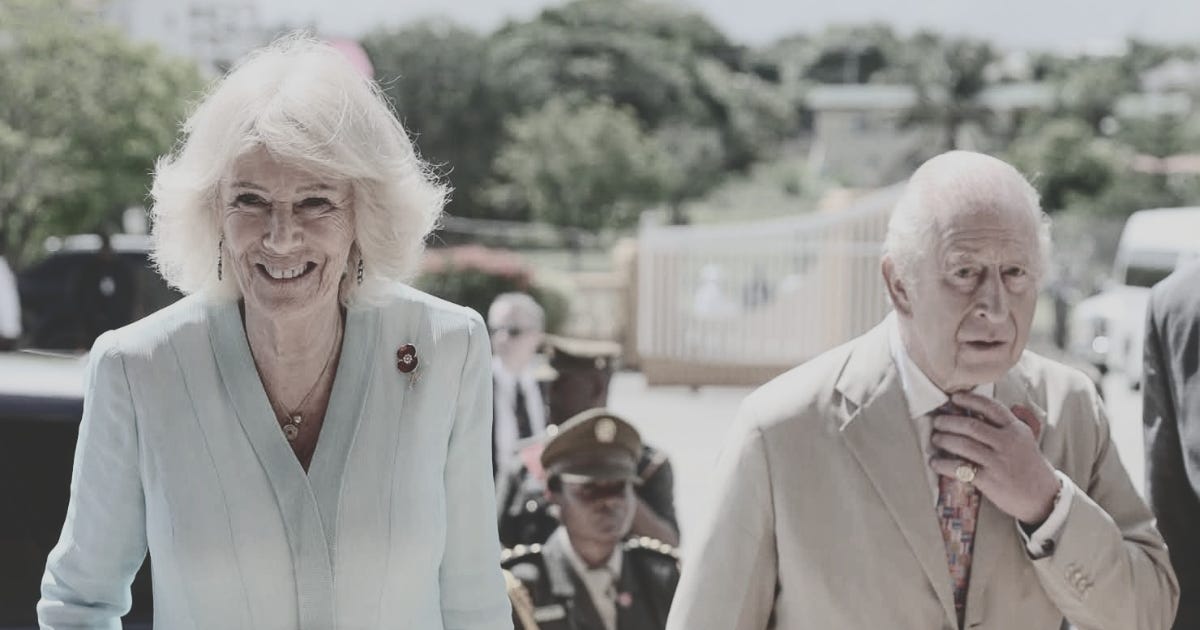
This is why the King has always limited his language to expressing ‘sorrow’ for the slave trade, as he did in 2022 in Rwanda — which was colonised by Germany and France, not Britain.
Between 1662 and 1807, some 3.4 million slaves were shipped by the British and sold to work on plantations during the colonial era. Britain’s abolitionist movement to end slavery grew in the late 1700s, and although the trade was ended in 1807, emancipation for existing slaves only came in 1838, and there was no compensation paid to the slaves themselves. The Royal Navy devoted huge resources, establishing the West Africa Squadron that captured around 1600 slaving vessels as part of its efforts to end the trade worldwide.
So why does saying the word sorry matter so much in this context? As always, follow the money.
The CARICOM Reparations Commission, established in 2013 by the Caribbean Heads of Government, sets it out in its ten-point reparation plan. It says sorry is the only acceptable word, as anything else does ‘not acknowledge that crimes have been committed and represents a refusal to take responsibility for such crimes.’
The Commission wants European countries to ‘take responsibility’ by waiving debts, paying for education, healthcare, rehabilitation and national debt, transferring technologies and funding cultural institutions and so on.
‘When will the demands stop?’ Badenoch, who was born in Britain but spent part of her childhood in her parents’ native Nigeria, which gained independence from the British in 1960, said on the BBC.
‘Why are we having this conversation today? It is because many of these countries are struggling with the same issues that we’re struggling with; they’re not becoming richer, and they don’t know what to do. My answer is no; we should not even be entertaining the issue of reparations.’
Badenoch said her government would boycott the Commonwealth if it did not ditch its pursuit of reparations.
This is hardly a right-wing agenda. Even Labour is tired of the pantomime’s mission creep. Under Sir Keir Starmer, the government was exploring reducing the number of times the organisation meets at leader level. Starmer had said the reparations issue would not be discussed in Samoa but was railroaded by other leaders when he arrived. His Majesty’s Government has not forgotten.

That is partly why Burnham’s move to offer a formal apology is so startling. The mood is not to indulge the campaign but to shut it down once and for all.
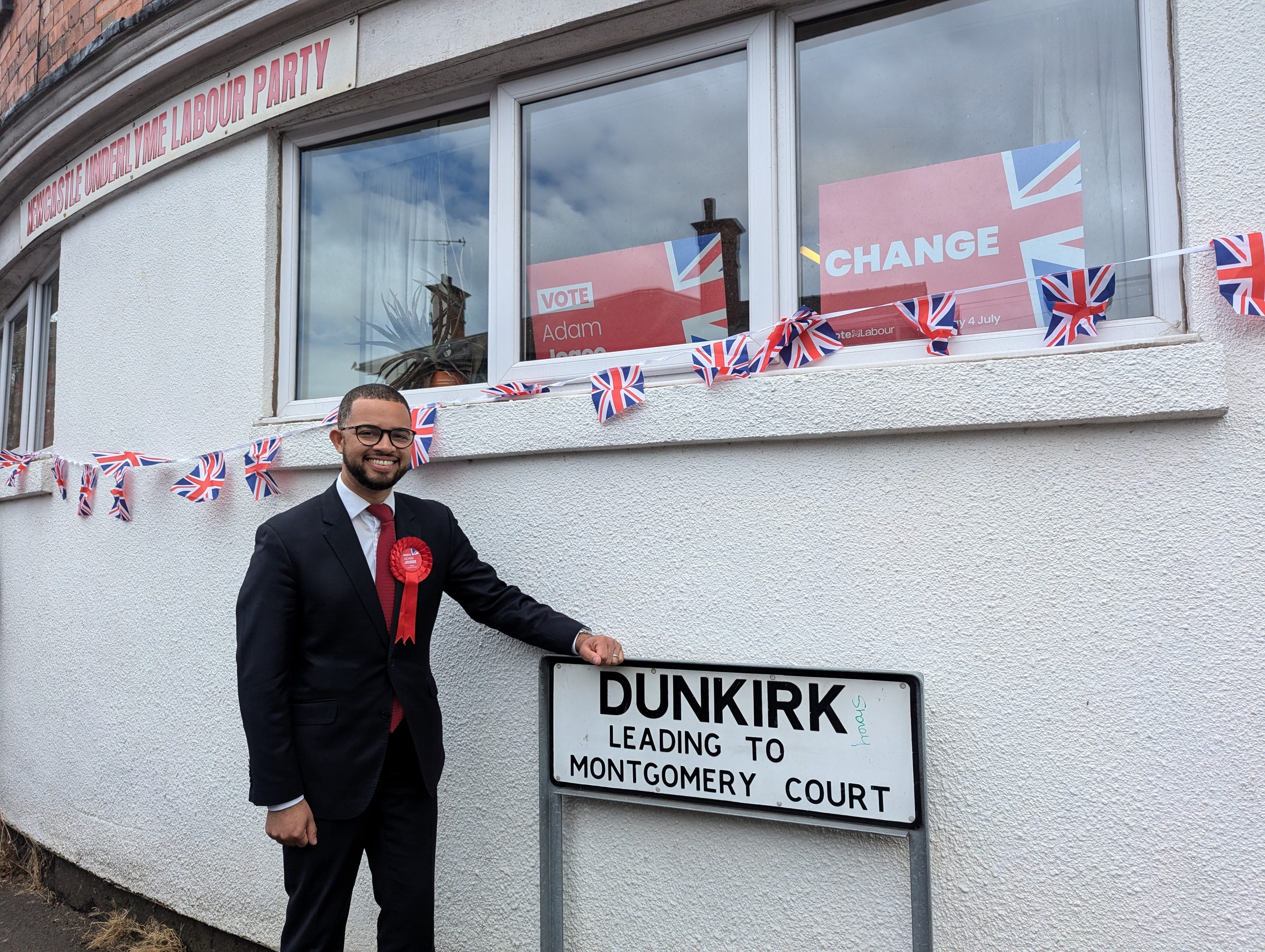
Adam Jogee, an MP with a Zimbabwean father and Jamaican grandmother, is attending the summit and hoping to catch up with his personal friend, Anthony Albanese.
The 34-year-old represents Labour in a Brexit-voting seat in England’s West Midlands and told the House of Commons that while he is proud of his race, it does not define him.
‘There has been talk of reparations in this debate and in recent weeks, ahead of the Commonwealth Heads of Government meeting in Antigua. I am the descendant of slaves, and I want to share my view. Who do we pay? What value do we put on the lives of those disgracefully, immorally and forcibly removed from their homes? Where does it stop?’ he said in a recent speech marking Black History Month.
He urged the Commonwealth to find a new purpose and lift its game.
‘I want to see more ministerial visits to the former colonies — I say this word consciously — because it is on those visits that we can show our equal partners the respect that they deserve,’ he said.
But Albanese clearly missed the memo.
‘We understand that the issue of slavery has had a historical impact, which is ongoing for many of the nations that are represented in the Commonwealth,’ he said when asked for his view.
‘We're not participants directly in those discussions, but we understand that it's important they be done in a transparent way and in a respectful way as well, which acknowledges the economic hardship that has been created, as well as the obvious circumstances of trafficking that occurred with slavery, and we understand why this is a major issue, so we will be not direct participants in those discussions but we want it to occur in a transparent way.’
As the old adage goes, with friends like these…
But truth be told, if the Commonwealth continues like this, it will end the other way.

Ben Judah was a special advisor to David Lammy, who served as foreign secretary under Starmer. He said the no-shows at CHOGM, including India, Singapore, Bangladesh, Malaysia, Kenya, Singapore and Cyprus, were becoming impossible to overlook. If the King had not demanded Albanese attend, Australia too would be on that list.
‘It’s time to admit the Commonwealth Secretariat and the CHOGM summit do not serve its original purpose,’ Judah said.
‘Instead of fostering post-imperial comity, it is engendering post-imperial hostility.’
The Commonwealth’s single-minded focus on reparations has exhausted everyone’s patience and now risks its own existence. It does not need to be a relic and attended only out of guilt or duty to the monarch, but on its current trajectory is edging closer and closer to being put on life support.
Albanese may feel this trip was not worth the political price he will pay at home for attending, but he could demonstrate its value by pitching in to lead an effort to redirect the organisation’s mandate and give it a fit-for-purpose mission in 2026 and beyond.
A version of this article was first published by The Nightly