

With no clear goal, is Trump dumping US power down the drain?
Israel and the Trump Administration’s war with Iran is approaching one fortnight.
The Trump Administration is full of its trademark bravado that everything is going according to plan, and that it has a clear objective for what comes next, even though there have been differences starting with President Donald himself about whether they are seeking regime change or not.
The US has suffered casualties and has no immediate plans to escort ships carrying oil through the vital economic artery of the Strait of Hormuz, which Iran has all but closed.
The US has also changed several times what it says its objectives are, and how it will achieve them. What success looks like is currently not defined, at least publicly.
And the first six days of the war alone cost the US $11.3bn, the Pentagon briefed members of Congress – though it wasn’t clear if those numbers included the cost of the buildup or the US missile defences as well. The ultimate toll of Iran’s closure of the Strait of Hormuz on the world economy remains to be seen.
Past administrations had been war-gaming an Iran invasion for decades – but with Trump in the White House, observers said that the rigidly closed circle of advisers around him, the collapse of an interagency process in the government and his erratic decision-making process made this unlike any other US military campaign in recent memory.
‘This is hard under any circumstances but especially with so little [evidence of] planning,’ said Philip Gordon, the former national security adviser to Kamala Harris and the White House coordinator for the Middle East under Barack Obama.
Of the growing chaos in the Middle East, he said: ‘It is surprising that Trump is surprised.’
Previous administration had ‘gamed out’ potential conflict scenarios with Iran ‘many times and constantly’, said Gordon, now of the Brookings Institution, but regularly ran into exactly the problems that the Trump administration is now facing: Iran targeted neighbouring countries to threaten a regional war and closed the strait of Hormuz, threatening the global oil trade and driving up energy prices.
‘One of the reasons we did the nuclear deal and didn’t try to change the regime is exactly what’s happening,’ he said of the 2015 Joint Comprehensive Plan of Action (JCPOA). Trump withdrew from the treaty in 2018.
The military campaign to eliminate the Iranian leadership has achieved considerable success. The early strikes that killed Khamenei and dozens of his senior advisers were the product of a collaboration between Israeli on-the-ground intelligence and US signals intelligence. Trump seemed poised to match the success of the 12-day war, when the US delivered surgical strikes against Iran’s nuclear programme and then exited the conflict.
But Iran has continued to fight. And as Trump and top officials such as the US defence secretary, Pete Hegseth, herald the complete destruction of the Iranian leadership in successive briefings, there are no clear explanations for what the US will call victory in the conflict, and how it will now reverse Iran’s decision to squeeze the global oil supply.
‘The military planning has been stellar,’ said Michael Rubin, a senior fellow at the American Enterprise Institute and an expert on US foreign policy on Iran. ‘That said, politically, this is increasingly looking like a cluster fuck. And the reason is that step one of any plan is to establish a goal – the targeting should be in pursuit of that goal. The United States has this backwards. We have the targeting, but we don’t have a clear goal, and that lies not on the Pentagon planners, but on Donald Trump.’
Internal dissent over Khamenei Jnr’s condition
The strikes on day one wiped out the Supreme Leader Ayatollah Ali Khamenei, who was replaced by his son Mojtaba Khamenei only this week.
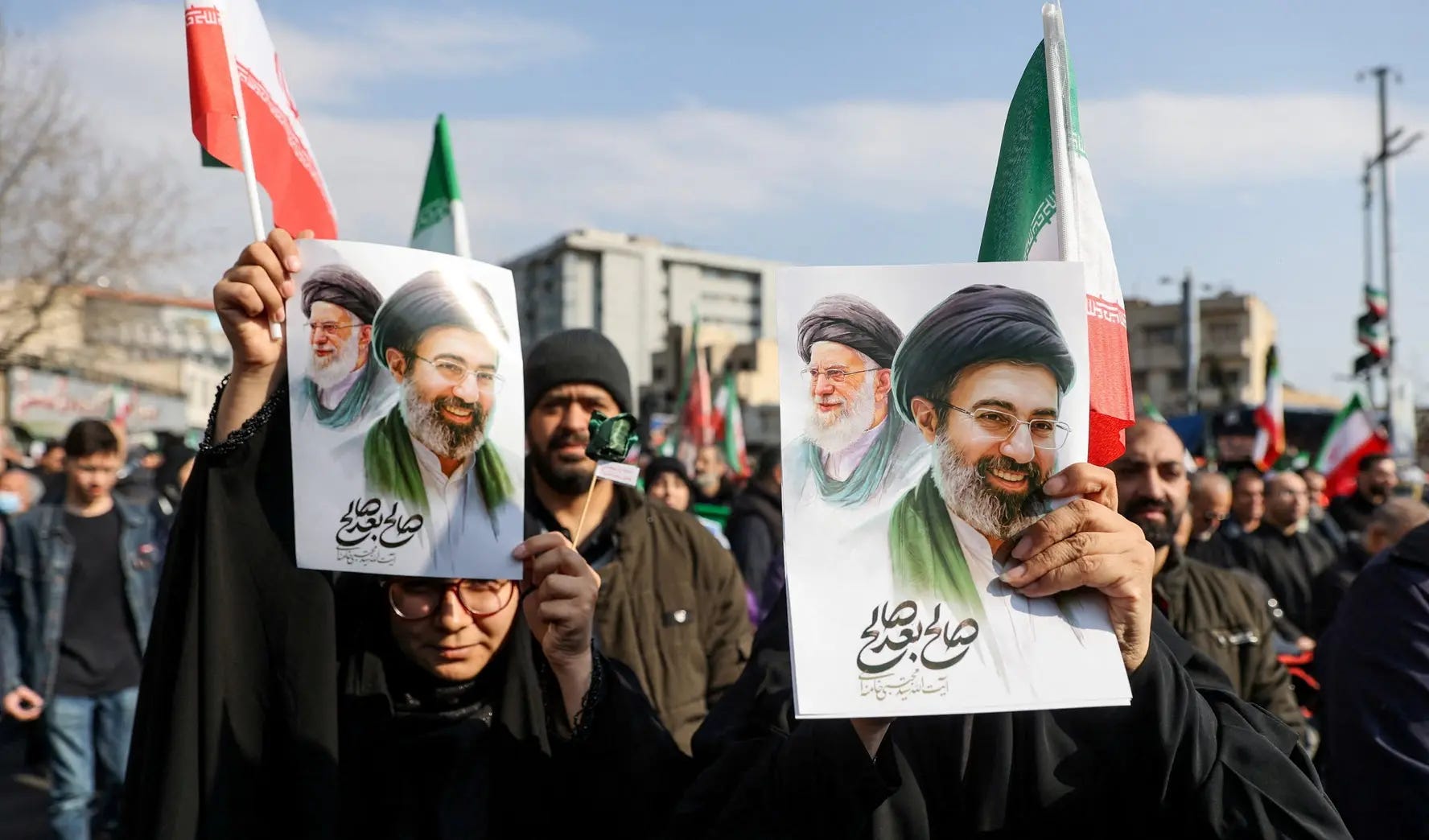
Further, Mojtaba Khamenei has not been seen or heard in public, and his only statement was issued in writing. US Secretary of the Department of War Pete Hegseth told a media conference at the Pentagon on Friday that Mojtaba Khamenei was ‘wounded, but likely disfigured.’ The US has placed a $10 million bounty on his head, as well as on other officials linked to the Islamic Revolutionary Guard Corps.
Iran International says the transfer of power may be contested.
Iran new Supreme Leader Mojtaba Khamenei’s physical condition and inability to maintain regular communication with officials have prompted criticism and political maneuvering among some ruling clerics, according to information received by Iran International.
Ali Asghar Hejazi, deputy chief of staff to the former Supreme Leader, and Alireza Arafi, a member of the Guardian Council and a member of Interim Leadership Council are among clerics who have raised concerns about Mojtaba Khamenei’s health and managerial capacity, sources told Iran International.
They are pushing for authority at the top of the Islamic Republic to return to a temporary leadership council.
Hejazi and Arafi are also among influential clerics who have criticised the growing power of the Islamic Revolutionary Guards Corps and the increasing dominance of its commanders over government decision-making during the war.
Divisions between political officials and ruling clerics on one side and Revolutionary Guards commanders on the other have deepened following the killing of Iran’s former leader, particularly after Mojtaba Khamenei was introduced as the new head of the Islamic Republic.
US deploys troops from Japan to Iran
A truck of US media outlets, citing US officials, is reporting that thousands of marines (reports cite between 2500 and 5000) in the form of a Marine expeditionary unit and warships will be sent to Iran.
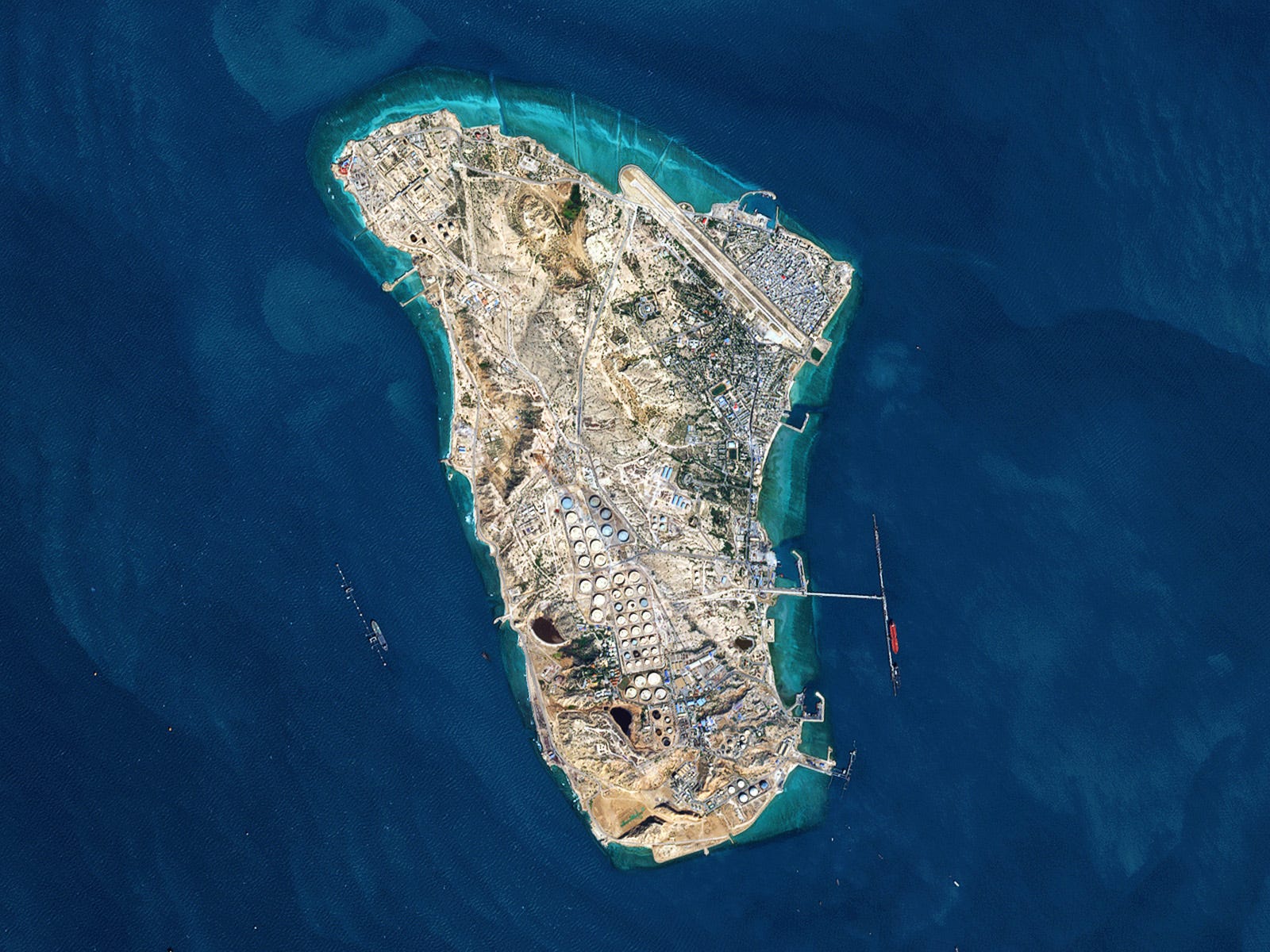
This is not enough for an invasion or ‘boots on the ground’ a la Afghanistan or Iraq, but it would enable the US to facilitate evacuations or a targeted military operation, such as taking Kharg Island, a tiny but one of the most important pieces of land to be watching right now.
Today, this 22-square-kilometre coral outcrop in the Bushehr province is widely known among Iranians as the ‘Forbidden Island’.
Shrouded in intense secrecy and guarded by the elite Islamic Revolutionary Guard Corps (IRGC), it is a place where entry is strictly restricted to those with official security clearances.
Yet, beyond the imposing steel fences and military watchtowers lies a pristine landscape where millennia of diverse human history quietly coexist with the beating heart of Iran’s modern energy empire.
….
Located 55km northwest of the Bushehr port and 15 nautical miles (equivalent to about 28km) from the Iranian mainland, Kharg Island is the undisputed economic backbone of Iran.
The island processes 90 per cent of the nation’s total oil exports, handling approximately 950 million barrels every year.
Measuring just 8km in length and 4 to 5km in width, its deep surrounding waters provide a natural geographic advantage. This depth allows colossal supertankers to dock safely and load crude destined primarily for Asian markets, with China standing as the leading importer.
According to the Iranian Ministry of Petroleum, the island’s facilities act as the vital nerve centre for the sector. The terminal receives crude from three major offshore fields – Aboozar, Forouzan, and Dorood – which is then transported via a complex network of subsea pipelines to onshore processing facilities before being stored or shipped to global markets.
In May 2025, S&P Global Commodity Insights reported that Tehran added two million barrels to the terminal’s storage capacity by rehabilitating tanks 25 and 27, each capable of holding one million barrels.
Historically, the loading capacity of these continuously upgraded terminals has reached a staggering maximum of seven million barrels per day, though current national exports hover around 1.6 million barrels daily, in addition to managing production for the domestic market.
Trump eases sanctions on Russian oil
Europe has been unable to prevent the Trump Administration from easing sanctions on Russian oil. The US has used the spike in the cost of oil (now higher than $100 per barrel) caused by the Iranian closure of the Strait of Hormuz through which 20 million barrels flow per day, to waive the sanctions on Russian oil.
The sanctions were introduced after Vladimir Putin’s illegal invasion of Ukraine, and the Trump Administration has berated countries like India, which refine Russian oil and resell it to countries that impose the sanctions, for their support of Russia’s war economy.
European leaders are unhappy but were ineffective in swaying Trump’s mind on a call of G7 leaders, Germany’s Chancellor Friedrich Merz said.
‘Six members of the G7 expressed a very clear view that this is not the right signal to send. We learned this morning that the US government has apparently decided otherwise,’ (Merz said).
‘Once again, we believe this is the wrong decision. There is currently a price problem, but not a supply problem. And in that regard, I would like to know what additional motives led the US government to make this decision.’
Merz, who discussed support for Ukraine in its war against Russia with Norwegian Prime Minister Jonas Gahr Store, said Moscow continues to show no willingness to negotiate and that pressure on the Kremlin must increase.
MAGA supports Iran war, Pence
Vice President JD Vance notably referred to the war in Iran as a ‘military operation,’ in a rare public appearance since the war’s beginning.
Vance and Rubio are considered rivals for the GOP nomination in 2028 and Vance represents the MAGA soul, compared to the more traditional and hawkish US Secretary of State.
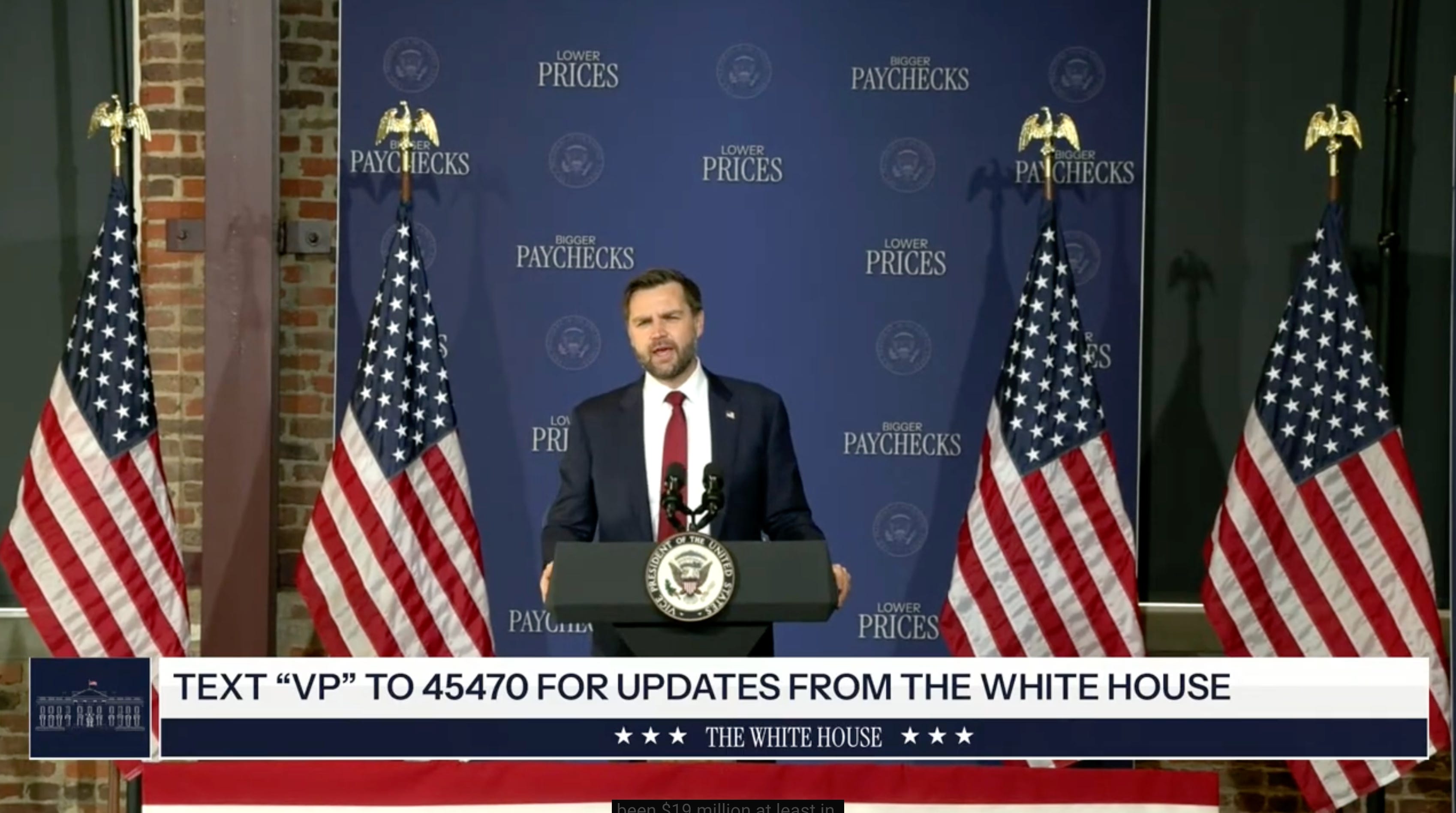
Vance was asked what he advised the President and Vance said he would not do this because the conversations in the Situation Room are classified. Again, a notable non-response. But the crowd loved it and applauded his response resoundingly.
‘When you're thinking about a major decision like this, the way the President makes these decisions is he talks to a lot of people,’ Vance told reporters later.
‘Obviously, we're thinking about various ins and outs, various options, what this looks like, how to accomplish our goals, what our goals should be. And I think it's important for the President of the United States to be able to have that conversation with his team, without his team, then running their mouths to the American media.
‘So part of what makes our national security team so cohesive is that we all trust each other, and we all have a very free exchange of ideas. I'd like to keep that going.’
Trump’s first and former Vice President Mike Pence is no supplicant of Trump, having been pursued by insurrectionists on January 6, in 2021.
He represents traditional Republican hawkishness on Iran as opposed to the supposed resistance of the Make America Great Again (MAGA) Trump supporters, who backed Trump because they believed he would not drag them into forever wars.
But Pence believes there is no divide.
‘If we continue to pound the security infrastructure in Iran, I believe that we’ll create the conditions for the people of Iran’ to overthrow their government, Pence said.
Pence, who served as vice president during Trump’s first term in office, said he disagrees there is a wide rift within the GOP over the conflict.
Some members of Trump’s ‘Make America Great Again’ movement have said they feel betrayed by the president’s intervention overseas after he pledged as a candidate to avoid wars. Other critics within MAGA oppose the Trump administration’s supportive policy toward Israel.
That divide is largely ‘among some commentators, some online influencers,’ Pence said.
And that’s my list for this week.
📻 On Saturday, I appeared on Times Radio to discuss the week in geopolitics and British politics.
On Wednesday, I joined the BBC’s Five Live to discuss the difference between Australian Question Time and the UK’s Prime Minister’s Questions.
🎙️ And on the ABC’s Global Roaming podcast with Geraldine Doogue we interviewed the New York Times’ veteran journalist Steven Earlanger about the Iran war. Listen on all podcast apps and here.
Please do send me anything that’s caught your eye, I enjoy knowing what you’ve been reading.