

The Epstein Files
There’s so much to go through with The Epstein Files that it’s difficult to know where to start. I began searching through them last Saturday and have barely stopped since.
The volume (3 million documents in the latest dump) and the scattergun way of uploading them all onto the internet with what seem indefensible redactions makes trying to make sense of them overwhelming.
Then there is their contents. Chilling, skin-crawling stuff. I don’t advise reading them unless you must — the glee with which Esptein and some of his associates revelled in their crimes, cruelty and abuse explains a lot about how he was able to get away with it for so long.
Epstein clearly had zero guilt for what he was doing when he trafficked and sexually abused underage girls. He documented his crimes unashamedly. Who knew, what and when are the three questions that threaten to embroil his associates long after his death (in jail in 2019 while awaiting trial).
After the first four hours of going through the latest files, I realised that what has long been a story of sex abuse, paedophilia and power was also one of security.
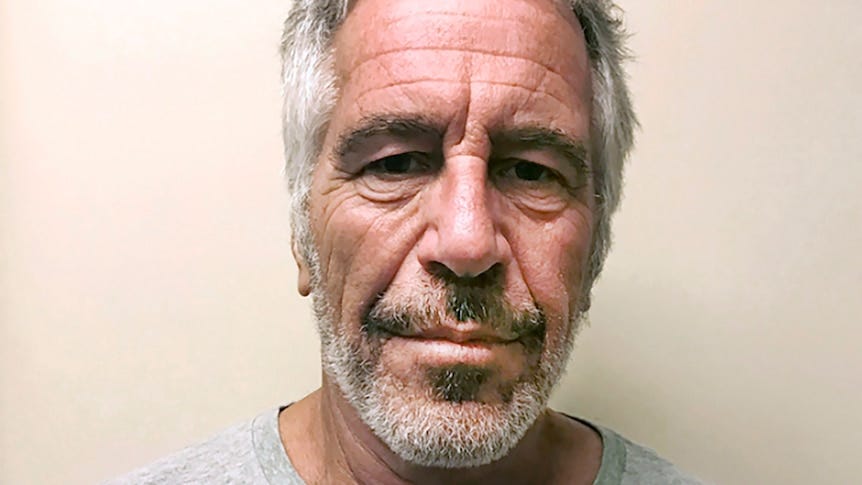
It was very clear that Epstein was targeting and cultivating predominantly Western elites, and his favours ranged from offering money, hospitality, underage girls, and women, as well as hosting dinners and parties for a carefully curated guest list of A-listers.
And he collected videos, written accounts from his participants via texts and emails and photographs the entire time.
Given his targeting of predominantly Western elites, the warm and friendly references to Putin and the Russians throughout the files, Epstein’s motivations are under a different kind of scrutiny, with Polish Prime Minister Donald Tusk ordering an investigation into whether Epstein was a Russian agent.
Don’t forget the report by Daily Beast that when former US Attorney Alexander Acosta was being interviewed to become Trump’s Labour Secretary during the first Administration, he allegedly told them that he had been ‘told’ that Epstein ‘belonged to intelligence’ and that he was to leave the case alone.
Christopher Steele, the former MI6 spy who claimed in the Steele dossier that Russia was attempting to interfere in the 2016 US election, believes Epstein was working for the Russians, and possibly also the Israelis.
Mr Steele said: ‘I would argue this goes right back to the 1970s.
‘My sources in America tell me that the American government, the American intelligence services assessment was that Epstein was recruited as early as the 1970s by Russian organised crime figures in New York and that his information was being used, his operational techniques were being used from that point onwards.
‘One of the interesting aspects of this is that if the American security services knew that this was initially a Russian operation, was a continuing Russian operation over the years, why did they let it run so long? I find that mysterious. I think other intelligence services were also involved. Israelis, almost certainly.
‘The value of the kompromat that was being gathered must have been so great that it was attractive to more than just the Russian intelligence services.’
US v Europe
Click on any main news site in the US, and you’ll have to scroll to find Epstein stories beyond the ding-dong in Congress.
In the UK, it’s the complete opposite. The scandal has long dogged the disgraced Andrew, who was stripped of his title as prince and kicked out of his royal lodgings.
But now it has threatened to ensnare the UK Prime Minister Keir Starmer, who chose one of Epstein’s close friends, former Labour Party grandee Peter Mandelson, as his Ambassador to the United States.
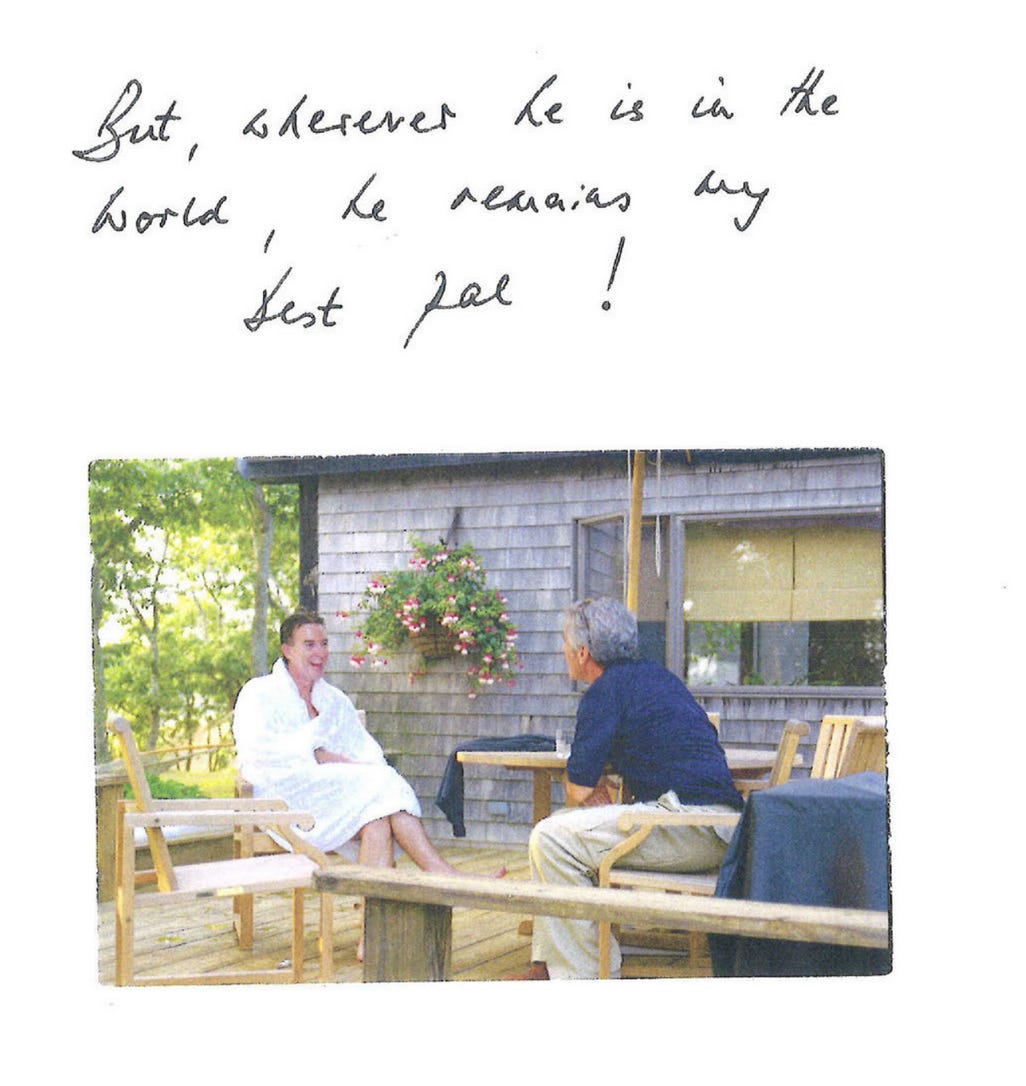
But the politics is not the total UK interest. There are interviews with the victims of Epstein’s abuse, interest in the geopolitical angle and almost daily fresh news breaks on what the emails show, thanks to the doggedness of the British press.
While the core of the Epstein saga will always be his web of sexual abusers and the women and girls they preyed on, every new set of messages released by the US justice department reveals the staggering range of his social network and the relationships he was able to sustain.
Epstein’s emails read like a self-help group for the 0.01 per cent. How did a college dropout from a working-class family in Brooklyn manage to do it?
The picture that emerges is of a man with an extraordinary ability to work out exactly what some of the world’s richest and most powerful people wanted and needed, and provide it to them. Epstein managed to keep doing this even after spending 13 months in jail starting in 2008 for soliciting prostitution from a minor.
He was able to turn those relationships into a source of money, information and further relationships, a form of social Ponzi scheme that he kept going until he was arrested and died in jail in 2019. The needs of his elite group of associates varied.
To satisfy them, Epstein could present himself as a confidant, a broker of introductions, a gateway to a more luxurious lifestyle, or even a banker. According to US prosecutors, he had also built ‘a network of minor victims in multiple states to sexually abuse and exploit’.
Fame, power, sex and crime — the Epstein files are likely to reverberate for a generation, especially given the legion of questions about his abuse of women and the source of his money that remain unanswered. In an era of profound mistrust of elites, modern politics is already being shaped by the power of conspiracy theories. QAnon believers in the US, a loyal part of the Trump coalition, have long claimed to be battling a group of elite paedophiles in government, business and the media.
It turns out that the real conspiracy was being run not by Davos or the UN or from the basement of a pizza restaurant, but from the hyperactive email account of a child sex offender in a townhouse on the Upper East Side. When Epstein’s deployment of wealth, flattery or assistance failed, he would threaten and bully — turning the intimacy he cultivated in people into a fear of exposure that kept the machine running.
Norway rocked
The tiny country of Norway has been most rocked in continental Europe by the release of the files, ensnaring in scandal a former prime minister, the Norwegian head of the World Economic Fourm, a diplomatic duo who were the darlings of the diplomatic world and the UN, as well as the country’s future Queen.
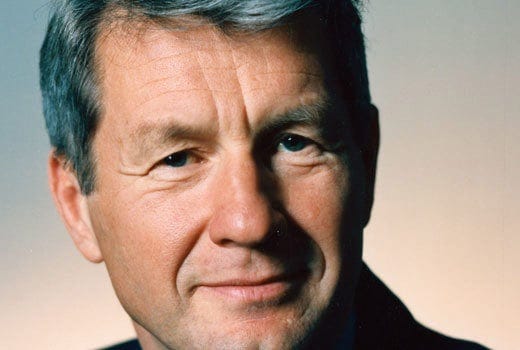
In Norway, the revelation of emails between Norway’s Crown Princess Mette-Marit and Epstein caused initial shockwaves.
Then, on Thursday this week, Norwegian police opened a criminal investigation into former Norwegian Prime Minister Thorbjorn Jagland on suspicion of ‘gross corruption’ linked to gifts, loans and benefits he may have received from Epstein.
…
Jagland’s association with Epstein is linked to his time as secretary-general of the Council of Europe.
His critics at the time alleged he did not do enough to fight corruption and that he was overly friendly towards Russian President Vladimir Putin.
On Thursday this week, Norwegian police said it is investigating whether Jagland received gifts, loans and travel benefits while serving in those positions after emails between him and Epstein emerged in the released documents last Friday.
…
Crown Princess Mette-Marit’s … friendship with Epstein was already known. The latest tranche of documents, however, provides a much clearer picture of the nature of her relationship with him, with hundreds of messages sent over several years.
They included a 2012 email from Mette-Marit to Epstein in which she asked him: ‘Is it inappropriate for a mother to suggest two naked women carrying a surfboard for my I5 yr old sons wallpaper?’
…
In a statement following the documents’ release, the crown princess said she felt ‘deep sympathy and solidarity’ with the girls abused by Epstein.
She said she took responsibility for ‘not having investigated Epstein’s background more thoroughly’ and also expressed regret for ‘having had any contact with Epstein at all. It is simply embarrassing.’
Separately, Mette-Marit’s eldest son, Marius Borg Hoiby, 29, whom she had referred to in her emails to Epstein, appeared in court this week on multiple charges, including rape and domestic violence.
He denied charges of rape and filming people without their consent in court on Wednesday, but admitted to transporting drugs and speeding while driving.
Epstein preyed on women; his ghost haunts powerful men
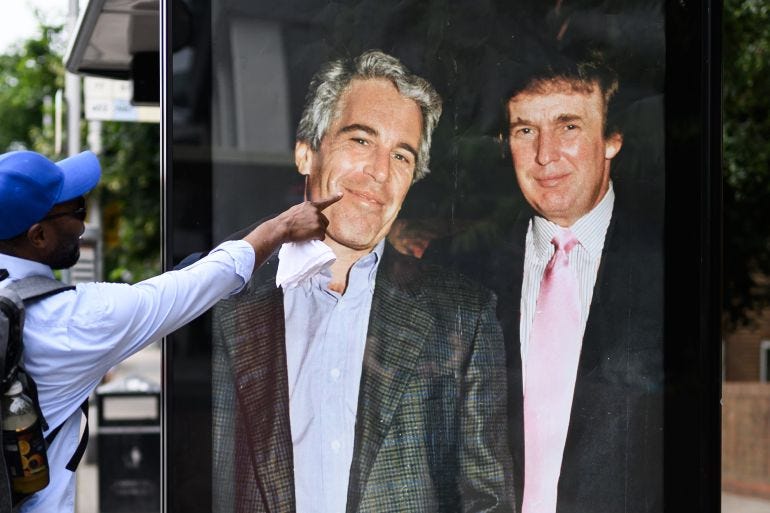
A wonderful column from The Economist.
When he was alive, Jeffrey Epstein relentlessly abused young women. Nowadays his ghost haunts a different group: the grand old men of global capitalism. Even before America’s Justice Department released a vast trove of documents on January 30, the Epstein affair had claimed enough high-profile careers to fill a private jet.
Les Wexner, a retail magnate who employed Epstein as a financial adviser, was the first to go. He resigned from L Brands in 2020. The next year Jes Staley, boss of Barclays, a British bank, and Leon Black, founder of Apollo, an investment firm, were dethroned. Some of the biggest names in commerce, from Bill Gates, co-founder of Microsoft, to Larry Summers, a former Treasury secretary, have been tarnished.
Their ranks will surely grow as lawyers, journalists and social-media addicts pore over Epstein’s emails. On February 4 the chair of Paul Weiss, a white-shoe law firm, joined those resigning from their posts over revelations of their ties to Epstein. What many of the defenestrated have in common, apart from various levels of bad judgment, is membership of an elite at its zenith between the 1980s, when Epstein left Wall Street to work as a fixer and tax adviser, and 2019, when he died in an apparent suicide.
Epstein attracted powerful people because he knew so many of them. Yet this dynamic also created a single point of failure for a singular elite. Meritocracy made them powerful, global markets made them rich — and now Epstein is making them reviled.
The photo was real
The last word goes to one of the world’s bravest women.
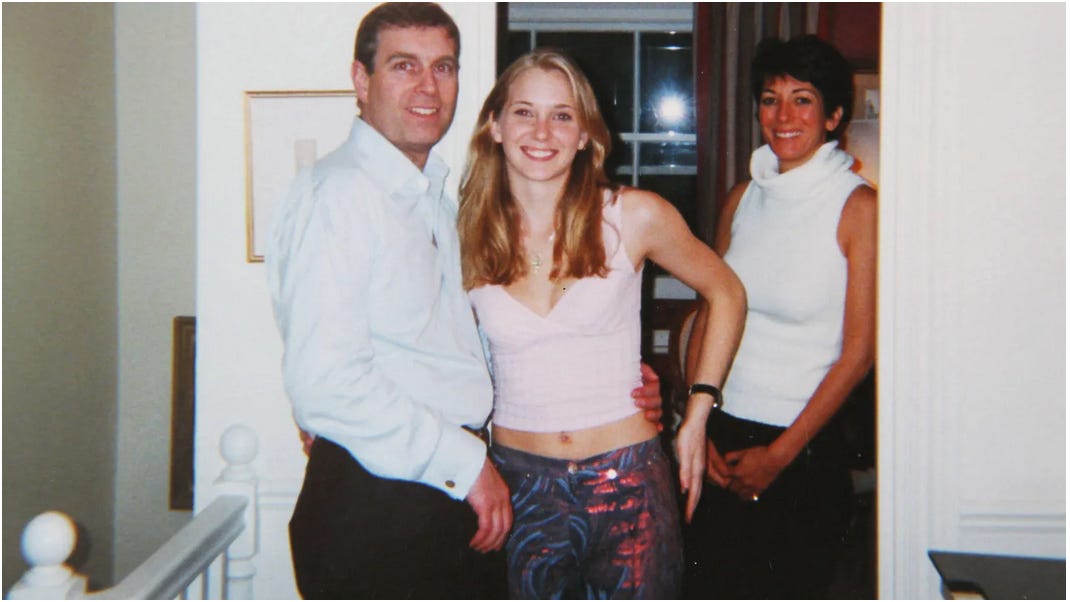
It is tragic that Virginia Guiffre is not alive to see what her courage has achieved. She died by suicide last year after campaigning for justice for years. She took down a prince and helped blow open Epstein’s depravity for all of us to see.
The latest dump of files all but confirms what she told us all along, that the photograph of her in London, with Prince Andrew’s hand around her waist, with Ghislaine Maxwell to the right, was real.
Guiffre had said the photo was taken in London (she was 17) and proved her claim that she was ordered by Maxwell to have sex with Andrew, a Prince and father of two.
Andrew infamously told the BBC’s Newsnight in 2019 that he had never met Giuffre and went full Trump.
‘Nobody can prove whether or not that photograph has been doctored, but I don’t recollect that photograph ever being taken,’ he told Emily Maitlis.
He also claimed he was at a Pizza Express in Woking, Surrey, the night it is claimed he was photographed with Giuffre.
But the Epstein Files show that in an email an account ‘GMax’ sent to ‘J Jep’ in 2015, Maxwell confirms Guiffre did meet Andrew and that a photo was taken — something she too had denied on public record.
Giuffre’s family told CNN’s Jake Tapper on Thursday they wish Giuffre were here to witness this moment and see her impact.
‘I’m very proud of her for everything she was able to accomplish and everything she keeps accomplishing from beyond,’ Giuffre’s brother Sky Roberts said.
Roberts applauded the growing social justice movement coming out of the files release and called for a criminal investigation of Mountbatten-Windsor.
‘I think that his day is coming, and we hope that they open up a criminal investigation on him quite frankly,’ Roberts said.
In an interview with British public broadcaster BBC, Giuffre’s family called the release of the email a ‘vindicating moment.’
‘It shows that not only was she not lying this entire time … she was telling the truth,’ Roberts said.
‘It’s a moment where we’re really proud of our sister. I think that it is a vindicating moment, but we also want to use this as a moment to remind people to believe survivors,’ Roberts added.
And that’s my list for this week.
📻 This week on the ABC’s Global Roaming podcast with Geraldine Doogue and Kylie Morris, we interviewed the Beirut-based freelance journalist Mat Nashed about the (forgotten) war in Sudan and Holly Dagres about the fate of the regime in Iran.
🗞️ And on Wednesday, I reviewed the newspapers for The Globalist with Emma Nelson on Moncole Radio.
Listen on all podcast apps and here.
Please do send me anything that’s caught your eye, I enjoy knowing what you’ve been reading.