

Is NATO back on the table for Ukraine?
US President Donald Trump is making a fresh attempt to broker an end to the war in Ukraine, having failed in his pre-election brag to have it settled in ‘one day, 24 hours,’ or force the imperialist invader, Russian President Vladimir Putin, to get out of the country he illegally tried and failed to seize.
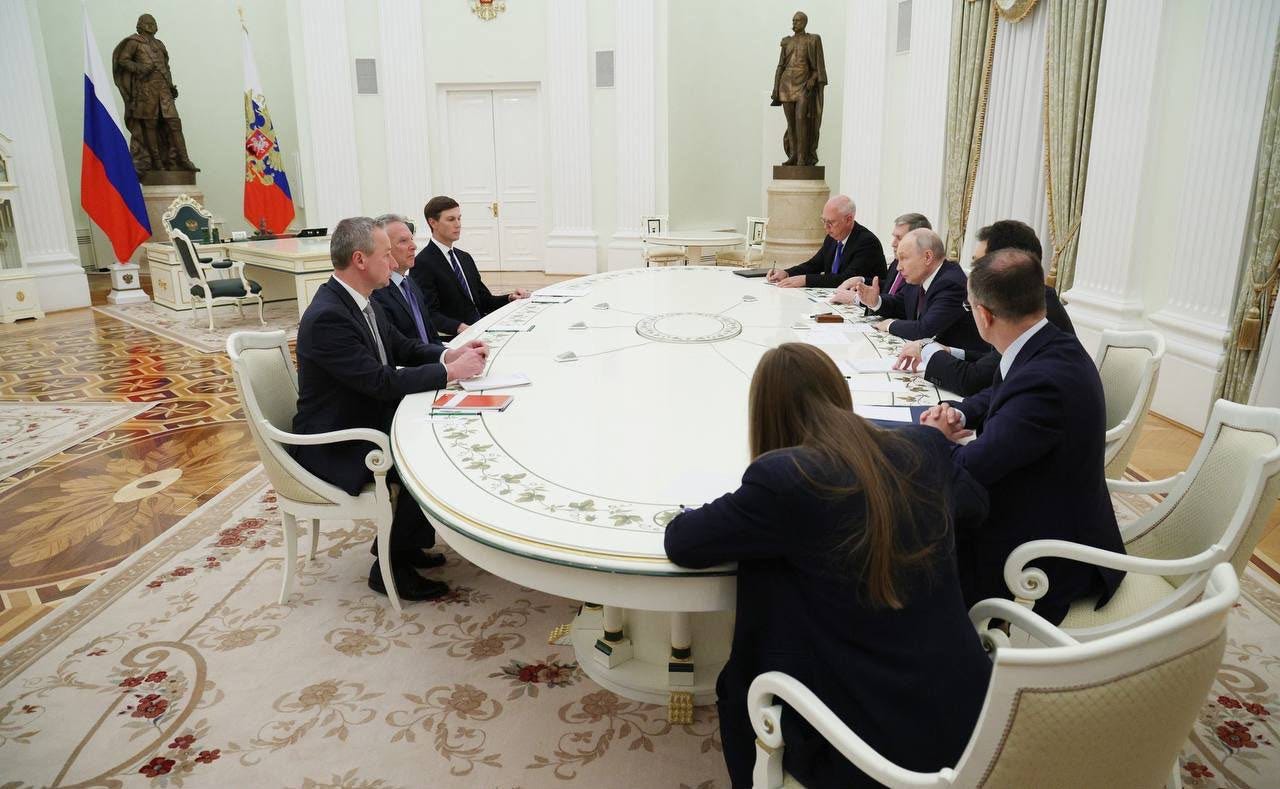
Trump sent his ‘envoys for everywhere’, Jared Kushner and Steve Witkoff, to Abu Dhabi to resume talks with the Russians. Europeans sent a squad of national security advisers who sat on the sidelines. Kushner and Witkoff then flew to Moscow and secured Putin’s permission to allow Europe to have a seat at the negotiating table. How humiliating for Europe. Every government shirking raising their defence capabilities must surely see that this is the cost — capricious powers carving up your security because you were too weak to defend it yourself.
Witkoff and Kushner then flew to Ireland to meet Ukraine’s President Volodymyr Zelensky on the sidelines of the European Political Community meeting, which includes European leaders outside of the European Union, including Britain.
Zelensky said that the Americans had asked if Ukraine would accept NATO membership in exchange for giving Putin the Donbas, the eastern part of Ukraine where the frontline is frozen and remains strategically important in terms of access to the rest of the country.
Ukraine’s NATO membership was a flame largely considered extinguished, particularly as it is not just the US that opposes it but other major European powers, including Germany. And this is not the first time 'land-for-NATO’ has been raised. It was proposed by Stian Jenssen, who served as chief of staff to former NATO Secretary-General Jens Stoltenberg in 2023. And at the time that caused such an uproar in Kyiv, Jenssen was forced to immediately recant.
So would Ukraine accept such a deal today?
What kind of NATO would Ukraine be joining? One that is openly questioned by the White House and faces a long-term withdrawal in support from the United States?
Also, it is worth remembering that Putin has said the entire European security architecture must be part of any deal he agrees. Would he consider accepting Ukraine into NATO on his border, after years of insisting that NATO’s expansion provoked him into his illegal war, or does he now accept the idea because he determines that NATO has been sufficiently weakened by the Americans and does not pose the threat he once felt?
The Ukrainian leader told reporters: ‘The Americans raised a question: “What if Ukraine joins NATO? Would Ukraine withdraw from Donbas?”’
Zelenskyy repeated Kyiv’s position that it was not willing to cede territory to Russia. But he added that if the country reached a comprehensive deal, including security guarantees, a strong and well-funded Ukrainian army and funds to rebuild, he would put the question to the public in a referendum.
‘That is why I believe NATO is back on the agenda. But you have also heard [Russian President Vladimir] Putin’s signals, and this is an extremely difficult conversation.’
Zelenskyy said the prospect of NATO membership in exchange for withdrawing from Donbas has not been raised before.
He also warned about Moscow’s plan to change the continent’s security architecture, saying it could lead to more conflict.
Putin has demanded that NATO pull back its troops from the Russian border, which European Union leaders have strongly criticised.
‘This is dangerous because, in my view, it is precisely things like this that lead to wars or escalations,’ Zelenskyy added.
‘Real security in Europe means the EU and NATO. That’s it. There is no other security in Europe.’
Has Trump killed the Quad?
I’m writing this edition from Manila, after several days in Japan, where Trump will meet the Quad leaders for the first time in his second term.
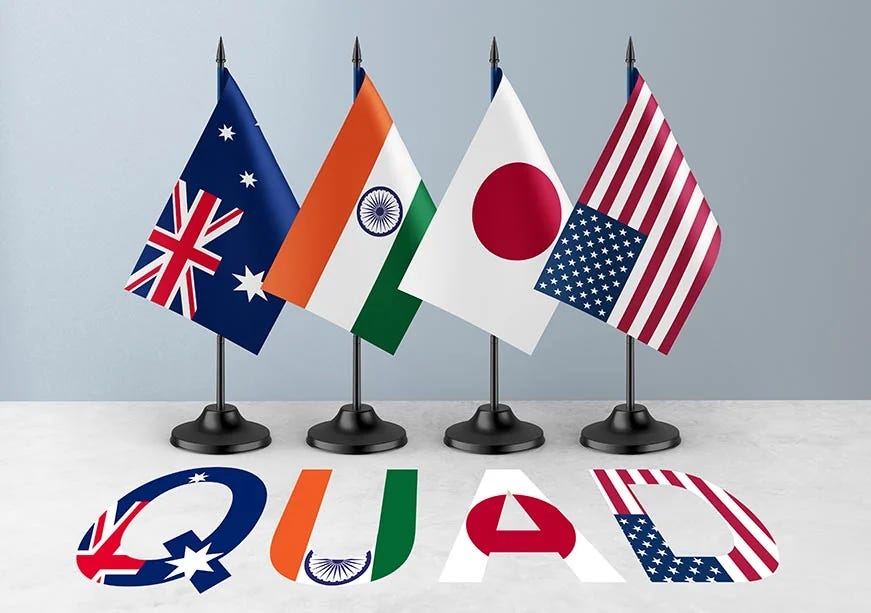
The Quad was formed as a counter-China grouping, but despite US Secretary of State Marco Rubio’s firm commitment to the project, there has been zero momentum at the leader level.

Can a lame-duck President who has undermined collective efforts to counter Chinese dominance resuscitate the grouping?
‘The Quad is on life support,’ said a Washington-based Asian diplomat, granted anonymity due to the sensitivity of their comments. ‘It’s not dead yet, but it needs strong leadership.’
A weakened Quad is good news for China. While the two-decade-old grouping has mostly focused on collaboration in areas such as climate, health and infrastructure development, in recent years it has moved toward a regional security focus through joint Coast Guard and naval exercises. Beijing has labelled the bloc an ‘Indo-Pacific NATO.’
‘The Quad represents an opportunity to collectively confront the Chinese Communist Party, and it’s being missed,’ said retired Rear Admiral Mark Montgomery, former director of operations at US Pacific Command. ‘Trump’s mistreatment of all three countries has prevented any progress in collectively pulling India into more direct participation in confronting Chinese aggression outside the subcontinent.’
The White House defended Trump’s leadership of the bloc.
‘No administration has done more to advance Quad cooperation than the Trump administration,’ said White House spokesperson Olivia Wales.
Trump had a very different approach to the Quad in his first term. While the alliance was created in 2007, it went mostly dormant the year after amid internal squabbling and concerns about provoking Beijing. Trump revived it in 2017 to address growing concerns about China’s increasing economic, diplomatic and military heft in the Indo-Pacific, though he never held a leaders’ summit.
Former President Joe Biden gave significant time to the group, participating in six Quad leader meetings — two of them virtual — during his presidency. He hosted the last meeting of the Quad in Delaware in 2024.
In his second term, Trump has relegated engagement with the Quad to Secretary of State Marco Rubio.
‘Trump doesn’t invest in these partnerships the way Biden did. And consistent with that is the fact that Trump saw no value in having a Quad summit’ until this month, said Arzan Tarapore, former Australian defence liaison to the U.S. during the Obama administration. ‘There’s not that White House pressure to advance the Quad.’
…
Trump hasn’t publicly criticised the Quad, but his lack of interest in the group has spooked its members, even as lower-level work has continued.
…
‘Despite the efforts of Secretary Rubio, ambition has gone way down in the Quad,” said Nisha Biswal, former assistant secretary of State for south and central Asian affairs in the Obama administration, who is still in touch with policymakers in the region. ‘There’s a desire to keep the Quad alive, so that it can become perhaps reprioritised down the road, but not necessarily to put a huge amount of effort and ambition into the Quad structure at the current moment.’
That absence of engagement at the highest levels could derail tentative moves to expand its focus to include cooperation on regional defence as both India and Japan grapple with worsening border tensions with China.
‘If you want the Quad to be more than a talk shop, you need that signal from the boss,’ said Jonathan Czin, a former CIA China analyst, now at the Brookings Institution. ‘Beijing sees anything less than US participation at the head-of-state level as a sign that it’s stepping back from the Quad.’
Japan and Australia’s intelligence ties
As the above article notes, the lack of US leadership has not stopped individual countries within the Quad and from doing more with each other.
At the heart of this are Japan and Australia ties, which have quite honestly reached a breathtaking level of strength. After a week of meetings in Tokyo and Nara, my strong impression is that this is the strongest relationship Australia has that neither side is doing a good enough job of explaining.
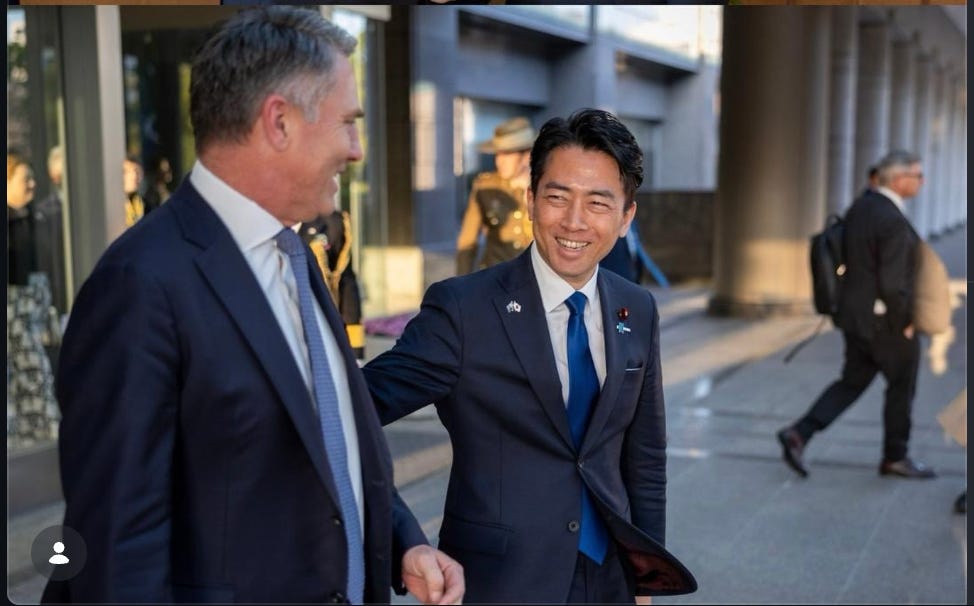
On Friday, I attended the Japan Foundation’s Free and Open Indo-Pacific conference in Nara, where one of the issues discussed was how to take this relationship even further, possibly through a treaty or formal alliance (less likely due to the Japanese constitution). Another avenue being actively explored is whether Australia and Japan can join intelligence forces. There are many challenges to this becoming a reality. But the case for it is compelling, as was explained at the conference by the Australian diplomat Sam Wendfeldt, who wrote a paper on the issue for Japan Foundation and the Sydney-based United States Studies Centre as part of a fellowship with the think tanks.
I read his paper on my flight from Osaka to Manila and recommend it to those of you interested in this policy space.
Australia would stand to gain from expanded bilateral intelligence cooperation with Japan. As highlighted by Ambassador Shingo Yamagami, Japan has a lot to offer as ‘Japan has been standing on the frontline of strategic challenges facing this region over a number of centuries. By comparing notes between us, I think we can mutually benefit.’
Indeed, with elements of shared culture, literature, academic and person-to-person interactions with China over the last two centuries, Japan and the Japanese Intelligence Community have a grasp of the People’s Republic of China and Chinese mentality that would be valuable to the AIC and the broader Australian Government.
More specifically, Australian decision-makers could significantly benefit from access to the collection from Japan’s indigenous SIGINT (signals intelligence) and IMINT (imagery) capability through their own bespoke satellite network.
…
Japan’s commitment to nearly double its indigenous military satellite network from five to nine satellites by fiscal year 2029 ensures that the value of this capability, particularly its ability to detect missile launches, will only increase.
Similarly, Japan has access to a wealth of economic intelligence on the PRC through the approximately 31,000 Japanese businesses operating in China that maintain engagement with the Japanese Government.
…
There are two key benefits for Japan in expanded intelligence cooperation with Australia. The first is access to Australia’s strategic all-source intelligence assessments, where the shared focus with Japan on the PRC’s malign actions in the Indo-Pacific, supported by the robust and highly capable architecture and collection capabilities of the AIC, ensures that these assessments would increase the value and veracity of the intelligence product available to Japanese decision-makers.
Some in the Japanese system may ask whether the information shared by Australia would be detailed enough or of benefit, compared to intelligence already shared by the US Intelligence Community (US IC).
The answer to this question should be apparent in Australia’s retention of a capable and Indo-Pacific-focused sovereign intelligence community, where collection and assessments are likely different.
The second key benefit is support from a similarly sized intelligence community in a fellow parliamentary democracy with structural advantages and parliamentary oversight, as Japan looks to improve its own intelligence apparatus.
Iran hacks blood freezers
The astonishing story of Iranian hackers hijacking French supermarket freezers and turning down the temperature continues.

French investigators are now examining whether hackers took over medical freezers storing blood.
It is a chilling (no-pun-intended!) reminder of how close the frontline of hostile attacks is coming to everyday citizens.
The attack took place on the night of November 1 to 2. Hackers took over the control systems of cold rooms at three regional centres and changed their temperature and defrost settings, the EFS said earlier.
Some units were reset from about minus 30 degrees Celsius to 110 degrees, the French weekly Le Canard enchaîné reported. That was the setting, not the temperature the blood products reached.
Alarms and an on-call technician caught the problem, and the products were moved to other sites or otherwise secured, the EFS said. No samples or blood products were lost. The service has not said when the attack was detected, how long the transfer took, or how the stocks were moved.
The attack came the same night that supermarkets in at least nine European countries, including Belgium and Luxembourg, reported suspected cyberattacks that sent fridge and freezer temperatures soaring.
The Paris prosecutor’s office has not yet linked the attack on the blood service to the supermarket cases and said its investigation is continuing, Agence France-Presse reported.
On October 11 and 12, hackers took control of refrigeration systems at about 700 supermarkets and other businesses across France, letting fridges and freezers warm up. Some stores had to throw out their entire stock of fresh and frozen food, and officials said the attacks caused heavy losses and, at some sites, fires.
A joint report by French intelligence and cybersecurity agencies named Shahid Kaveh, an offensive cyber unit of the Revolutionary Guards, as responsible, and said it worked behind front groups posing as independent hacker collectives.
Albanese flatlining
Michelle Grattan is the unrivalled oracle of Australian politics. One of the greatest compliments I ever had was former prime minister Tony Abbott telling me that the only other person who pestered him as much at odd hours with phone calls to check things was Grattan. The highest praise!

Grattan has an excellent piece on the flatlining state that is the Australian Labor government headed by the gaffe-prone and underperforming Prime Minister Anthony Albanese, who was once lauded as the left’s poster boy by managing to defeat the incumbency curse and win re-election last year. (That title now ostensible belongs to Canada’s Mark Carney.)
Albanese’s leadership is far from over. But this is the closest to an official obituary you will find of his uninspiring and legacy-less time in power. Coming from Grattan, considered the fairest, most restrained but toughest judge of Australian prime ministers, this is no less than devastating.
Albanese was never a charismatic leader, neither a great orator nor an innovative policy thinker. He says people always underestimated him. Perhaps it was more a case of underestimating how far he could rise. He’s a superior tactician, honed in the fires of Labor’s left, with long experience in politics and in government. That gave him a competent skill set in his bid for the prime ministership. Fortuitous circumstances helped with the rest.
In both 2022 and 2025 he benefitted less from having a tailwind than from his opponents facing strong headwinds. Voters wanted to dispatch Scott Morrison. Then they couldn’t stomach Peter Dutton.
Albanese is in his present dire trouble because of multiple factors, some outside his control, others his own fault.
Voters’ black mood reflects in large part the serious financial straits many families are in with the cost-of-living pressures and the real wages slump. Annual real wages are not forecast to begin growing again until towards the end of 2027.
Albanese said in March 2025, ‘Australians have gone through a difficult time over the last five years. […] What we’ve done, as a fact is to introduce cost-of-living relief […] We are turning the corner. Australians now are getting real wage increases five quarters in a row. Interest rates have begun to fall. Inflation has declined to the lower half of the Reserve Bank band.’
Voters see that narrative was quite wrong. They can’t, either, feel much effect from the cost-of-living relief. They’re unimpressed by declarations that the government feels their pain. Now they want to see what plan the government has to get the economy, and their personal financial lives, into a better place. Unfortunately that’s easier said than done.
Albanese has played into people’s perception that the word of politicians can’t be trusted. His now notorious fall off a stage was nothing in itself, but his disputing that he did fall turned it into a damaging symbol. His poor judgement and stubbornness in dealing with the stage incident manifested again in his handling of the aftermath from the Bushie podcast in which he unthinkingly insulted the Japanese PM (although the initial judgement lapse was in agreeing to the podcast in the first place).
Albanese last term got away with breaking his promise not to change the stage three tax cuts. The reworking could be justified in the name of equity, and the breach was a one-off.
But the May budget’s spectacular broken promises, on negative gearing and capital gains tax, crossed a tipping point. It now looked like a pattern. Albanese had been so emphatic during the campaign when questioned about these taxes. His rationalisation, ‘we have changed our position’, came across as frustratingly slick and unconvincing, indeed insulting, as if it had all been a clever con.
The trust problem was worsened by the budget’s messy landing, necessitating concessions. The pluses and minuses of the shock to the housing sector are being hotly debated, with the longer term implications unclear.
The post budget battle has been against a background of continuing high inflation culminating in five interest rate rises this year and increasing pressure on the government over its spending. Labor rejects claims of fiscal profligacy, but acknowledges they must be addressed in the December’s half-yearly budget update, and into 2027.
Not always but typically, voters go through a cycle in their attitude to leaders. Initial positivity fades, replaced by boredom or negativity. Albanese was seen as a safe pair of hands, a benign well-intentioned leader, at a personal level always going on about his rugby league team and his fluffy white dog Toto. But now even many staunch Labor people are “over” him.
He has never excelled at communication. Testing times accentuate his rambling at news conferences, his failure to directly answer difficult questions, a tendency to impatience. In opposition he preached the need for accountability and openness. This week one of his former press secretaries who has returned to journalism called him out for making announcements at news conferences before the reporters are given the relevant material that would allow them to ask informed questions. Control and secrecy are marks of this government.
And that’s my list for this week.
Please do send me anything that’s caught your eye; I enjoy knowing what you’ve been reading.
🇯🇵 This week I have been in Tokyo and Nara, where I attended Japan Foundation’s Nara MIRAI Forum on Advancing the Evolution of a ‘Free and Open Indo-Pacific’.
Long-time readers will remember I first came to Japan as a guest of the foundation as part of the inaugural Indo-Pacific Cooperation Network to study disaster resilience.
I visited four countries to learn about disaster resilience, here's what I learnt

I have just wrapped up a visit to Fiji and Tonga, concluding a six-month study program with the Australian Institute of International Affairs and the Japan Foundation to study disaster resilience in …
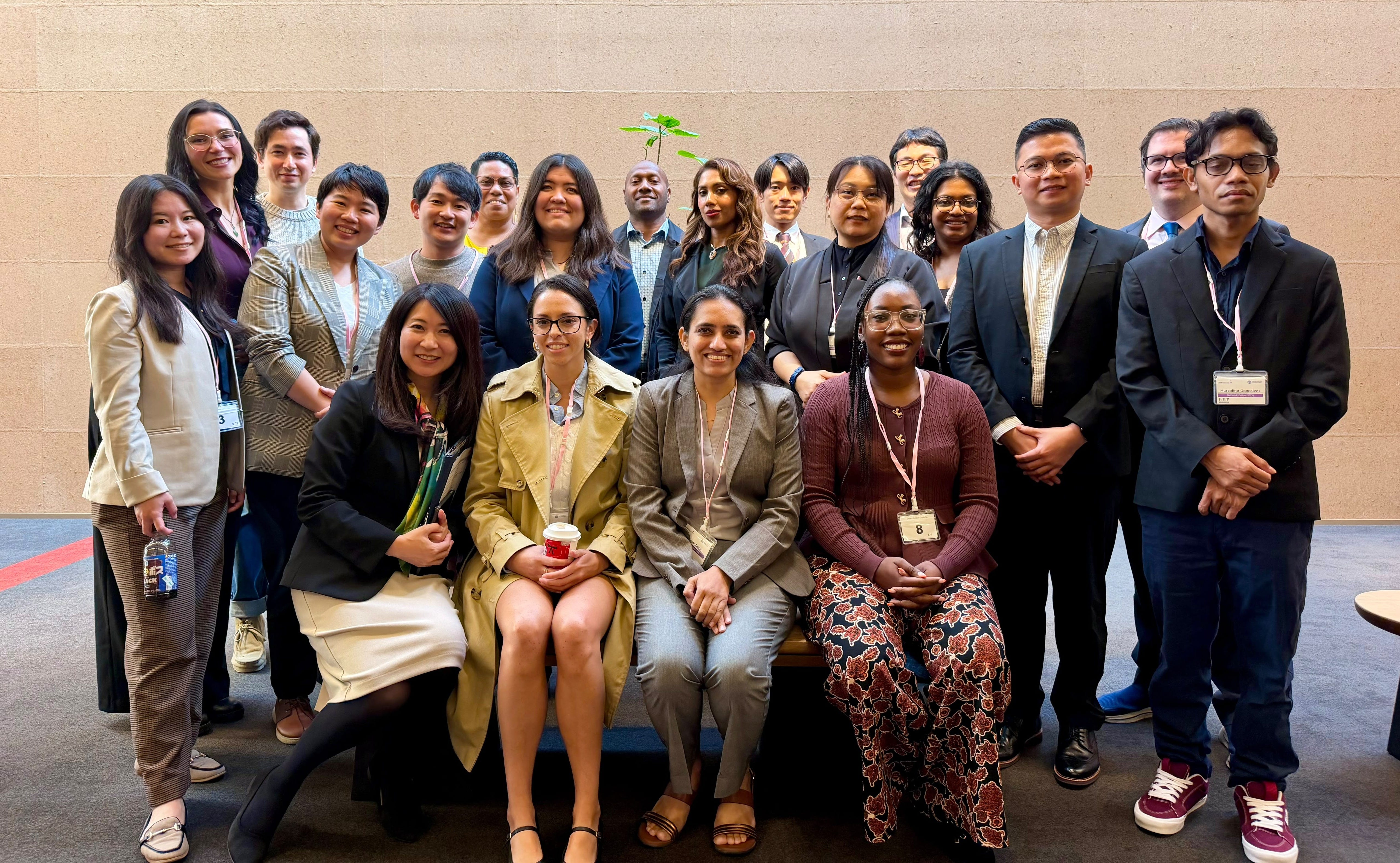
It was great to be reunited with some of those members in Nara.
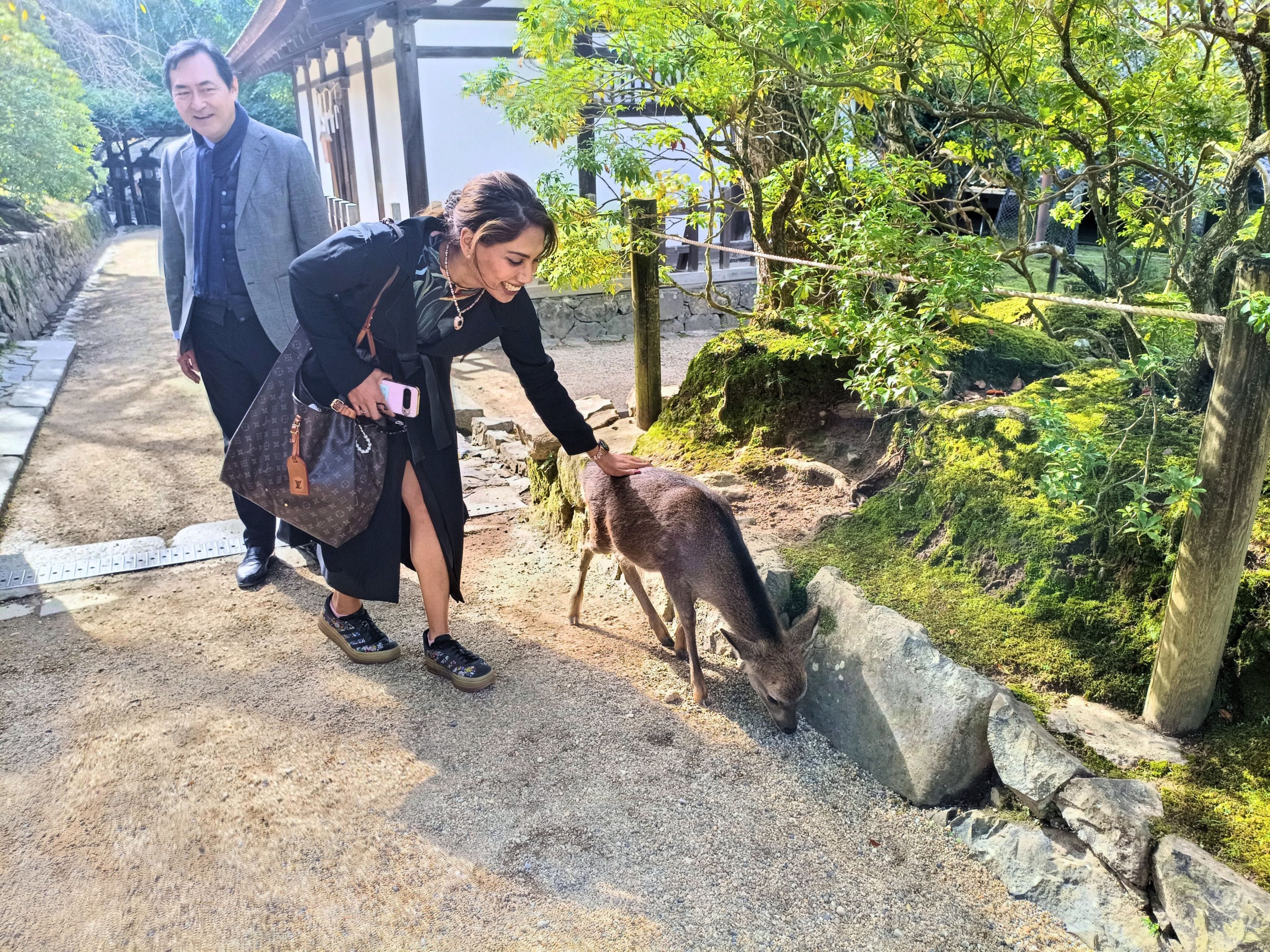
🦌 I was also very excited to meet some of Nara’s famed and friendly deer.
🇵🇭 Next week I am in Manila to moderate at the Manila Dialogue.
🎙️ On the ABC’s Global Roaming, Geraldine Doogue and I discussed the case of the Panguna mine in Papua New Guinea’s Bougainville region with Bougainvillean environmental and human rights advocate Theonila Roka Matbob and Oliver Nobetau from the Lowy Institute