

Kushner’s interview
Jared Kushner’s interview with Mathias Döpfner is definitely one to watch in full.
Kushner, Donald Trump’s son-in-law, is one of the two envoys negotiating a peace deal for Ukraine. But what kind of peace are they trying to broker?
This interview shows Trump & Co.’s deep sympathies with Russia and Vladimir Putin’s mindset.
Kushner flatters Putin for not using nuclear weapons. He agrees that Russia’s war, illegally launched in 2022 and prefaced by nearly a decade of destabilisation as well as the illegal annexation of Crimea and the shooting down of Malaysia Airlines civillian flight MH17 in 2014, is a proxy one being funded by Europe.
He spoke of interest in Russia’s proposal for a new US-Russia relationship, which, of course, is the Kremlin attempting to split the trans-Atlantic alliance.
He reveals Putin does not want a ceasefire first (before a peace agreement is thrashed out) and that Europe was not invited to sit at the table in Abu Dhabi because the Russians were provoked by commentary out of Europe.
Kushner calls Kremlin negotiator Kirill Dmitriev his ‘friend’ and uses Kremlin language throughout, such as ‘root causes’, which is a Russian phrase pretending to claim that NATO enlargement provoked Putin into starting a war he cannot end, five years on.
For Ukraine, for Europe, for the West and for every country that has ever been locked in a border dispute over time, this is all incredibly dangerous.
Because what is the most important part of Kushner’s 70-minute interview is what he does not say or even obliquely acknowledge — that countries cannot invade one another and be allowed to get away with it, that Putin has zero justification for resolving his anxieties about losing former Soviet and Russian empire colonies to the European beacon of democracy and NATO’s protection through military invasion against a sovereign country.
If the peace being brokered is based not on this vital premise, but on an acceptance that Russian grievance is legitimate cause for grabbing another’s land, it is not just unjust and an outrage, but sets a precedent for more conflict.
The war is spilling over
With the frontline stuck, both Russia and Ukraine are taking their war outside their borders as both sides take more risks.
Russian drones have long violated NATO airspace, but in recent days the intensity has ramped up, with Russia firing cruise missiles into Poland.
In the latest astonishing attack, Ukraine capsized a Russian logistics ship docked in Libya with drones. Two Libyan naval officers were killed. Ukraine has had to subsequently reassure Libya that it respects its sovereignty and that Libyans are not its target.

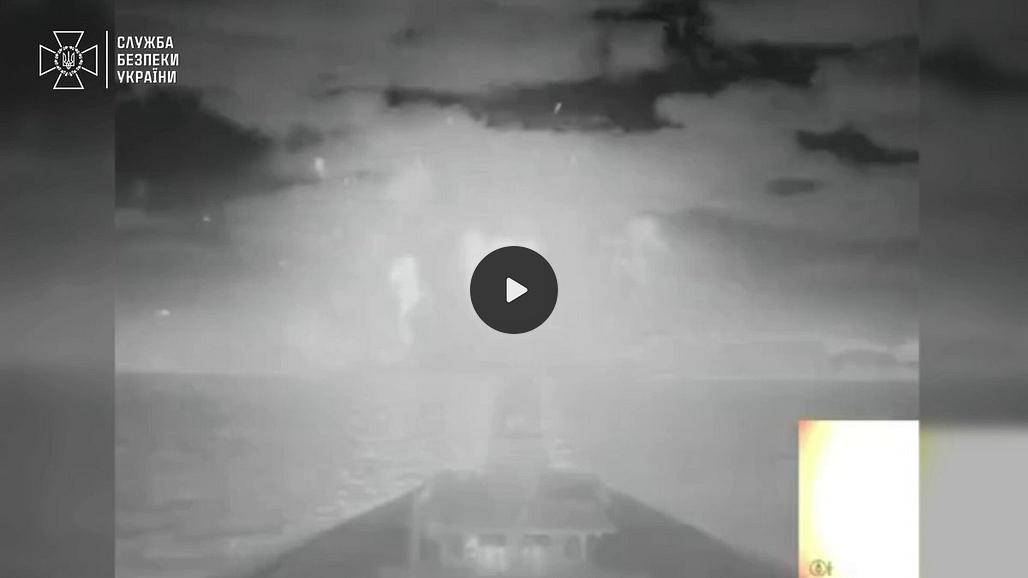
There is a sense that this war is spreading dangerously and uncontrollably.
The sinking follows a similar incident in the Baltic last week, which crippled a Russian cargo ship, and previous Ukrainian attacks on oil tankers and Russian navy ships and bases in the Black Sea region. Last week, Russia was blamed for a missile and drone strike on Nato member Poland, which Donald Tusk, the Polish prime minister, claimed was intentional, and for deliberately targeting western diplomatic compounds in Kyiv. While Moscow’s murderous winter bombing of Ukrainian civilians and energy infrastructure continues apace, provocative and disruptive Russian hybrid warfare operations across all of Europe, including sabotage, arson and cyber-attacks, are becoming daily occurrences.
After almost five years of continual fighting, the Ukraine war has become deadeningly familiar to those looking on from the outside who, unlike tens of thousands of Ukrainian citizens and more than 400,000 hapless Russian soldiers, are not already dead. The lamentable failure of numerous, mostly half-hearted, half-baked US efforts to negotiate a peaceful way out of the morass is no longer news. Partly because it’s so difficult and so protracted, ending the war somehow appears to many Europeans and Americans to have become less urgent, even less of a priority. That’s a dangerous mistake. The huge human, economic and geopolitical damage it has already done is nothing as to what could follow if the conflict goes truly global.
This latest, alarming string of attacks from the Mediterranean to eastern Europe to the high north must finally vanquish an enervating, collective western complacency that simultaneously condemns Russian aggression, and pledges increased financial and materiel support for Kyiv, while in effect tolerating the continuation, intensification and widening of what could become an existential conflict for all concerned.
Spain’s youth back the far-right
Spain’s socialist Prime Minister Pedro Sanchez faces voters on Sunday amid a very familiar tale across Western politics — the rise of the far-right.
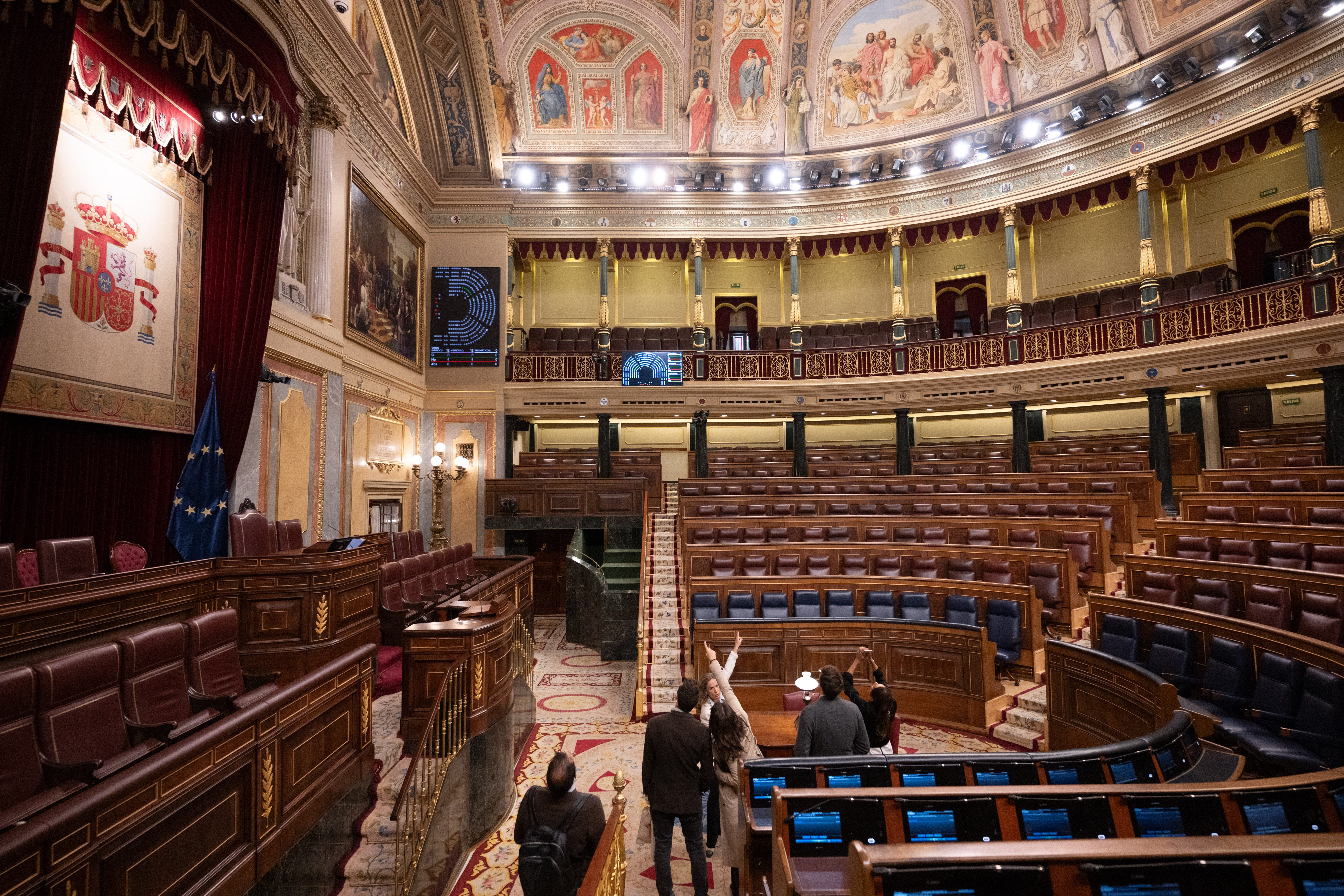
The driving issues - housing, the economy and immigration - are also a cut-and-paste.
And Spain is also replicating another trend seen in the UK and US — a fascination with the far-right amongst younger voters, particularly men, meaning women’s safety has become a political football.
…for the first time since the end of Francisco Franco’s fascist government in 1975, the far right could join the country’s government.
The centre-right People’s Party, currently leading in the polls at 31.5 per cent, has not ruled out an alliance with Vox.
One reason for this rise in support is because ‘this is a generation of young people facing significant economic challenges who have never experienced the dictatorship’, explained Maria Elisa Alonso, a political scientist and lecturer-researcher at the Université de Lorraine specialising in Spain.
And because of this, they are drawn to the ‘narrative that blames immigrants for all the country’s problems’.
…
Notably, Vox has announced plans to push back against protections for women in Spain. For example, the party wants to dismantle a 2004 law meant to protect women who are victims of violence. The party also wants to cut funding for feminist organisations that support victims.
Vox also wants to roll back LGBT rights, challenging a person’s ability to change their gender based on self-determination, which was established in a 2023 law.
In 2023, more than half of men between 16 and 24 years old said they felt that equality policies had ‘gone too far’ and were now discriminating against them.
‘Some young men see women as a threat to them and want to return to Spanish society as it was fifty years ago,’ Alonso said.
Europe’s complicated feelings about Breturn
Andy Burnham has kickstarted a national debate about Breturning to the EU, ten years after the divisive and polarising EU referendum that split the country.
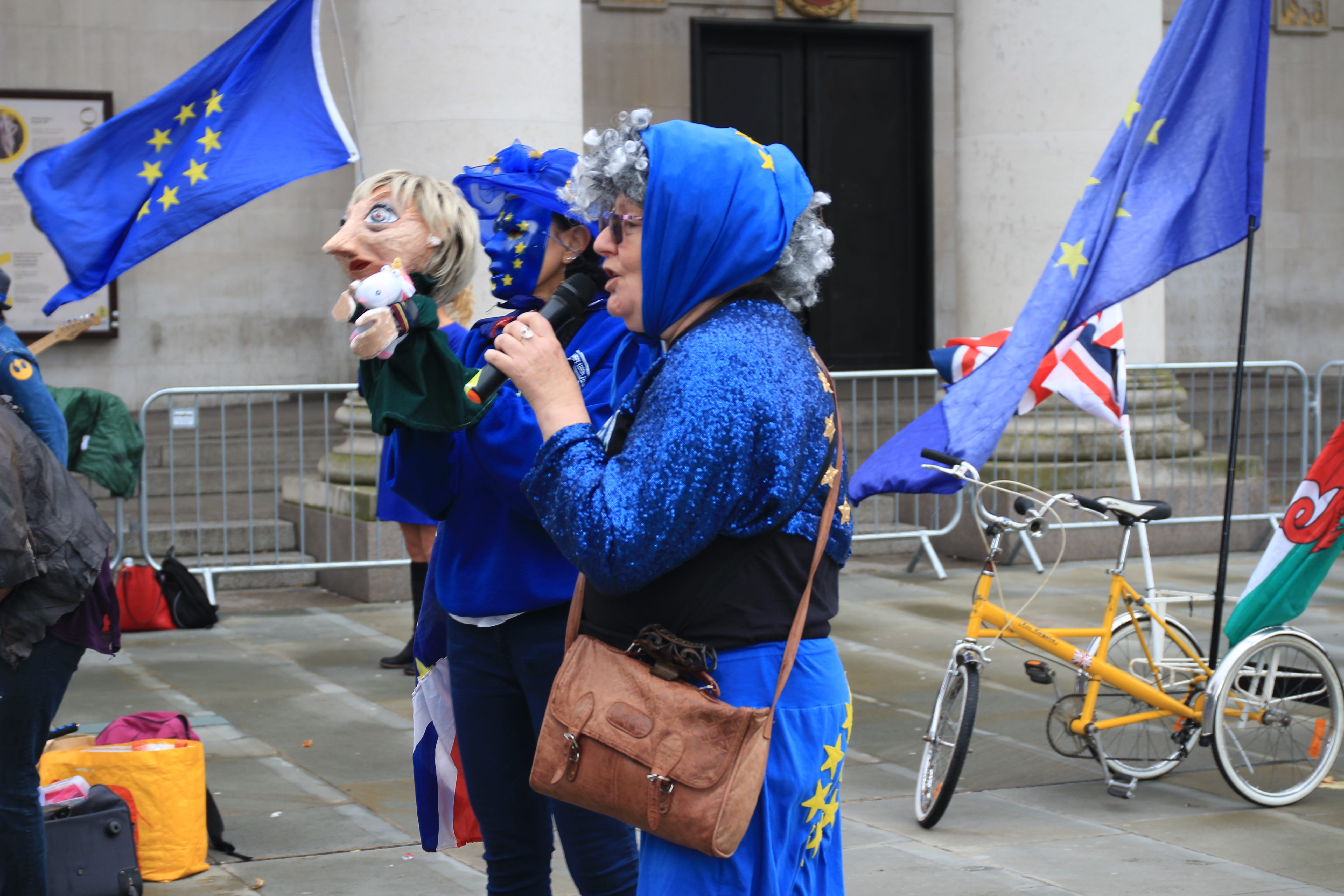
How far this goes is anyone’s guess, and while Burnham is getting a lot of space right now to take some risks and do things differently, it is incredibly high-risk.
Burnham was not in Westminster for the EU debate, and it has been disturbingly traumatic seeing the Brexit-era faces and voices return to screens and airwaves since he began the debate, following a summit with the EU where the two sides announced some closer alignment on trade. I have been surprised how often I hear Remainer left-wing voices privately confide that they are not even sure the Europe they left is the one they would be going back into at any rate, because of the increasingly hardened stance towards migration that the Commission and member states are taking.
What is less studied in the UK is how the Europeans feel about it all. It is my sense that Europe has largely moved on from the UK. When I am attending security conferences in Europe, Brexit is not a major topic of discussion and gone are the days when the British representative from HMG was the heavy hitter in the room.
That is not to say Britain is not missed. It is. Particularly in providing pragmatic leadership on budgetary issues, something exposed again this week when the EU leaders cancelled a summit a day early because they cannot agree on their long-term funding arrangements.
But it’s a big leap from there to Rejoin, something former FT Editor Lionel Barber captures after his trip to Brussels this week.
The world has moved on since Brexit, ‘UK is not on our radar’:
This may sound mildly shocking; but there are other more pressing priorities. The war in Ukraine, rampant populism, the prospect of Marine Le Pen becoming president of France in next year’s election, US disengagement in Europe; the cost of living crisis, the stasis in the EU itself. Europe is curiously detached and unsympathetic to any political risk Burnham has taken. Bottom line: if he is serious, why does he not act now?
Burnham’s Britain is pursuing a moving target:
There is huge uncertainty about the future of the EU: what shape, what form. Not so much in light of pending enlargement (Montenegro, Albania and Moldova) or what status Ukraine. None of these countries is going to join anytime soon. But because a Le Pen presidency would trigger an immediate political crisis in the EU. She wants a Thatcher-like cut in French budget contributions and a repatriation of powers to Paris. Add this year’s Spanish election (lurch right), Italian elections next year (can Meloni-led coalition survive far right challenge?) and German elections in 2028. Bottom line: a serious changing of the guard in Europe is imminent.

Australian court ruling questions undercover reporting
This is an extraordinary case in Australia with major implications for freedom of speech.
Animal activists snuck into an abattoir and filmed horrific abuse of animals. When they informed the regulator, the federal government department of agriculture, they received an automated response.
But when they sent that and the footage to a news network to broadcast, the matter exploded into a court case that eventually ruled that the copyright of the video captured belonged to the abattoir. The High Court overturned that ruling but ordered the activists to destroy their footage.
The Saturday Paper used a copy downloaded by a UK activist before the court ruling and has published the footage on its website.
Central to court deliberations was the question of whether illegally obtained footage can be published. This has profound implications for journalism, and the filmmakers were joined in their legal submissions by the Human Rights Law Centre and the Alliance for Journalists’ Freedom.
According to federal Greens senator Vanessa Bleyer, the High Court ruling ‘effectively says that the public doesn’t have a right to know about how non-human animals are treated inside slaughterhouses’.
Bleyer worked as the case’s instructing solicitor from 2024, when FTP sent an extract with a cruelty complaint to the federal Department of Agriculture, Fisheries and Forestry.
When DAFF failed to respond beyond an automated receipt, FTP published extracts and forwarded one to Channel Seven’s Border News. Preparing to air, Seven received a legal threat from the abattoir, and omitted the footage from its report. FTP then published it on its website but was served with an injunction within three hours.
It soon emerged the abattoir had been tipped off by DAFF, which later admitted it had given McDonald-Eckersall’s personal details to the abattoir. A DAFF review found this ‘was likely a breach’ of the Privacy Act.
McDonald-Eckersall says DAFF ‘passed on my information to the very people who I was reporting, exposing me to potential repercussions’. This had ‘significant effect on my mental health … I experienced stress and anxiety.’
DAFF’s breach enabled the abattoir to ‘lawyer-up’ in advance of media exposure, she says. ‘The breach directly resulted in litigation against us.’
And that’s my list for this week.
Please do send me anything that’s caught your eye; I enjoy knowing what you’ve been reading.
📻 For my media, I joined Andrew Mueller for The Monocle Daily to discuss the EU budget barney, Australia’s security treaty with the Solomon Islands and more.
🎙️ On the ABC’s Global Roaming, Geraldine Doogue and I discussed Serbia’s student uprising with Miloš Teodorović, director of Radio Free Europe's Balkan Service and had far too much fun discussing the new James Bond with Professor Jeremy Black, author and board member of the International Journal of James Bond Studies.