

Prince Harry leads condemnation of Trump
I think we will come to observe Davos week as the one when Trump jumped the shark.
The US President retreated on this threat to acquire Greenland, gave a rambling, and quite frankly, dull, speech to the World Economic Forum and wrapped up his Euro jaunt with a stab at Allied war dead.
Yes, really.
Trump, for weeks, has been trying to justify his threatened hostile takeover of Greenland by complaining about NATO to Americans, questioning whether Allies would ever come to the United States’ aid.
It is a sick attack. Article 5, the one-for-all and all-for-one mutual defence clause, has only ever been activated once. By the US after 9/11. And NATO and non-NATO allies, including Australia, rushed to fight in a faraway war that the US abandoned in a disgraceful fashion and left the country for the Taliban to saunter back into and resume control.
After weeks of this going unaddressed, Mark Rutte, the NATO Secretary-General, who, as the former prime minister of the Netherlands, deployed his country’s troops to Afghanistan for the US, finally corrected Trump to his face on camera.
Trump subsequently went even further in an interview with Fox News.
‘We’ve never needed them. They’ll say they sent some troops to Afghanistan… and they did, they stayed a little back, a little off the frontlines,’ Trump said.
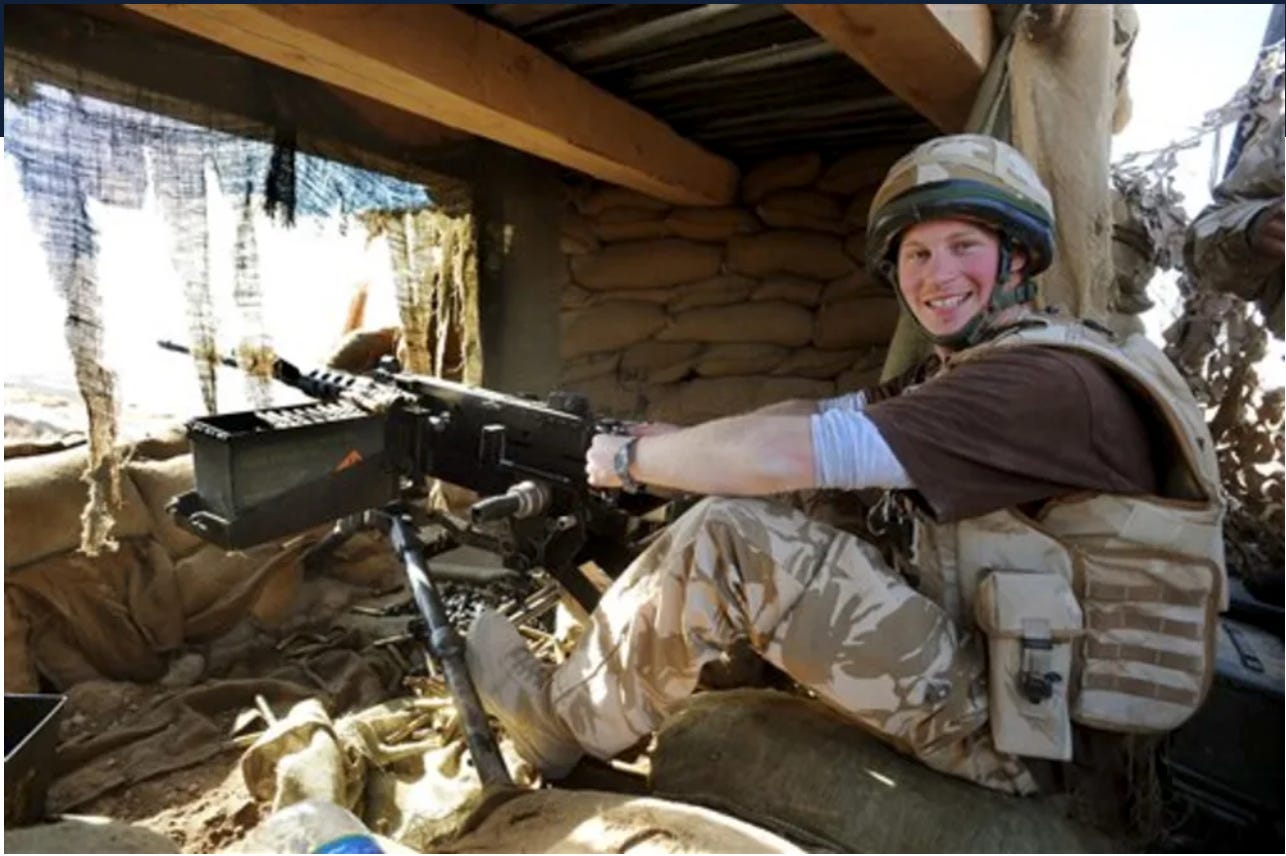
Prince Harry (whose redemption is surely taking place in front of our eyes) has led Britain’s condemnation, and the UK Prime Minister Keir Starmer, who has invested a lot in developing a good relationship with Trump, didn’t hold back either.
‘I served there. I made lifelong friends there. And I lost friends there,’ Prince Harry, who was twice deployed to the country, said on Friday as he paid tribute to Nato troops killed in the conflict, including 457 UK service personnel.
The prince was reacting to controversial comments made by Donald Trump in an interview on Thursday.
Trump’s words have drawn condemnation from international allies, with Prime Minister Sir Keir Starmer calling them ‘insulting and frankly appalling’.
The UK and other nations joined the US in Afghanistan after Nato’s collective security clause was invoked following the 9/11 attacks.
Prince Harry said: ‘In 2001, Nato invoked Article 5 for the first - and only - time in history. It meant that every allied nation was obliged to stand with the United States in Afghanistan, in pursuit of our shared security. Allies answered that call.’
He added: ‘Thousands of lives were changed forever. Mothers and fathers buried sons and daughters. Children were left without a parent. Families are left carrying the cost.
‘Those sacrifices deserve to be spoken about truthfully and with respect, as we all remain united and loyal to the defence of diplomacy and peace.’
Europe has leverage, but not the tools
This is a good piece assessing the washup from Trump’s retreat on Greenland and what it now means for Europe and NATO.
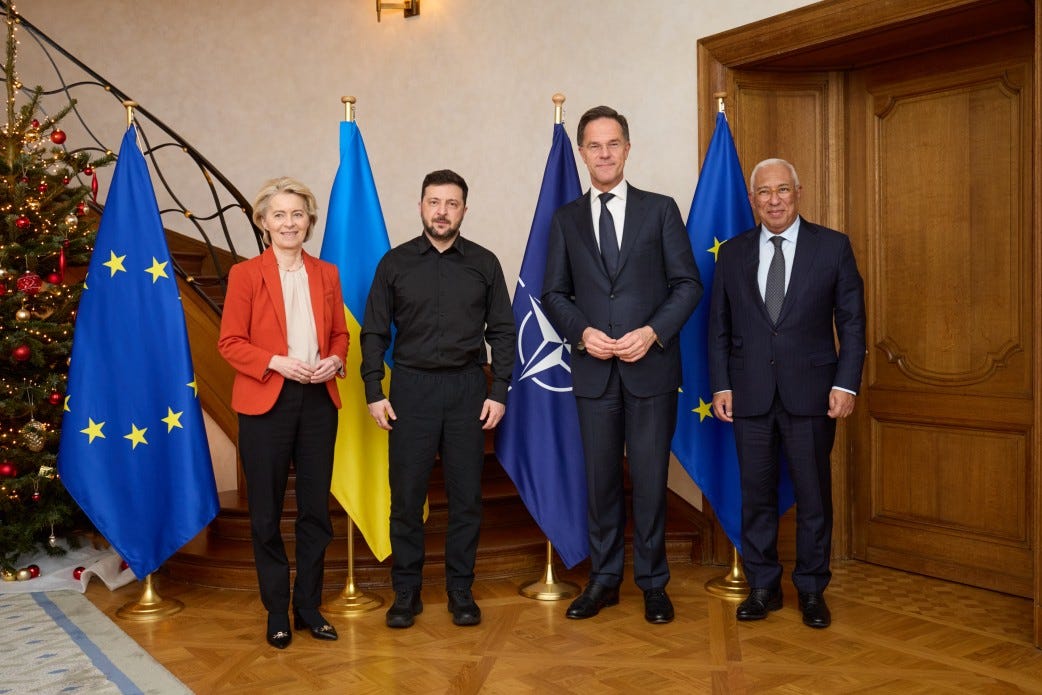
That trust has been shaken irreparably. Even if tensions ease, the episode leaves a mark. An alliance can survive repeated shocks. But each one raises the threshold to restore confidence.
Europeans did not have to make a decision this week about retaliation. But they must use this episode to reflect on the fact that fragmentation carries its own costs. When Europe cannot speak clearly about its red lines, it invites testing. Pressure does not need to succeed to be repeated. It only needs to go unanswered.
Ultimately, the deeper lesson of Greenland and the many humiliations of the past year is that Europe’s vulnerability lies in its dependence on the United States. Economic tools can raise costs at the margin; they cannot substitute for power. European leaders face a more consequential task: building the foundations of autonomy that were allowed to erode. That means investing seriously in military capability, integrating defence planning and procurement, diversifying trade partners, and reducing exposure in critical economic domains, from energy and technology to finance and supply chains. There can be no return to the comforts of asymmetric reliance, dressed up as partnership.
Greenland should be treated as a precedent, not an aberration. The immediate threat has receded, but the underlying reality remains: Europe is dealing with an ally willing to test boundaries, probe weakness, and turn dependence into leverage. In response, Europe must pair greater unity and clarity about its red lines with sustained efforts to reduce the vulnerabilities that make coercion effective in the first place.
Europe’s populists now have a Trump problem
It is somewhat ironic. MAGA has vowed to promote lookalike far-right populist movements across Europe, but those very parties now have a giant electoral problem called Donald J Trump.
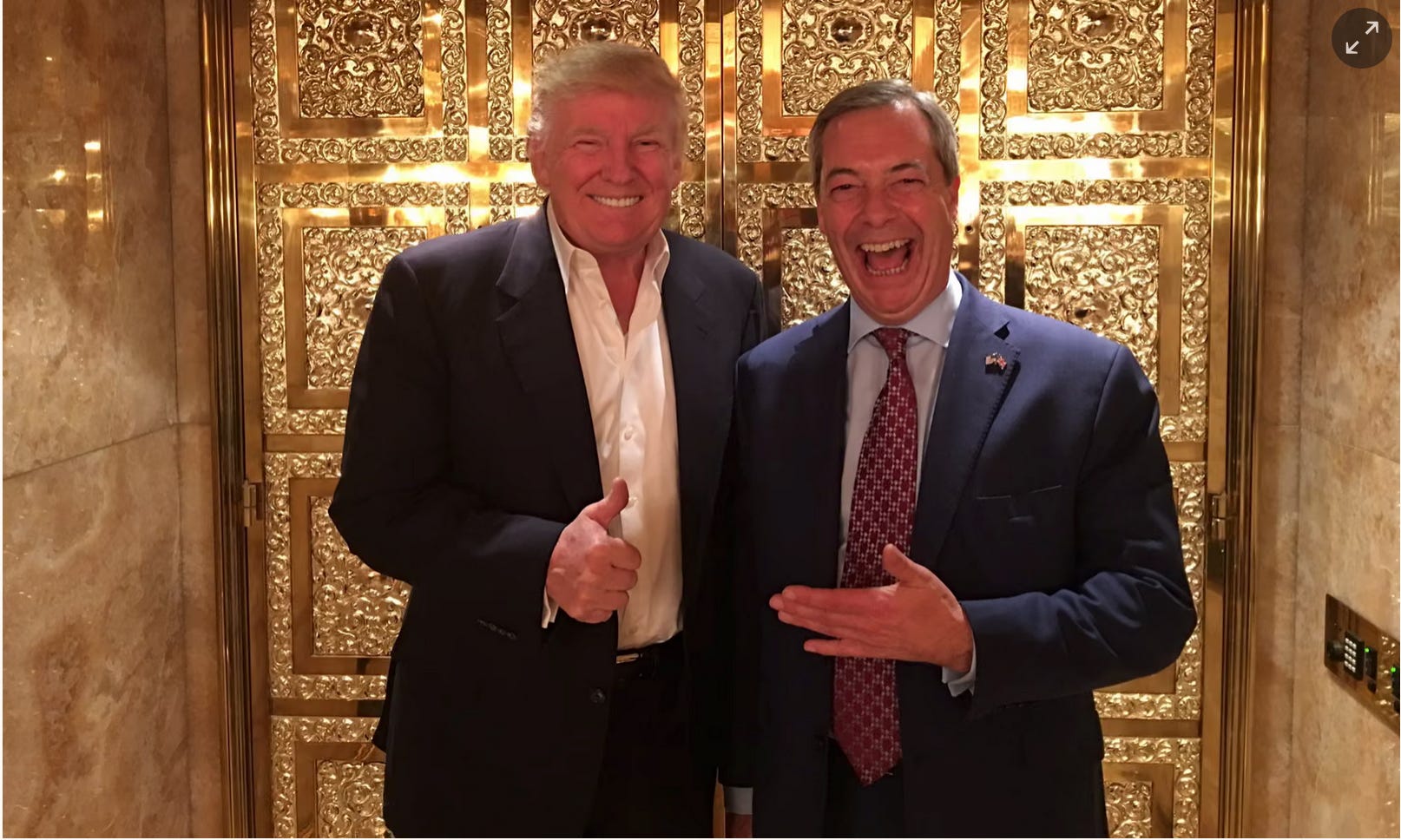
Reform in the UK, National Rally in France, and the AfD in Germany are all struggling to find their lines in the wake of Trump’s threatened assault on a NATO ally.
While we await the hard data in terms of polling, this is a gift of an opportunity for mainstream parties and one they should not waste.
The reaction among Trump’s European allies has not been uniform. Hungarian Prime Minister Viktor Orban, Czechia’s new populist leader, Andrej Babis, and Matteo Salvini, head of the right-wing Lega Nord party, avoided criticising Trump and urged restraint.
Mateusz Morawiecki, Poland’s former prime minister, lent credence to Trump’s argument about the supposed Russian and Chinese threat to Greenland.
But the response from nationalists — and possible future leaders — in Europe’s three leading powers shows the ingrained contradictions in their alliance with Trump.
In 2025, a number of right-wing Trump-friendly parties, seen as clear favourites to win the next elections, have been defeated at the polls — primarily in Canada and Australia — showing just how toxic an alliance with the US president can be.
‘This shows how contradictory it is to support Trump’s policy while pretending to be protecting your country’s national sovereignty,’ says Sebastien Maillard, special advisor at the Institut Jacques Delors.
‘Supporting the national interests of your country and supporting Trump’s America First policy just isn’t sustainable,’ he told the Kyiv Independent.
MAGA is a war on bureaucracy, not democracy, says 2025 author
Project 2025 is the radical blueprint for Trump’s second term. It was so controversial, Trump distanced himself from it as candidate but went on to adopt it as President (just as Kamala Harris warned).
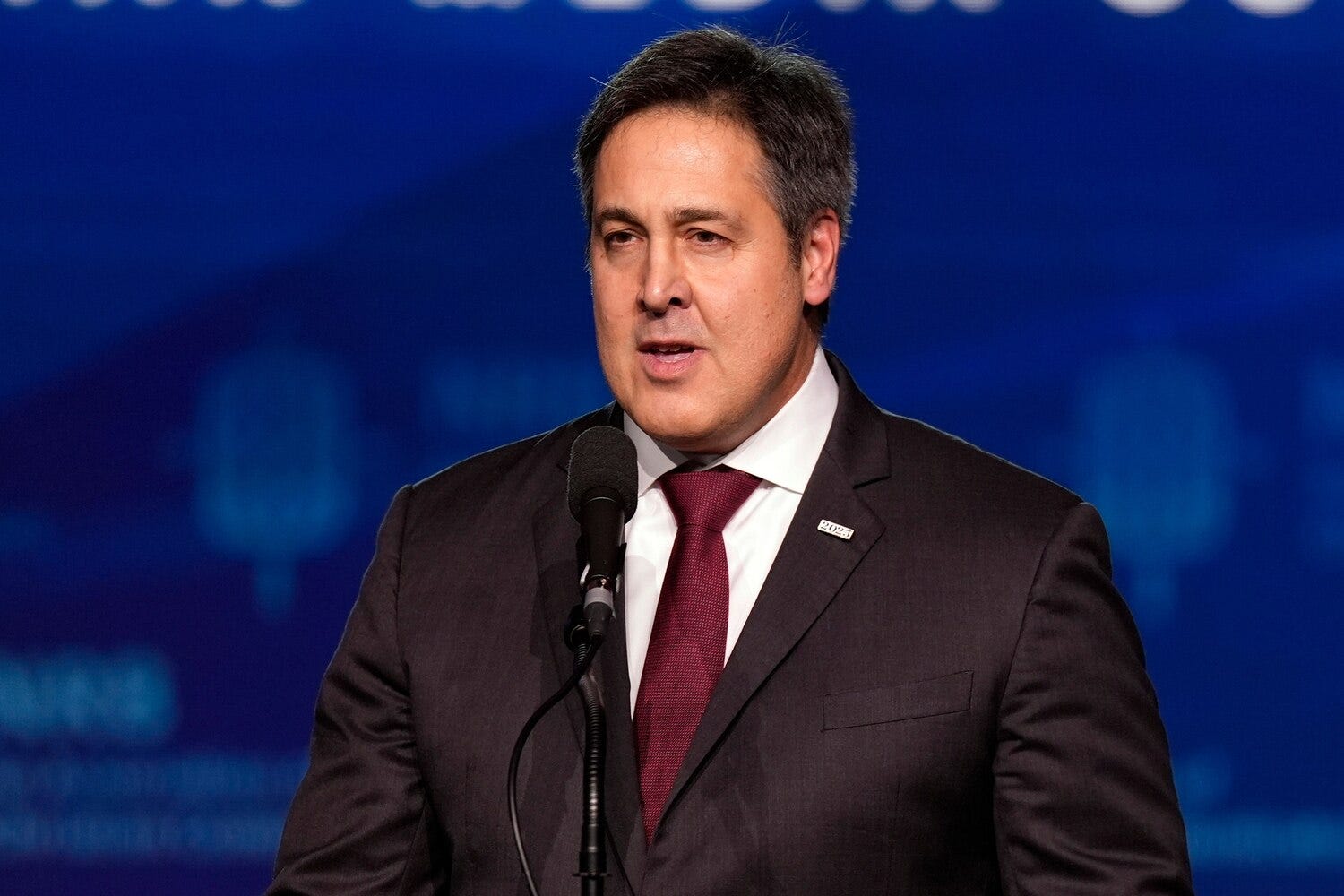
The man who authored the document is Paul Dans. He grew up in a family of ‘Kennedy Democrats’ but became turned off by the Democrats’ liberalism and jaded by globalisation, which tore away industry.
Dans wrote Project 2025 at the right-wing think tank Heritage Foundation. He left in unexplained circumstances.
He is now challenging Republican Senator Lindsey Graham for his Senate spot, arguing that Graham is too much of an old-school Republican.
He argues Trump has erred in attacking the MAGA base over Epstein, and needs a second DOGE, claiming the 2025 agenda is not about attacking democracy but about dismantling bureaucracy.
He also sees himself as standing up for Maga principles at a time when Trump seems to be watering them down.
The White House’s bid to persuade Republicans in Congress not to vote for releasing files relating to the late convicted sex offender Jeffrey Epstein was a huge blow to Maga, Dans says.
‘To see America First warriors being savaged for arguing for publication was very dispiriting,’ he adds, referring to Maga supporters who incurred Trump’s wrath by calling for the files’ release.
The most prominent was Representative Marjorie Taylor Greene, a one-time Trump diehard who has had a bitter fallout with him over Epstein.
‘She was fighting for the president in his darkest moments [before his re-election],’ says Dans. ‘It’s a gross mistake to pillory her and not to listen.’
As the White House faces pressure over what Democrats dub the ‘affordability crisis’, Dans concedes that the midterm elections in November will be a challenge for Republicans.
‘People are not getting behind the big jingoistic flyover. Yes, they saw a miraculous extraction in Venezuela, but that’s as good as it’s going to get.’
‘No one has ever won an election by alienating their base and that’s the problem here,’ he adds. In his view, Project 2025 stopped the internal warring.
‘That’s what always divided the conservative movement, and you see that breaking out again today. They’re right back at it with fisticuffs.’
The Ottawa Reuters chief turned Uber driver
This is a tragic and touching piece, but so beautifully written that I cannot think he will be driving Ubers for much longer.
Steve Scherer was Ottawa bureau chief and, before that, a roving correspondent for Reuters. He got laid off as part of the carnage that is the mainstream media industry.
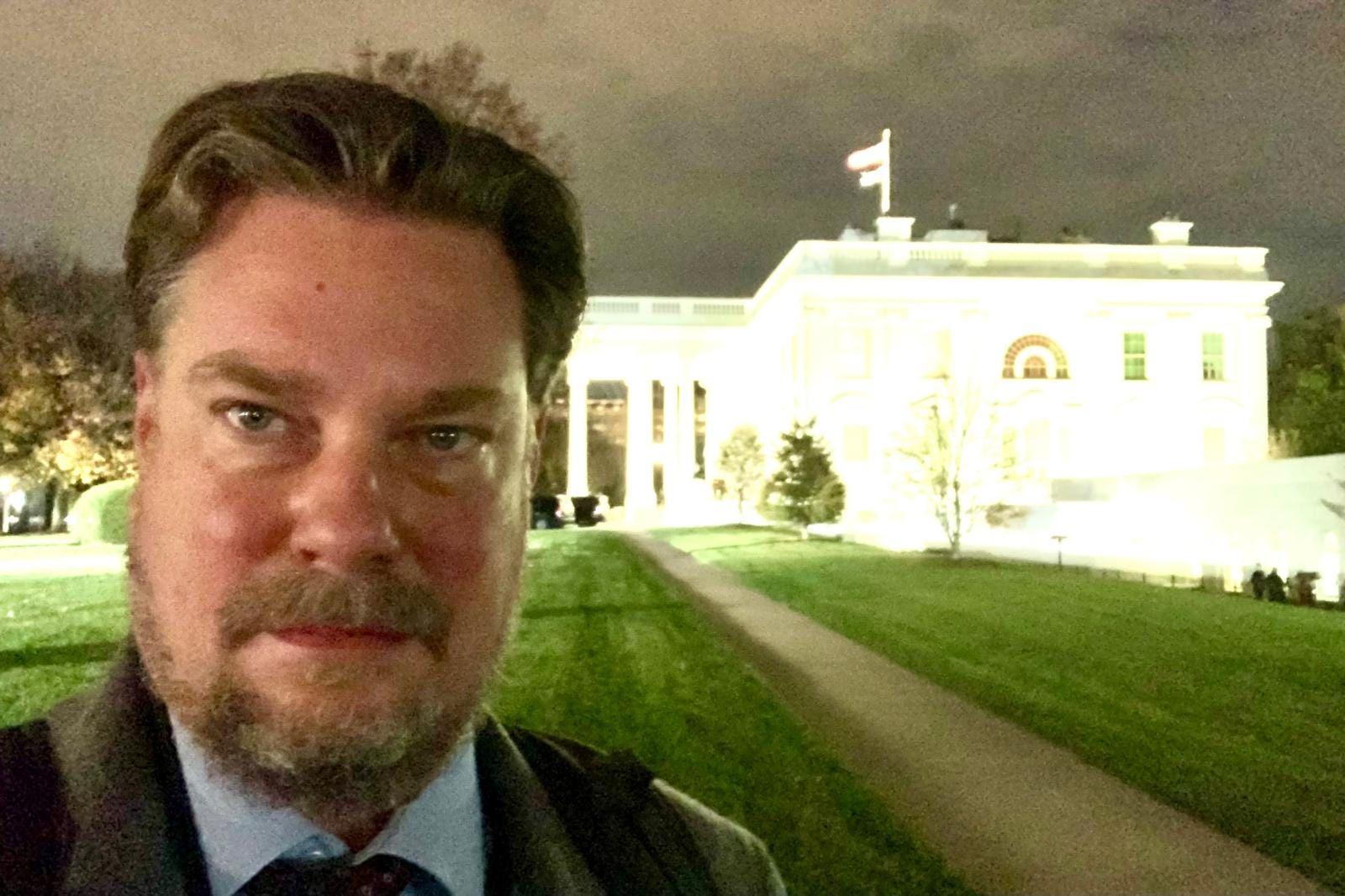
Because his wife is Italian and he is American, they could not get visas to remain in Canada, where they had a home and were raising their kids.
Now he’s in DC driving an Uber and barely getting by. He writes poignantly about the issues of immigration, borders and desperation that he reported on for years, now colliding into one in his own life.
In Canada, I made about $130,000 per year. Driving, I’m unlikely to exceed the $36,580 per year that is the federal poverty guideline, and it takes twice that much to live comfortably in Northern Virginia.
Before, I interviewed prime ministers and CEOs and documented humanitarian disasters for media organisations with a global reach. Now I provide a basic service, and I wait for my phone to beep.
For most of my life, my movement has given me both agency and freedom. Now other people’s movement is a means for my survival.
I see my own fragility reflected in the people climbing into my back seat before dawn: widows, migrants, parents, workers stitching together lives on the margins. We are all improvising, all one broken transmission or missed paycheck away from something worse. For the first time in my life, I am no longer observing this precarious world from the outside, notebook in hand. I am inside it, dependent on an algorithm, measuring my worth in five-dollar increments.
As a journalist, I depended on taxi drivers to do my job. When Canadian Prime Minister Justin Trudeau went to the White House, I took an Uber to Pennsylvania Avenue. When, as a sitting prime minister, Silvio Berlusconi spoke during his tax fraud trial, I took a cab to the Milan courthouse. When I interviewed Romano Prodi ahead of the 2006 national election, in which he narrowly defeated Berlusconi, I took a cab to party headquarters.
For several years I covered the deadliest migration route in the world, across the Mediterranean to Italy from Libya or Tunisia. Some 26,000 migrants are estimated to have died attempting this sea passage since 2014, a number roughly equivalent to half of America’s dead in the Vietnam War. It is also where there have been the most disappearances. Only Neptune, Roman god of the sea, knows how many.
At the time I was documenting the contours of human displacement I didn’t really understand what would drive a person to attempt such a dangerous passage, especially with children in tow. Now I am closer to understanding that kind of desperation.

And that’s my list for this week.
📻 This week on the ABC’s Global Roaming podcast with Geraldine Doogue, we interviewed RUSI fellow and former NATO spokeswoman Oana Lungescu about the future of the Alliance after the Trump Administration. Listen on all podcast apps and here.
Please do send me anything that’s caught your eye, I enjoy knowing what you’ve been reading.
So, Latika, where do you stand on the latest of Trump's odious gaffes? Are you too scared to call out this megalomaniac for fear of being denied entry to the now totally dis-United States of America. If that is why you choose to merely report and not provide your own opinion, that is as cowardly an excuse as the Mango Mussolini’s bone spurs.