

If Russia wins
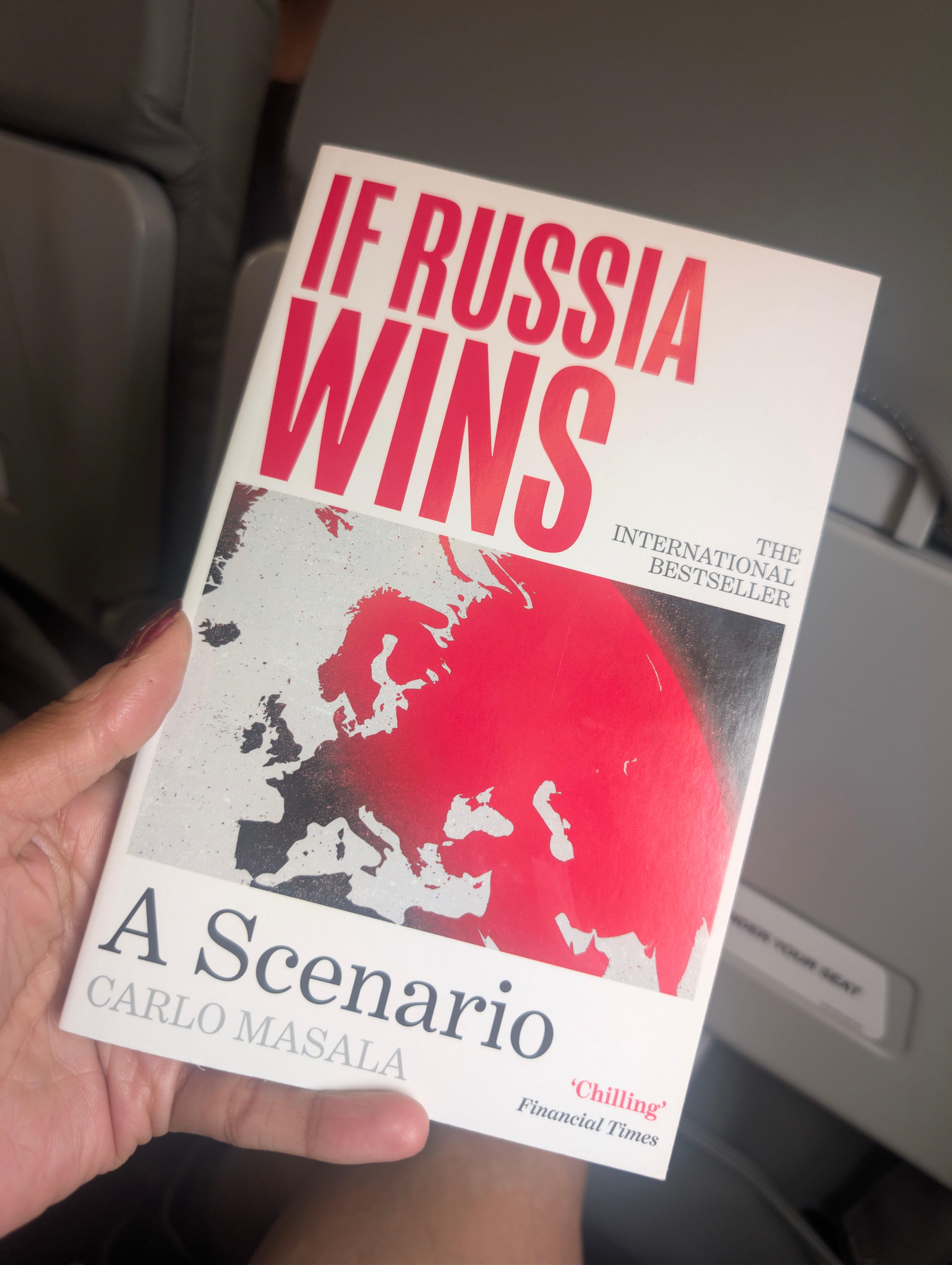
If Russia Wins: A Scenario is an interesting conceptual book that I had cause to come across. It is essentially a tabletop exercise of what might happen in a Russian attack on NATO.
Carlo Masala, a German political scientist, takes the worst-case scenario and applies it to a response that today’s politicians might take.
What I liked about this book was the total nature of warfare, or attack, it describes. This is not an exercise in military manoeuvres or even resources or exercises, but rather an application of how war could be effected, merely because politicians are not equipped to respond to the subtler ways an attack could begin and metastasise across the Alliance.
While Masala takes the most fatalistic options (hence, If Russia Wins!) it becomes difficult to accept all his premises that would lead to this disaster, that the French have been overtaken by the far-right, the Americans effectively withdraw from NATO and that they are successfully scared off by nuclear threats.
Since Masala wrote this book and updated it with an afterword last year, there have been some very promising developments in Europe, especially the fall of the Orban government in Hungary.
At just 120 pages, this book is clear and concise and is written in very simple English. So it can be easily followed by anyone, particularly those with no background in or or only a passing interest in national security. I particularly appreciated the way he illustrated how all the levers of political pressure could be applied simultaneously by an aggressive Russia, such as causing a migration crisis that Europe would have to respond to, diverting military resources, as well as an orchestrated leadership transition in Russia to whitewash the war acts.
If Russia Wins concludes with a bleak non-fictional afterword in which Masala laments the ‘social and political fatigue’ that has spread through European society over the past decade or so. In response, he argues, elites need to fortify Europe against the looming prospect of a Russian military ‘stress test’, the urgency of which is heightened by America’s ongoing withdrawal, under Trump, from its role as the continent’s post-war patron and protector. Among Masala’s preferred policy options are ‘higher defence spending, accelerated armament processes, and the reintroduction of universal conscription’, including in states where conscription has been ‘suspended or abolished in the last thirty years’.
To some extent, these things are already happening. Across Europe, defence budgets are going up. Germany plans to double its defence spending over the next four years. In Britain, spending on national security will increase from 2.3 per cent of GDP in 2025 to 5 percent in the 2030s. In France, Emmanuel Macron is plotting a radical expansion of the French army, and his government is launching a voluntary military service programme aimed at eighteen and nineteen-year-olds this summer. At the same time, in each of these countries, public services are being decimated, and the nationalist right is on the rise. Russia may or may not win in Ukraine, but Europe is more than capable of losing on its own.
Putin has no successor
A rich and informative read on Sergei Ivanov, the man who could have been Vladimir Putin’s successor by Mikhail Zygar.
Ivanov died this week, aged 73.
After Putin chose the less popular Dmitry Medvedev as his successor in 2008, Sergei Ivanov faded into the background. But four years later he made an unexpected comeback. When Putin returned to the presidency in 2012, he appointed Ivanov as his chief of staff.
By then, however, Ivanov no longer displayed the drive that had once defined him. According to people who knew him, he had grown tired and believed that his chance had already passed.
…
In reality, however, Ivanov no longer wielded any significant political influence, especially after the full-scale invasion of Ukraine. One indication of this was the fate of his younger son, who headed Russia’s state diamond monopoly, Alrosa, until 2023. That year he was dismissed without receiving another senior government or corporate position.
According to widespread reports, Sergei Ivanov had been suffering from cancer in recent years. The death of Putin’s former heir apparent—a man once regarded as an even greater hawk than Putin himself—is deeply symbolic. According to current Kremlin insiders, today’s Putin has no intention of ever handing over power to anyone. He is his own successor.

Rutte v Meloni
After having a very public spat with US President Donald Trump, Italy’s Giorgia Meloni is battling another foreign intervention, this time from NATO’s Secretary General Mark Rutte.
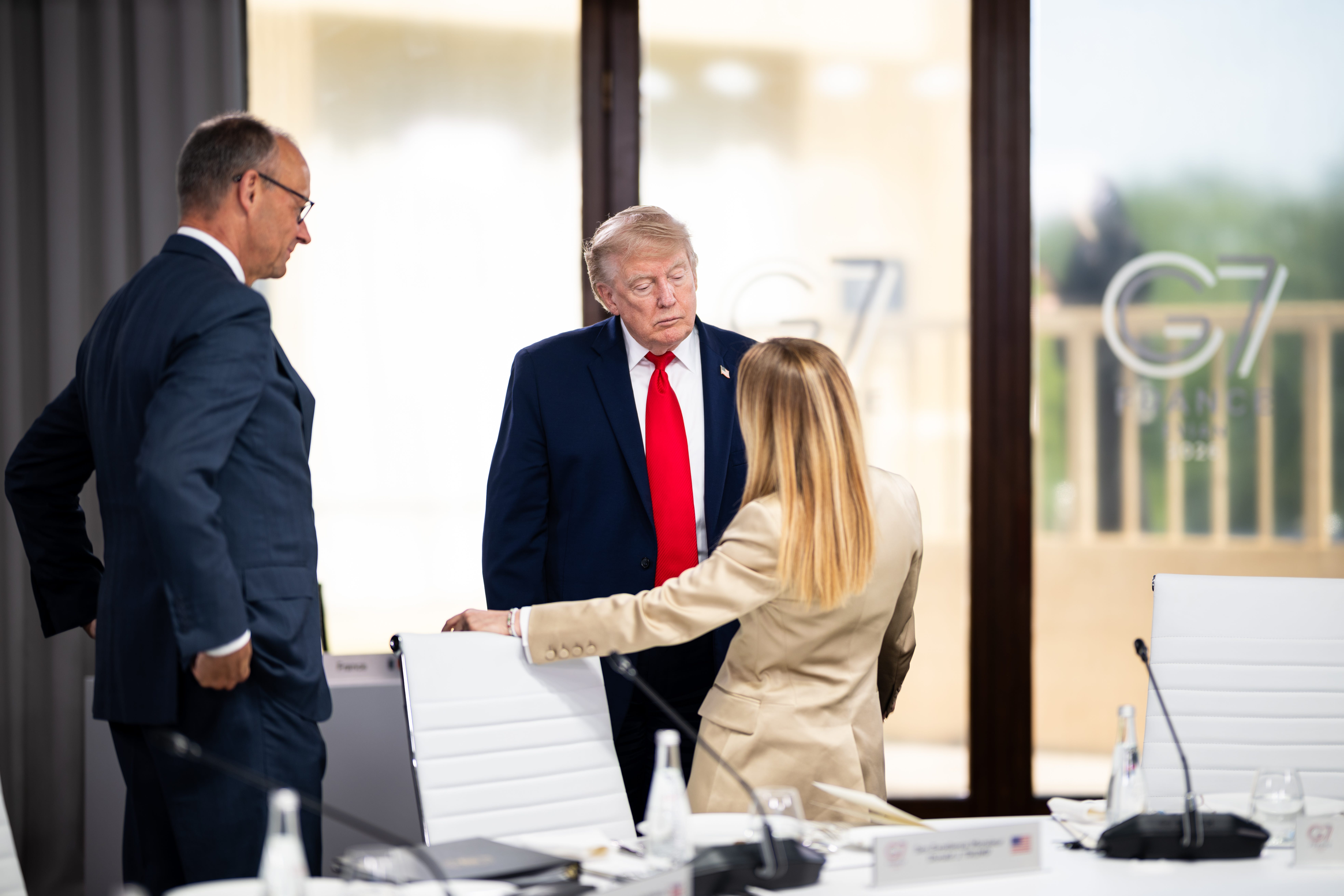
Rutte, always eager to please Trump and argue a Trumpian case to the US media as a way of trying to keep the US inside NATO, revealed to Fox News that the Italians had allowed thousands of US flights to use their bases to attack Iran.
Trump is furious at the Europeans for denying usage of the bases, and European leaders have been at pains to tell their populations how much they disagreed with Israel and the US’s war against Iran and that they did not participate.
Making Rutte’s comments, politically problematic for Meloni.
Meloni pushed back on Thursday, saying Rutte was incorrectly implying that flights from Italy were used in direct attacks on Iran in his eagerness to convince Washington that NATO was playing a significant role.
‘In his — let’s call it enthusiastic — account, the secretary-general has lumped together things that are actually quite different from one another, confusing the types of authorized flights,’ Meloni told reporters during a Franco-Italian summit in southern France.
‘We did not participate in the conflict with Iran. By the way, if we had participated in the Iran conflict, there would be no explanation for this disappointment that the U.S. president keeps reiterating very often,’ Meloni added.
The Italian prime minister has clashed with Trump over recent days, with the American president pointedly slamming her for refusing access to Italian bases for U.S. bombers.
She reiterated that Italy only allowed bases to be used for logistical and technical operations.
Meloni said she had no clue why Rutte gave this ‘oversimplified account.’
Vucic goes promising to accelerate path to EU
Serbia’s President Alexander Aleksandar Vucic will resign, ending his 12-year rule of the Balkan nation.
Serbia has been witnessing anti-government protests, sparked by the deadly collapse of a railway station roof in Novi Sad, for more than a year and a half.
The tragedy in the northern city of Novi Sad on November 1, 2024, killed 16 people and shocked the public amid reports that corrupt practices had led to shoddy construction at the railway station, a flagship government project carried out by Chinese companies.
At their peak, the protests over the incident, largely attended by students, were the largest in Serbia since the demonstrations that led to the toppling of Yugoslav leader Slobodan Milosevic 25 years ago.
At the June 27 rally, Vucic called for dialogue with the demonstrators but at the same time accused the movement of being influenced by foreign actors, who are allegedly interfering in the country’s politics. He provided no evidence for the claims.
Separately, in recent months, Serbia has faced a series of other scandals, including rising nationalist sentiment, controversial construction projects, and uncertainty over its stalled path to the European Union, as some member states are fretting about the country’s nonalignment with the bloc’s sanctions policy toward Russia.
A plane crashes into a Chinese skyscraper…
But don’t ask any questions.
This story provides an almost-unbelievable insight into communist China.
On Friday, a small plane crashed into Beijing’s tallest skyscraper, the 109-story CITIC Tower.
A total of 14 people, including the pilot, were killed. But the Chinese Communist Party is not telling the public how or why this happened.
A short while later, it was like nothing had happened.
All references to the incident – and the shocking footage of it – had been scrubbed from Chinese social media. The government initially did not publicly acknowledge any incident had taken place. State media – including the country’s national broadcaster CCTV, headquartered across the road from the crash site – made no mention of the incident.
That’s thanks to the work of China’s army of censors and the Communist authorities’ obsessive control over information, particularly concerning events they believe may bring negative attention or consequences
The information vacuum left a host of unanswered questions for those who witnessed the event or saw reports of it. For almost a day, it was unknown how many people were injured in the incident.
On Saturday afternoon local time, media affiliated with the Beijing government reported a ‘single-engine double-seat light sports aircraft collided with a high-rise building in flight,’ and that the pilot – the only person on board – had been killed and 13 people injured at the scene. The incident was being ‘investigated,’ it said.
It’s still unknown whether the crash was accidental or intentional.
Perhaps most worryingly for authorities, it’s also raised questions of how the pilot managed to fly over China’s fortified capital, where most of the Communist Party elite live, and where even flying drones is effectively banned.
And that’s my list for this week.
Please do send me anything that’s caught your eye, I enjoy knowing what you’ve been reading.