

Australia’s lost soul
It is nearly a fortnight since the Bondi terror attack, when a father-and-son from southwest Sydney hunted down Jews celebrating Hannukkah at Bondi Beach, opening fire and killing 15 people and wounding 40 more.

Blame is being laid everywhere, primarily at the feet of the Prime Minister Anthony Albanese, who is accused of allowing antisemitism to fester across the country for two years. But there are also questions about the intelligence agencies, who are now the subject of a federal review.
Additionally, there is a lot of soul-searching taking place regarding Australia’s identity, about how the innocent, fun-loving, beach-going country could host an attack usually associated with the United States, Europe and the UK.
Too many people are now saying out loud, ‘This is not a country I recognise, this is not the childhood I remember.’
The best snapshot of this sentiment was captured by Australian Financial Review columnist Christopher Joye, who takes apart the country he no longer recognises.
(The bolds are my own emphases.)
The Australia I remember during my youth bears little resemblance to the nation that now exists.
I am not sure you can even describe us as a nation – we are more like a heterogeneous agglomeration of vested and frequently colliding interests.
I think there is a fair case to be made that we have traded away our soul. There is no cohesive national identity. There was, once upon a time, a demonstrably visible national character. We knew what it was to be Australian.
We loved our country. Our flag. Our history. Our entrepreneurial and iconoclastic verve. Our disdain of centralised authority. Our willingness to give every person a fair go. Our characteristically intense competitive streak. And our eccentric and larrikin heroes. From Don Bradman to Kerry Packer.
But today it is difficult to discern a unifying crusade or common community. There are, to be sure, redoubts here and there. But across this sunburnt land, we have emerged as a nation divided.
Many will claim that their vision of Australia best represents a universal mission. That they know the true Australia. And that there is a silent majority that agrees with them.
But I do not see it. Right now, Australia is a battlefield bloodied by conflicting interests, which this column belaboured seven days ago.
The lucky country has become the lazy land, spoilt by endless resource riches and the seemingly bottomless pit of public money that this has bestowed.
Our wealth has been relentlessly wasted on pet political projects that serve only to perpetuate the reign of those in power. Financially corrupt the voters to win the next election and then rinse and repeat. Until the money runs out.
Australia has become obsessed with the public sector providing answers to its problems. Obsessed with centralised control. Remember the world’s worst lockdowns? Obsessed with censorship: eviscerate parental responsibilities and ban children from access to the internet.
Obsessed with revisionism. We don’t even give our kids an opportunity to learn from our historical wins and losses. It is airbrushed in the name of trying to create an alternative political reality. Obsessed with cutting down tall poppies. That is, we don’t just want equality of opportunity, which is a crucial ideal – we increasingly seek equality of outcomes.
You built this
Yoni Bashan’s riposte to particular sections of the pro-Palestinian movement that have led marches down Australian streets was as sad as it was powerful.
The NSW government has banned major protests for two weeks and is outlawing the use of ‘Globalise the Intifada’ as part of a state and national crackdown on hate speech that also includes tightening gun laws.
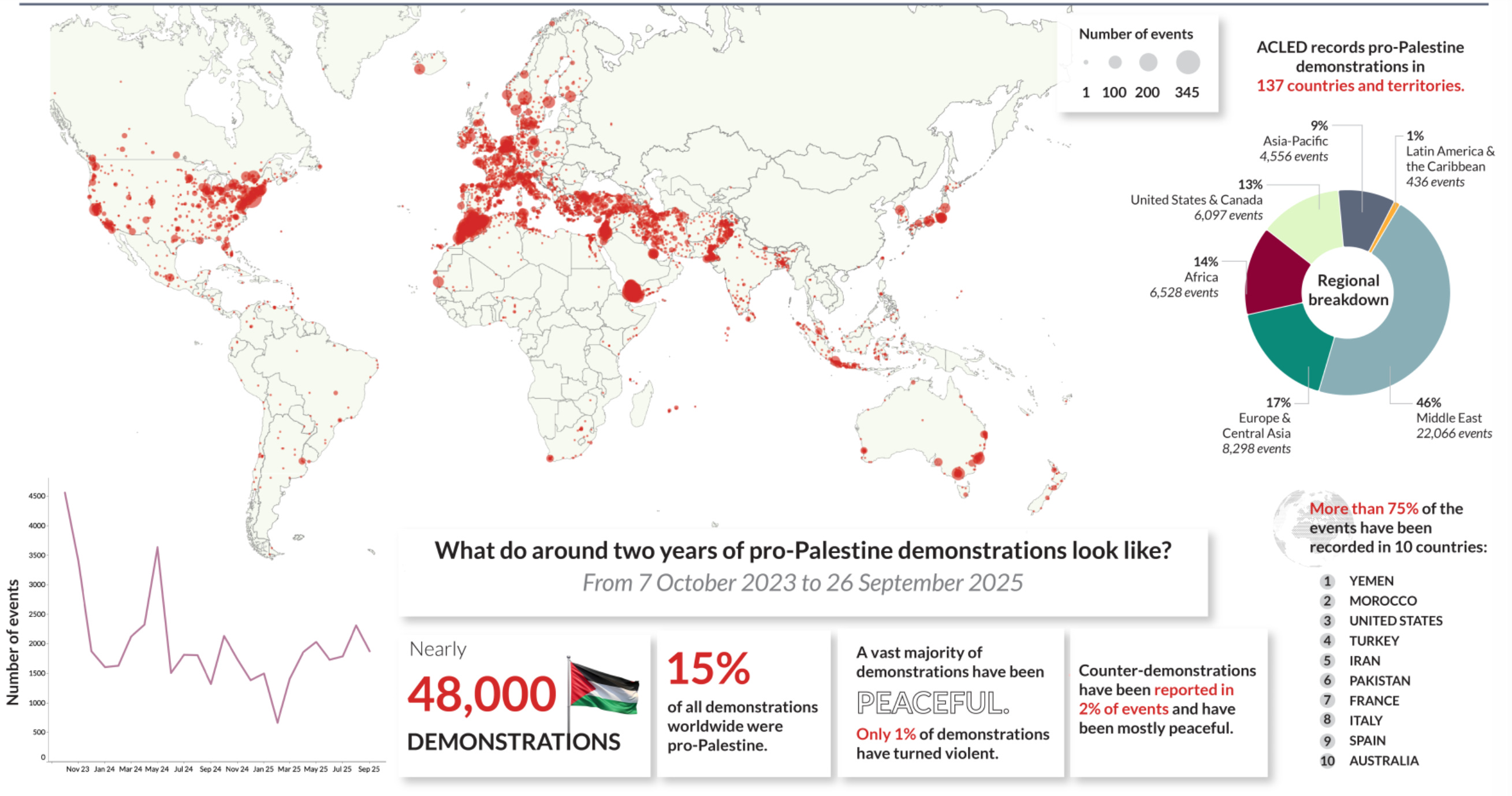
With bitterness, Bashan writes that the calls of the influencers, activists et al to ‘Globalise the Intifada’ have succeeded.
But here’s what needs to be said to the people who’ve spent two years treating Israel as a uniquely evil state. Who’ve made ‘Zionism’ synonymous with racism and slavery and every conceivable sin. Who’ve said Zionists should not be platformed, should not have culturally safe spaces, should essentially be drummed out of polite society. Who’ve chanted ‘from the river to the sea’ at rallies, in parliament, and posted it on their Instagram stories with little watermelon emojis:
You built this. You laid the foundations, brick by rhetorical brick, post by viral post, march by march with your inverted red triangles and your signs bearing the words ‘Zionists are neo-Nazis’.
What exactly did you think ‘intifada’ meant? It means blood. It has always meant blood. And now they’ll be cleaning up the blood on Bondi Beach for weeks.
…
Anti-Semitism has always been like this. It never goose-steps into the ball dressed as anti-Semitism. It doesn’t wear a sign. It arrives in the costume of the moment. As nationalism. As anti-capitalism. As social justice. It makes itself sound reasonable, even righteous. It speaks in the gentle language of decolonisation and human rights.
And then people die; that’s how this story goes.
Yes, you can criticise Israel. You can oppose settlements and protest civilian casualties in Gaza. But there’s a difference – and it’s a life-or-death difference now – between protest and incitement. Between holding a government accountable for its conduct in war and demonising an entire people.
Because when people talk about Russia and its war in Ukraine, none of it metastasises into graffiti on Russian restaurants. Into harassment of Russian students. Into boycotts and firebombings. Or bullets on beaches.
But with Israel? With Jews? It always does. Every single time. And the Jewish community kept saying this. We saw it coming. We saw it in Europe and America. We saw it in England.
So spare us the shock. Save the thoughts and prayers.
You don’t get to globalise the intifada and then act all surprised when it finally shows up.
Albanese ‘nearly impossible’ to comprehend
As I have been writing (linked above), Prime Minister Anthony Albanese has totally bungled his response to the attacks. He was booed at the vigil held last Sunday night. He is now under immense pressure to call a Royal Commission, something the families of victims, survivors, the Jewish community, the federal opposition, crossbenchers and even two Labor MPs want. Inexplicably, Albanese is refusing.

When the Canberra press gallery’s doyen Michelle Grattan calls it, the die is cast.
She described his resistance as ‘nearly impossible to comprehend.’
Albanese argues a royal commission would take a long time and he doesn’t want to slow responses. ‘We want urgency and unity, not division and delay,’ he told a Monday news conference.
But this is not convincing. New South Wales Premier Chris Minns is both undertaking a raft of actions with legislation this week (cracking down on protests and symbols, and changing firearm laws) while planning a state royal commission.
Former High Court chief justice Robert French, in a strong call for a national royal commission, said, ‘There is no requirement for governments to put on hold their responses to the attack, pending the provision of reports by the royal commission.’
The government could ask a royal commission to provide both short term and longer term reports.
Why Frydenberg resonated
If you haven’t listened to my podcast interview with Josh Frydenberg who made a searing intervention into the political debate over the attack, you should. It is not surprisingly, by far and away my most listened-to episode and with good reason.

It was also quoted by Rob Harris in his excellent piece about the power and purpose of Frydenberg’s speech. And why it mattered.
There’s no shortage of people ready to reduce Frydenberg’s intervention to political calculation. A former treasurer who lost his seat in 2022’s landslide against the Morrison government. A potential return to public life. A moment of national grief. The cynicism is familiar – and tempting. It is also, as even his most hardened critics this week believe, grossly uncharitable.
What set Frydenberg’s address apart was not just its bluntness, but the fact that it came from someone speaking as a parent and as a Jew before speaking as a politician. During his 12 years in parliament, no one ever called Frydenberg a conviction politician, but here he spoke with the type of moral clarity now rarely heard in public life. That distinction mattered – and it was audible.
He spoke not in abstractions but from lived experience. As a father raising Jewish children in Melbourne, where their schools and synagogues now need armed guards and families calculate risk before attending public celebrations. This was not borrowed outrage. It was personal fear, publicly expressed. Unscripted and pointed.
‘We, as a Jewish community, have been abandoned, and left alone by our government. Our governments have failed every Australian when it comes to fighting hate and antisemitism,’ he said. ‘Our prime minister, our government, has allowed Australia to be radicalised on his watch.’
He did not speak delicately. He accused governments of moral failure – of hiding behind euphemisms, of refusing to name Islamist extremism, of indulging antisemitism under the cover of balance and process. His charge was blunt: if leaders cannot say what is driving the violence, they cannot stop it.
That directness was jarring precisely because it is now so rare. It left MPs on all sides in Canberra wondering why no one else could manage the same cut-through.
The heros of Bondi
It wasn’t just Ahmed Al Ahmed, the Syrian shopkeeper who was captured in footage disarming one of the gunmen (the father) with this bare hands. There were many, many other heroic acts that day, but they were not as immediately obvious as they were not caught on camera in the same way Al Ahmed’s crazy brave acts were.
As the details emerged of how the attack too place, it is the story of 69-year-old Boris and 61-year-old Sofia Gurman that haunts.
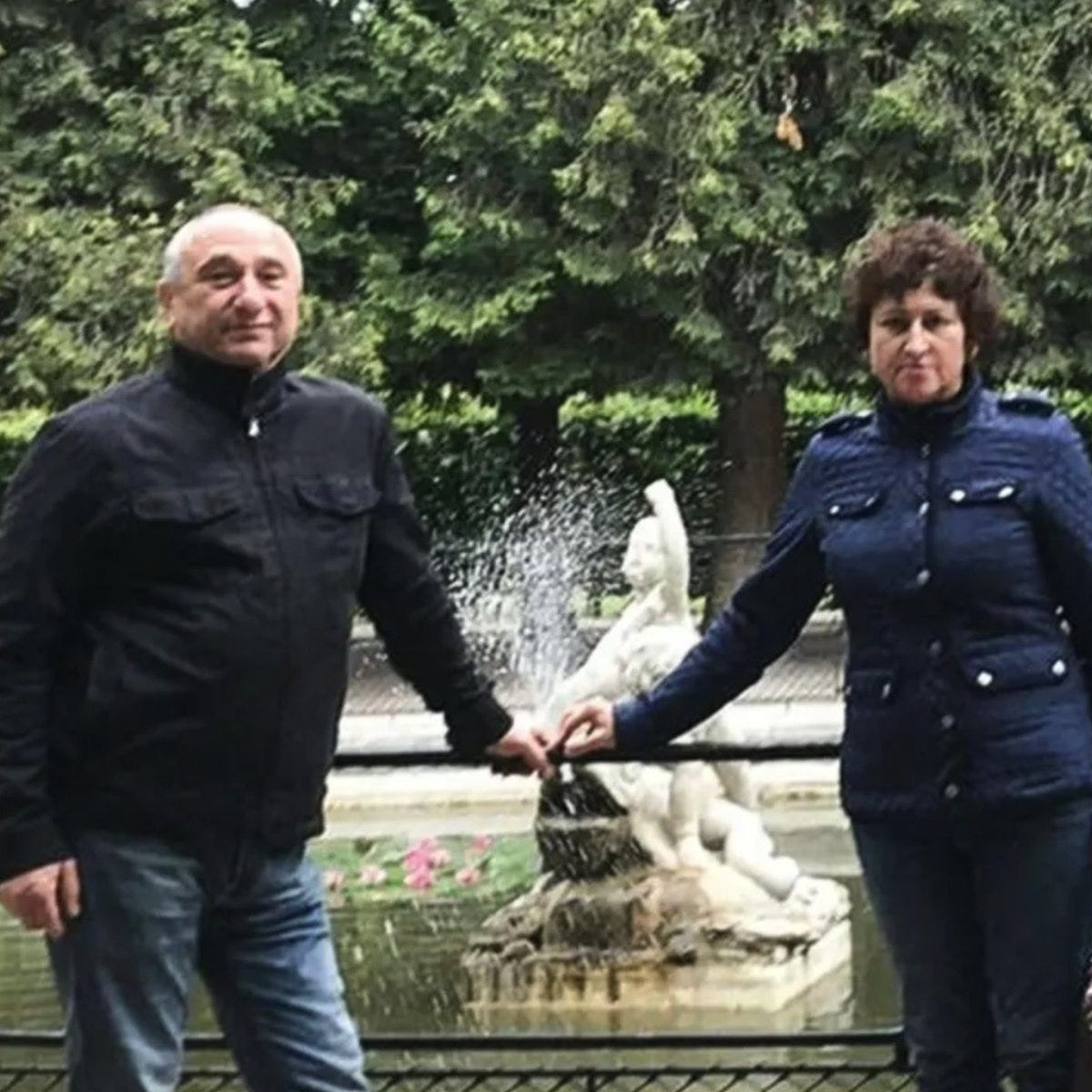
They were walking along Campbell Parade when the gunmen arrived and emerged from their car to being their attack. They were the first to confront the gunmen and the first of the 15 to die, gunned down at close range.
Approaching their 35th wedding anniversary in January, drone footage shows they died in each other’s arms.
The stories of these superhuman acts from the most ordinary of people, have made the perceived lack of federal leadership all the more stark.
The need for a royal commission is as blindingly apparent as the Bondi morning sun. An inquiry must investigate the attack itself, whether security agencies missed opportunities to stop it, and how the anti-Semitic beliefs which incubated it were allowed to gain a foothold in our society.
Yet the Government wants to keep us in the dark. Mr Albanese says he is prepared to take ‘whatever action is necessary’ to confront and root out anti-Semitism. Except, it seems, to risk embarrassment to his Government through a thorough and public review.
Undoubtedly, the onus is on our governments and institutions to lead this fight against hatred and radical beliefs.
But do not underestimate the power each of us holds as an individual.
We saw the truth of that in the most literal sense through the courageous actions of Ahmed Al Ahmed, who has rightly been lauded a hero for disarming one of the killers.
Many others also put themselves in harm’s way to save the lives of others. Some — Reuven Morrison, and Boris and Sofia Gurman — paid with their own.
We seek out these stories of heroism not to distract ourselves from the horror but because it is one of the most powerful things we can do right now. They remind us that there is strength in goodness.
Mercifully, few of us will be called upon in our lives to make such dramatic shows of our goodness. Instead, we can show it in smaller ways — by reflecting on the Australia we are today and the Australia we want to become.
And that’s my list for this week.
Please do send me anything that’s caught your eye, I enjoy knowing what you’ve been reading.
Great compilation. Thank you.