

Healey to dodge his own defence demands
Sigh.
Honestly, what more is there to say other than that people wonder why the populist bug is a virulent contagion fuelled by despair with the legacy political parties right now?
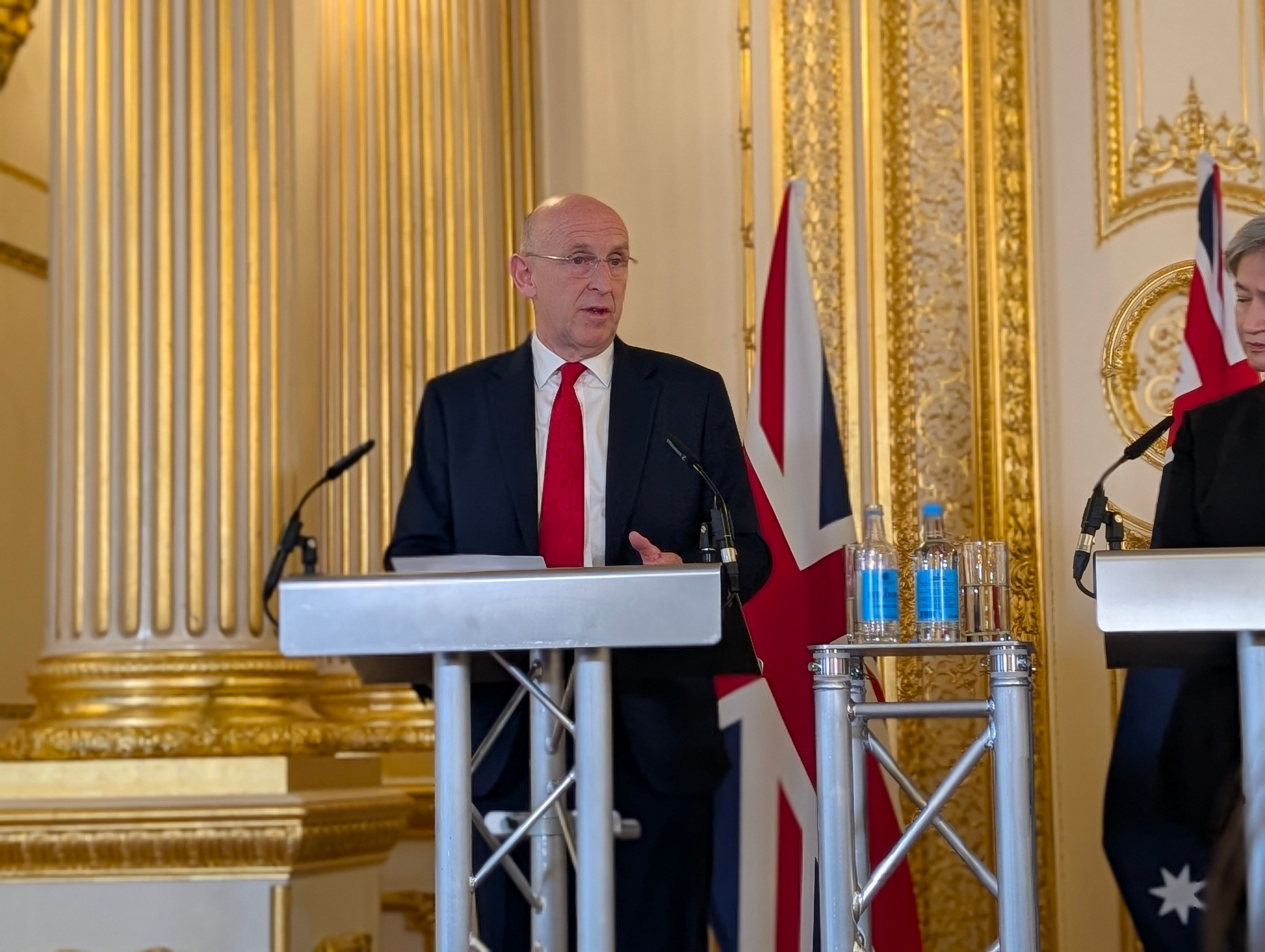
John Healey talked a big game as Defence Secretary of the UK and admirably walked his own talk when he quit Keir Starmer’s cabinet, a move that accelerated the termination of Starmer’s prime ministership.
He was rewarded with a promotion to Chancellor. This was met with widespread applause, given Healey’s seriousness and stated belief that the status quo on defence spending would leave the country unsafe.
But when he hands down his budget in October, he is set to swerve his own demand for setting out an increase of defence spending to 3 per cent by 2030.
Chancellor John Healey will shelve his own target of spending 3 per cent of Britain’s GDP on defence by 2030 when he presents his first Budget in October, with tough decisions on how to fund the military pushed down the track.
Government insiders told the FT that Healey’s Budget would focus on filling a defence equipment funding gap of nearly £5bn left behind by former prime minister Keir Starmer, amounting to about £1.2bn a year.
But much bigger decisions on an uplift in defence spending will be delayed until a Treasury spending review next year.
…
The chancellor was previously adamant that Britain must increase defence spending to 3 per cent by 2030, notably to address a growing threat from Russia. In his resignation letter to Starmer in June, the former defence secretary said: “As we have regularly discussed, I am certain that a headmark date for 3 per cent of GDP on defence in 2030 is what Britain must set.” Prime Minister Andy Burnham has refused to commit to hitting a 3 per cent of GDP target by 2030. He said this week that the fiscal backdrop to the Budget was “challenging”.
Chinese bots spread data centre concerns
Elon Musk’s platform X has uncovered 200,000 Chinese bots spreading concerns about data centres.

This would signal a successful copy and paste of Russia’s tactics of sowing division in Western democracies, by seizing on live debates and exploiting legitimate concerns, and helping the fissures become fractures.
There are many real problems relating to the growth of data centres used to power and process artificial intelligence, especially regarding their energy use, but it does feel like this debate came from nowhere and exploded into the hottest political issue in town.
Western governments need to find a way to communicate to voters that meritorious debates can be exaggerated by malicious actors, who may want to undermine a social licence for a technology that is the centre of a massive geopolitical race.
The awkward part of this disclosure is that the claims being amplified are not fabricated. Electricity prices in the United States rose 6.9 per cent year over year as of February 2026 according to Goldman Sachs analysis, and the bank expects further increases as AI facilities drive demand growth. Communities near hyperscale construction have real grievances about rates, water use and noise.
American towns have been rejecting data centre proposals for two years, and the objections come from local officials hearing directly from constituents about rising electric and gas rates. Power availability, not chip supply, has become the binding constraint on AI expansion, with data centre electricity consumption expected to double by 2030. Utilities have struggled to expand generation at the pace demand grew, which pushed operators toward private arrangements that bypass the public grid entirely.
An influence operation that latches onto a genuine grievance is harder to counter than one inventing a conspiracy. It also creates a trap for anyone arguing the other side, because a disclosure like this can be used to paint domestic opposition as foreign-directed. Several prominent accounts did exactly that within hours of the announcement.
…
State-linked influence operations are not new, and neither is the use of generative tools to run them. Platforms have taken down Russian networks built on purpose-made persona generators, and analysis of how bot farms manufacture the appearance of consensus shows the mechanics have been stable for years. Volume creates the illusion that an extreme position enjoys mainstream support. AI just lowers the cost of producing the volume.
OpenAI has published several reports on this activity, including a February assessment describing an operation tied to Chinese law enforcement with hundreds of staff and thousands of fake accounts across dozens of platforms. Coverage of the June bans noted the campaign’s internal name and its focus on energy costs. What X has added is a platform-side count, which is useful, and an unanswered question about what the other accounts in the network were doing.
Meta settled, but the fight with Big Tech should not end
Meta, owner of Facebook, Instagram and WhatsApp, settled an enormous lawsuit in the US this week, to avoid a full trial about its addictive features hooking kids onto social media.

The headline figure was stunning: US$18 billion. But it is peanuts to the social giant, and shows why the fight against technology platforms’ addictive algorithms should not end now, writes Jonathan Freedland.
But look closer and you see that, for Meta, $18bn is not exactly a bank-breaking sum. It amounts to less than a month’s revenue. And it has 10 years to pay it out: the monthly payments could come out of petty cash. What’s more, nearly a third of that sum is contingent on Meta’s rivals YouTube and TikTok agreeing to the same restrictions. All told, the financial penalty is less than a tenth of the $200bn the 29 states were seeking, and a tiny fraction of the $1.4tn the company told the court it feared it would have to cough up. No wonder Meta’s shareholders were doing fist bumps on Wednesday.
Beyond the money, Meta will be thankful it has escaped a court ruling against it, a legal verdict on the behaviour detailed so compellingly in the California courtroom in the first week of the trial before it was abruptly halted. Jurors heard from the former Meta safety engineer Arturo Béjar, who spoke of his own teenage daughter’s experience on Instagram – how she received unwanted sexual advances, crude misogynistic insults and photos of male genitalia on the platform – and of a survey he had conducted that found 51% of teen users had had bad or harmful experiences on Instagram within the previous seven days, and that content was taken down only 0.02 per cent of the time. Béjar reported his findings to Mark Zuckerberg directly, but got no reply. As Béjar told me when we spoke on Thursday: ‘They knew that harm to kids was happening, but they were telling the world it wasn’t.’ Under Wednesday’s settlement, Meta hasn’t even made an admission of liability.
China’s Jekyll and Hyde Pacific diplomacy
Nikkei has a brilliant read ahead on the shifting nature of Chinese and Australian outreach across the Pacific, where China tested a nuclear-capable ballistic missile last month.
This piece is one of the best, drawing together Australia’s new web of military alliances that it has struck in the region, as well as the changing way the Chinese are approaching how they fund the Pacific — swapping big, debt-laden infrastructure for smaller, everyday items that are easy to stamp a Chinese flag on.
While the Pacific was rattled by China’s missile test, Beijing just needs to pick off one tiny country in order to stop consensus-based statements being made — a tactic it is experienced and successful in deploying.

The Pacific Islands Forum meets next week in Palau.
The Fiji pact is the latest in a string of security deals Canberra has inked across the region over the last three years, seeking to counter Beijing’s growing footprint.
‘Central to nearly all of them is this language that prohibits these Pacific island countries from engaging either in infrastructure development or security agreement with a third party,’ said Tarcisius Kabutaulaka, an associate professor at the University of Hawaii at Manoa.
The third party mostly remains unidentified in the text of the agreements.
‘But one does not have to be a rocket scientist to figure out who that is -- and it’s China,’ said Kabutaulaka.
China, meanwhile, has pulled back somewhat from large-scale, big-ticket infrastructure builds that generated both debt and local criticism, pivoting to smaller, community-focused endeavors it calls ‘small but beautiful’ projects.
From backpacks and bicycles for schoolchildren to visits by doctors, solar panels and fishing nets, these initiatives “come straight out of the diplomatic post in the country, and they have a real community impact,” said Lowy Institute Pacific fellow Connor Graham.
This stands in contrast to Australia’s Pacific engagement, which usually comes in the form of ‘direct budget support or governance or things you can’t put a flag on,’ said Graham.
‘The impact of that (Chinese approach) is you get a lot more influence bang for your buck,’ he said. ‘The Chinese presence is felt a lot more on the ground per dollar spent than for Australia.’
These community-level projects, on top of engagement from Chinese corporations and diaspora, mean China has ‘weaved itself into the fabrics of Pacific island society in ways that the [West] can’t’, said the University of Hawaii’s Kabutaulaka.
But while China goes for ‘hearts and minds,’ there’s little doubt its July missile test, flying over the exclusive economic zones (EEZs) of several Pacific island countries, caused shock within Pacific capitals, say observers.
Canada is surviving Trump’s trade war
We will need to revisit these statistics in another year to truly know the damage US President Donald Trump’s all-out trade war with Canada causes to both sides.
Canadian Prime Minister Mark Carney walked away from negotiations last weekend, saying the Trump Administration was making demands it could not sign up to. This does not mean Canada is pure; what is worth watching for is what demands Trump and Co wanted Canada to agree to to stop transhipment of Chinese goods. These goods would ordinarily face duties when being imported into the US but escape them via Canada’s special trading terms with its neighbour. (This is also not to say that the Trump Administration is in the right either, but more a case of watch for the fuller story).
For now, Carney is once more buoyed at home because he is able to frame it as another attack from Trump on Canadians. Trump responded by claiming to rename Lake Ontario, Lake America. If only he displayed such triumph in ending his six-month war with Iran and/or the war he promised to resolve in a day between Russia and Ukraine. But I digress.
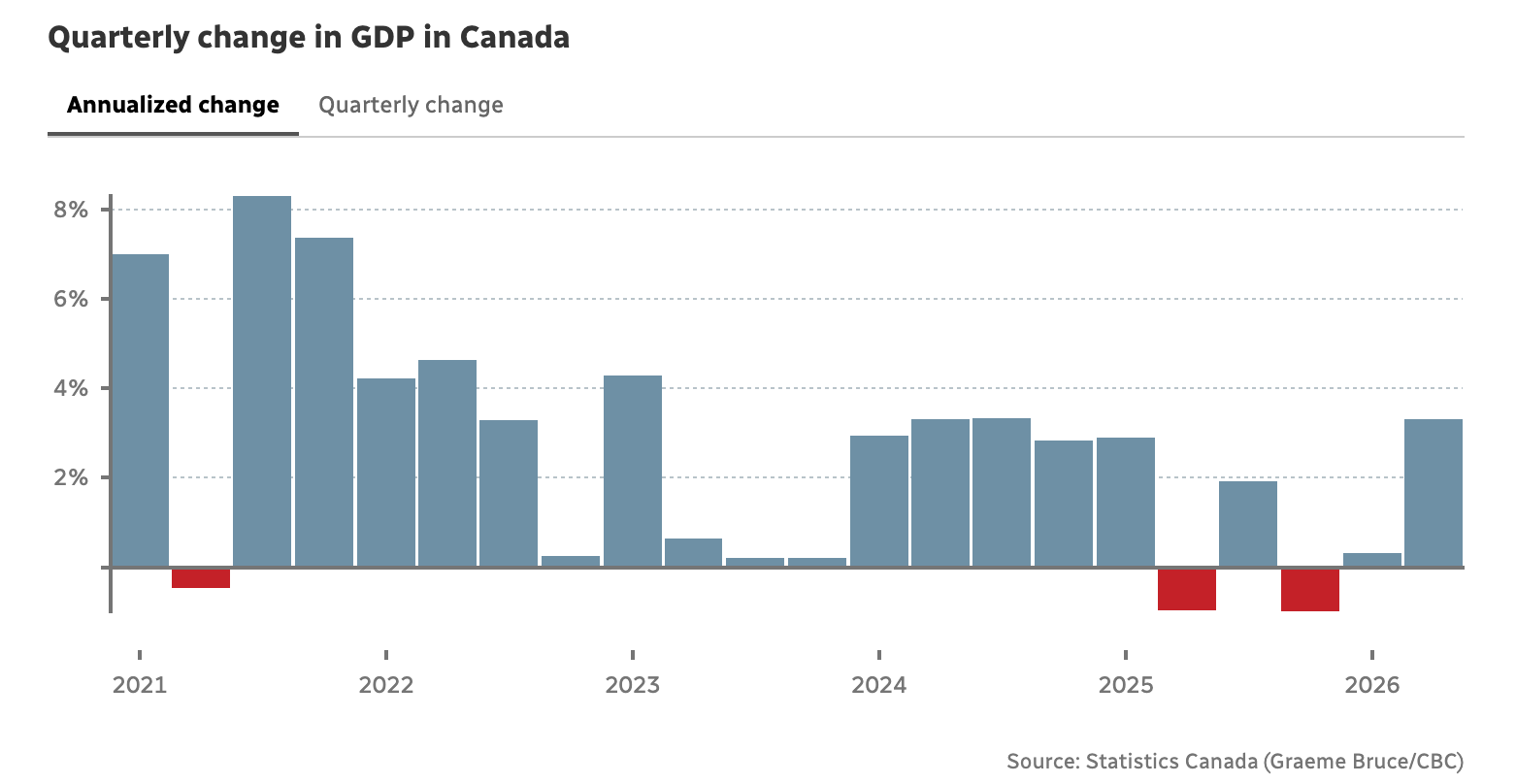
For now, Canada’s economy is doing well. In fact, better than expected — so expect to hear a lot more barracking for world leaders to sign up to Carney’s middle-power-middle-finger to the US President.
Data from Statistics Canada show the economy grew at its fastest pace since 2004. Gains were seen in roughly 90 per cent of the economy. Energy exports led the way, but even the heavily tariffed auto industry saw major gains.
Put it all together, and you can see Canada’s economy has carved out a small cushion to help weather the next blows from the trade war with the U.S. And economists say Canada needs every inch of it.
“This is genuine resilience, but not immunity from a trade war,” says David-Alexandre Brassard, the chief economist with Chartered Professional Accountants of Canada.
And that’s my list for this week.
Please do send me anything that’s caught your eye; I enjoy knowing what you’ve been reading.

This week I was in Stavanger, Norway for the ONS Conference where I moderated no less than four panels, including my chat with Siemens Energy CEO Christian Bruch.
He was super interesting, and I reproduced our discussion on my podcast ICYMI.
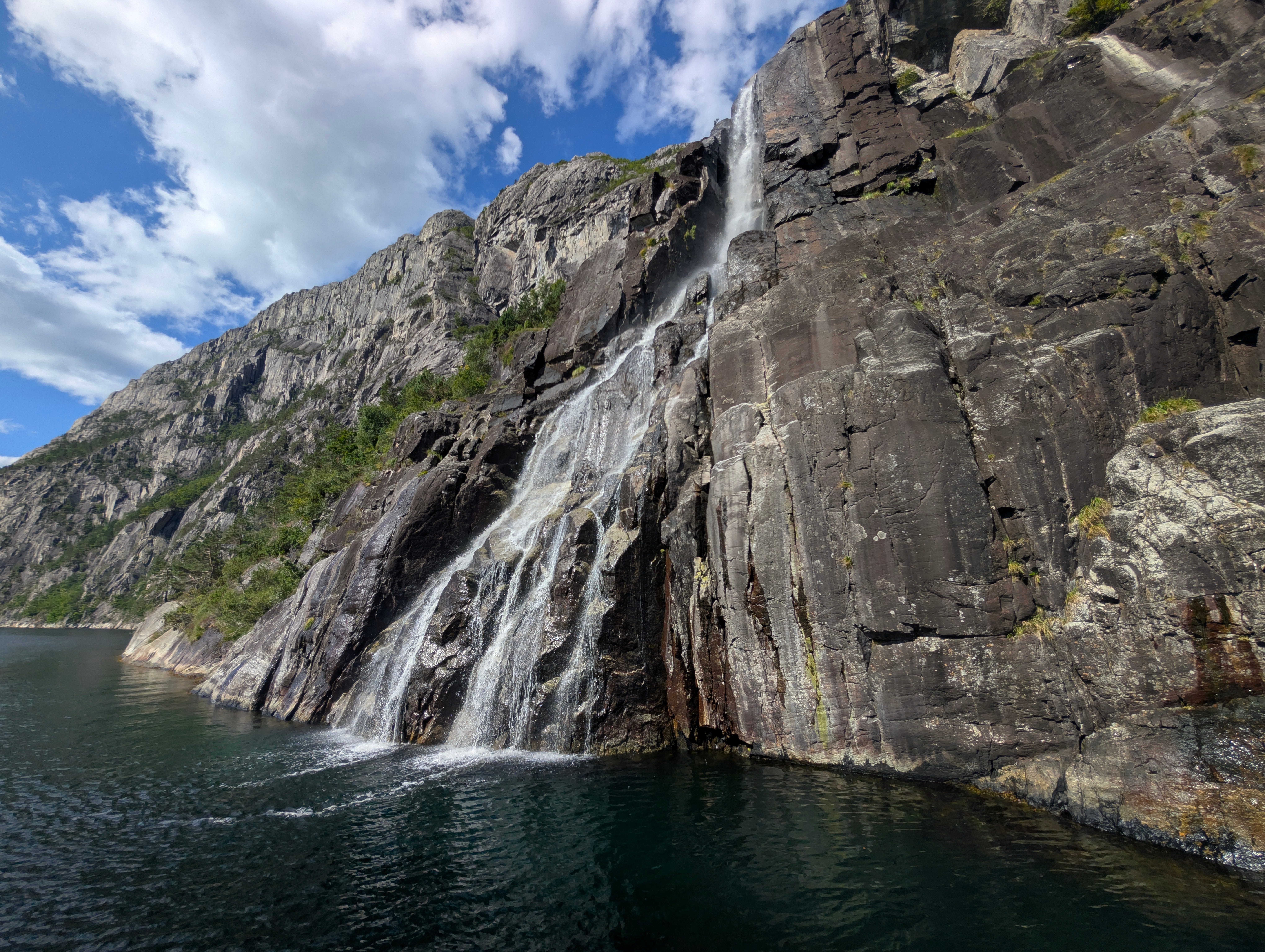
Before my flight home, I managed to see a fjord! Sunshine and 20+ degrees was not the weather I was expecting, but I’ll take it.
Next week I will be attending the Bled Security Forum in Slovenia.