

Federov opens Pandora’s Box
There is no doubt that Volodymyr Zelensky made (another) massive mistake when he sacked Mykhailo Fedorov as defence minister.
Fedorov applied a tech bro mindset to Ukraine’s military operations, expanded the kill zone, and started succeeding in mid-and longer-range strikes against Russian targets that have forced Vladimir Putin’s ‘Special Military Operation’ into the lives of ordinary Russians.
Fedorov was the digital transformation minister. He is a wildly popular and competent figure in Ukraine who was fighting established and corrupt ways of operating in the military that caused internal conflicts.
So naturally, Zelensky sacked him.
However, widespread protests that the Ukrainian President’s unwise decision caused may have gone to Fedorov’s head.
He this week broke the mother of all taboos in calling for an election during wartime. He did it in a slick video posted to YouTube.
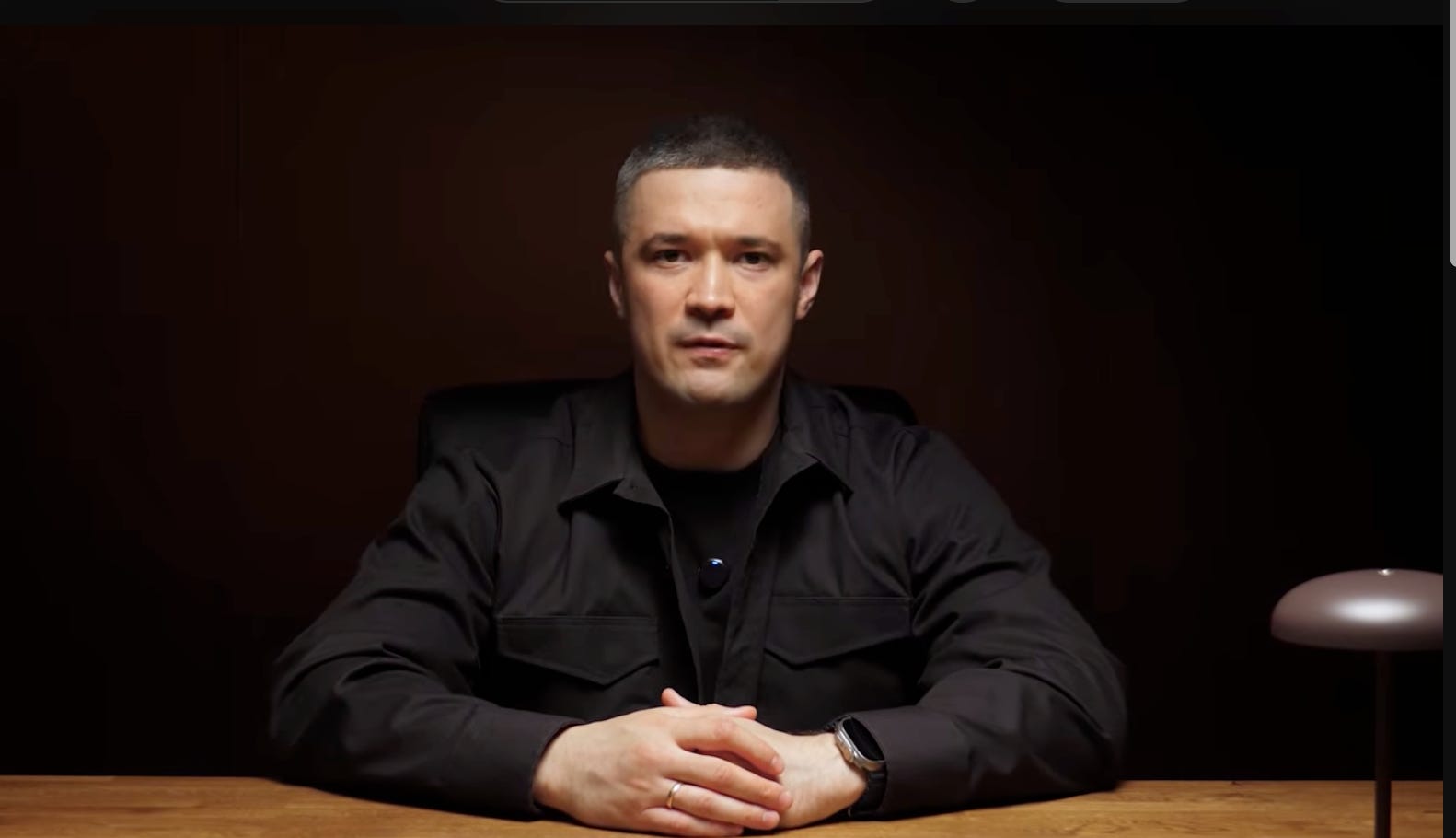
Firstly, elections during war are against the constitution. Secondly, those demanding Zelensky face the polls, and intimating that Zelensky governs illegitimately, have been to date the Kremlin and US President Donald Trump.
How a country could go to the polls when millions of its citizens are abroad, and hundreds of thousands are on the frontline and the country is suffering ballistic missile and drone attacks could partially be solved by technology, but there are compelling — and publicly accepted — reasons for avoiding a poll while the conflict rages.
Fedorov has overreached in opening this conversation. But it does come from somewhere beyond perhaps his own opaque ambitions, as he is ultimately tapping into dissatisfaction with Zelensky and the mounting corruption investigations into those around the internationally popular president.
I highly recommend this piece, which chronicles and analyses what drove Fedorov’s intervention and how it affects Zelensky.
Fedorov’s call was preceded by a gradual shift in the public discussion. Ukrainian public figures and some of the country’s most widely read media outlets had begun breaking the taboo around discussing elections, as Zelensky faced growing criticism for ignoring protests outside his office and refusing to meet demonstrators’ main demand: Fedorov’s reinstatement.
The parliamentary opposition, however, remains more cautious.
Yaroslav Yurchyshyn, a lawmaker from the opposition Holos party, told the Kyiv Independent that he cannot imagine elections taking place until fundamental problems are resolved.
‘Until we have an answer to the question of how to ensure that military personnel and Ukrainians abroad can vote, until the voter registry is verified, and — most importantly — until there have been no attacks for at least six months — I can’t imagine how to hold elections,’ he said.
‘That’s why I don’t understand how Fedorov can call on them to do so.’
Volodymyr Ariev, a lawmaker from the opposition European Solidarity party, largely agreed but put the responsibility on Zelensky.
‘Zelensky’s selfishness, his detachment from reality, and his inability to take the steps that Ukraine — not his administration — needs are leading the country into disaster,’ he said.
‘We’ve reached a point where we have to choose between elections and chaos — that is, between a bad option and a catastrophe. It’s not an easy choice, but if Zelensky doesn’t come to his senses, then elections will be the way out.’
Russians wait hours for fuel
An example of just how successful the Ukrainians have been this year is the queues in Russia for petrol.
Ukraine has been attacking Russian oil refineries with its longer and mid-strike drones. Russia has been hitting back with ballistic missile attacks, which Ukraine has less ability to counter because it is running low on its US-made anti-missile Patriot systems. But the Ukrainian attacks have been important for Ukraine’s morale and goal of trying to crack the Russian economy and society.
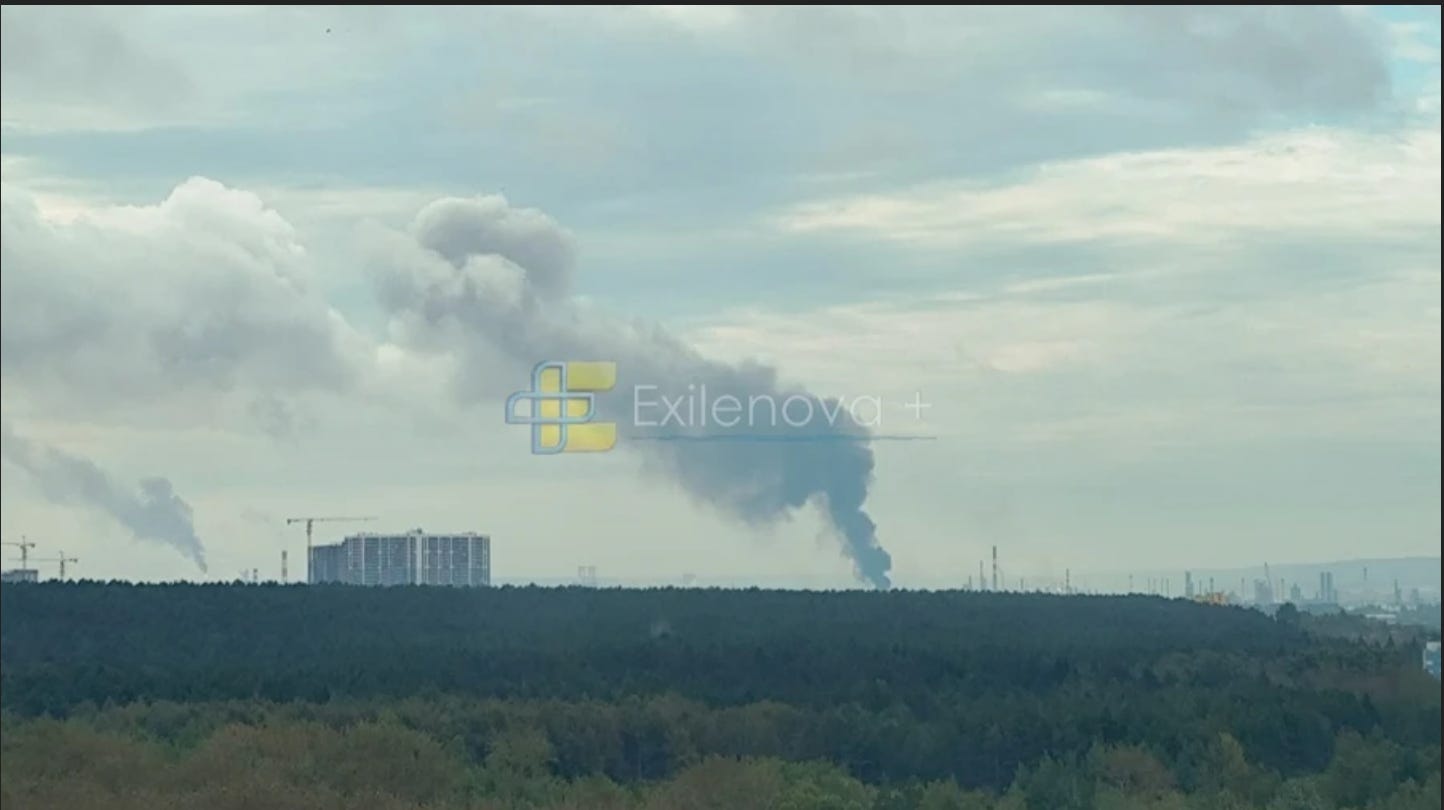
The Ukrainians have also lately been hitting Wildberries warehouses — Wildberries is a bit like Amazon. So ordinary Russians are very much feeling, seeing and hearing the effects of their President’s war, launched more than four years ago, that has resulted in little territorial gains.
Outside one Moscow petrol station I count 80 vehicles waiting in line.
The search for fuel is now a constant struggle.
‘Last night I went to get petrol at 11pm,’ says Elizaveta who’s queuing again for fuel. ‘By midnight I’d reached the front of the queue. Then they shut the petrol station until 2am.’
‘I drove into Moscow yesterday from the provinces,’ says Lyubov. ‘It was empty petrol stations all the way.’
…
To ease the crisis, Russia has begun importing petrol.
That is extraordinary for a country widely recognised as an energy superpower and one of the world’s leading exporters of crude oil.
To reduce the fuel shortage the government has also temporarily authorised the production and sale of lower-grade petrol, like Euro 2, which is faster to produce. Euro 2 contains up to 50 times more sulphur than modern Euro 5 and was banned in Russia in 2013.
…
‘It is a disconnect between people's feelings and the description of reality by Vladimir Putin, the description of his personal reality in his head,’ believes Andrei Kolesnikov, a columnist for independent news outlet Novaya Gazeta.
“Maybe he’s trying to hypnotise himself that everything is okay.”
Recent polling inside Russia, including by the Public Opinion Foundation, suggest that anxiety in society is rising. That would suggest that the Kremlin’s message of ‘keep calm and carry on’ isn’t landing.
‘This permanent feeling of anxiety is with everyone right now. You feel that something is wrong. Anxiety is the main sentiment,’ says Kolesnikov.
‘This regime doesn’t demonstrate any model of the future: the nearest future, a middle- term future, a long-term future. We are ‘great’ right now. What are the qualities of this greatness? The petrol crisis? In that sense, the future is aborted. People are trying not to think about the future. The horizon of planning is very short.’
Takaichi withers under Putin’s threats
Putin has taken to increasing his campaign of intimidation and threats against Japan with his visit to the disputed Kuril Islands, which Russia controls post the Second World War but Japan claims. Russia is conducting missile drills near the island.
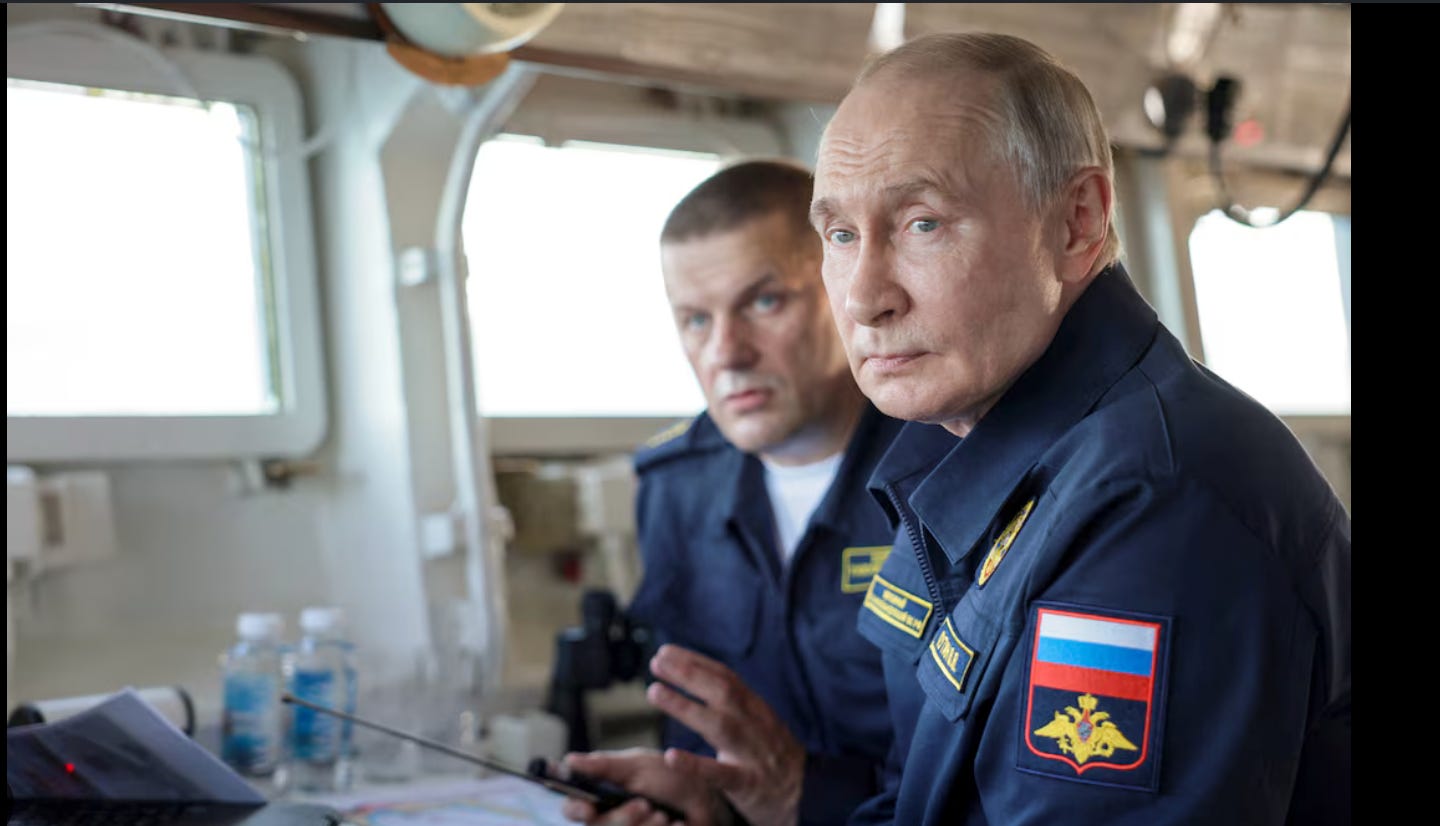
But Japan’s iron-lady prime minister Sanae Takaichi has barely responded. Her position on Russia is also tied to her failure to travel to Ukraine — something her predecessors were quick to do.
When then-Russian President Dmitry Medvedev visited the disputed islands in 2010, then-Japanese Prime Minister Naoto Kan’s government recalled its ambassador to Russia two days later in a move widely viewed as a de facto retaliatory measure.
And when then-South Korean President Lee Myung-bak visited Takeshima -- a group of islets claimed by Japan and controlled by South Korea -- in 2012, the Japanese ambassador to South Korea was recalled the same day.
Current Japanese Prime Minister Sanae Takaichi immediately condemned Putin’s visit by saying Tokyo ‘strongly protests’ the action, but her government has taken no further steps. This initial response has drawn some criticism, considering measures taken in past cases.
Yuichiro Tamaki, leader of the opposition Democratic Party for the People, told a news conference Tuesday that “failing to take any countermeasures raises questions about the government’s stance on territorial issues.”
Many in the government and the ruling party argue that Japan should first assess what moves US President Donald Trump will make regarding Russia policy. The US Congress is considering legislation that would impose additional tariffs on countries helping Russia evade sanctions. But Trump himself has often taken a conciliatory approach toward Moscow.
…
An official close to Takaichi cited Japan’s dependence on liquefied natural gas imports from the Sakhalin-2 oil and gas project in the Russian Far East as another reason for caution. With energy supplies already under pressure from Middle East tensions, the official wondered whether Japan could realistically ‘completely sever relations with Russia.’
…
There is also a view within the Japanese government that, compared with China and North Korea, Russia may still offer some room for future cooperation, which has led to pushback against a scenario in which tensions with Moscow intensify further.
This helps explain why Takaichi has not met with Ukrainian President Volodymyr Zelenskyy since taking office as prime minister. In May, a delegation of senior officials from the Ministry of Economy, Trade and Industry and business representatives went to Russia.
US draws down drone unit
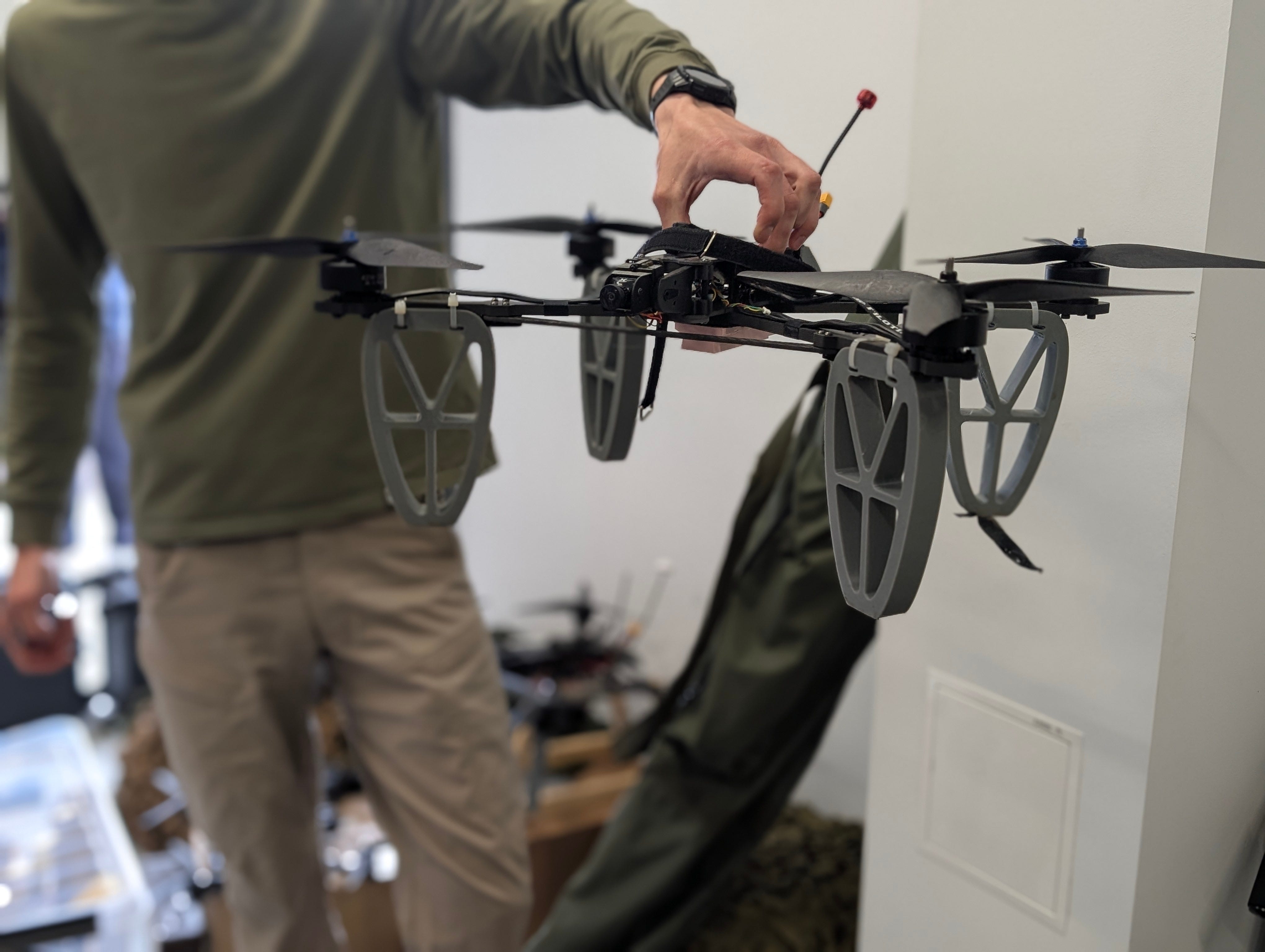
In another slow clap for the Pentagon under the Trump Administration, the US is closing its drone unit, which was designed to study and absorb the lessons of drone warfare.
The decision to gradually eliminate the unit was criticised by military experts, who point to Ukraine as a real-world ‘battle lab’ to learn how drones are changing modern warfare, with the most experienced drone operators in the world, who are constantly learning and adapting amid Russian attacks.
‘The US is behind in adopting and fielding small drones. While the Pentagon is planning a massive investment in small drones, procurement is not enough to close this gap. There is a risk that the US Army invests in the wrong types of drones or obsolete technology and doesn’t learn how to employ them in an effective fashion on a highly contested battlefield,’ Stacie Pettyjohn, a senior fellow and director of the defence program at the Centre for a New American Security (CNAS), told The Hill on Thursday.
‘The experience of a recent exercise in Europe … in which the Ukrainians beat U.S. Army forces, shows that the US has a lot to learn,” added Pettyjohn, a US defence strategy expert. ‘The Pentagon should be taking every opportunity to learn from the Ukraine war. The Russians, Chinese and North Koreans certainly are.’
Cameron McMillan — a former counter-rocket, artillery and mortar battle captain in Iraq — called the phaseout one of ‘several puzzling steps’ by the service branch in recent months, also pointing to ‘transferring or withdrawing units and commands suited for large-scale ground combat in Europe to theatres where they are less needed.’
‘As the Iran war has demonstrated, the US Army has a significant gap in drone defence capability, capacity and doctrine. In the Middle East, that challenge is largely defending static bases against long-range one-way-attack … drones. But in Europe, the counterdrone challenge is much greater’ and includes defending against smaller first-person view drones, McMillan, now a senior research analyst at the Centre on Military and Political Power at the Foundation for Defence of Democracies, told The Hill on Thursday.
‘This drone unit was designed to incorporate and apply desperately needed lessons learned from Ukraine to help the US Army adapt to this challenge.’
The joy of ‘children’s books’
August has been lovely this year. I have no idea why all the British abandon their country the only month sunshine is guaranteed, and people are in their happiest moods. I prefer to stay. I don’t take holidays as such, but this year August provided me with the first three consecutive weeks that I’ve been able to have in my own bed since January, and it was a total recharge.
Those of you who give me that face when I admit my sleeping hours sometimes reach three to four hours can give it a rest for now. These past weeks have been a wonder of plenty of hot yoga, discovering the deep sleeps that magnesium glycinate aids, trialling ice cream recipes in my new Ninja Creami and devouring my way through a couple of new cookbooks, along with falling in love with London all over again.
I now understand what a ‘staycation’ really means!
I must admit, I felt a bit depressed after compiling all these articles this week. Another summer habit has been sidelining my serious books (at night only) for a chapter or two of my favourite childhood book Anne of Green Gables. Deliciously, my eldest sister asked me a few years ago for a birthday present suggestion, and I requested first editions, so my versions have that fabulously evocative old bookstore smell.
She had introduced Anne to me growing up, and I had instantly fallen in love with the romantic, creative, imaginative, passionate, feminist, fiery but loving radical. I reread the entire volume so many times I did not think there was anything new for me to discover in them, but actually, I was taken aback by how many new dimensions appeared at age 42.
A bit like Harry Potter, I realised how adult these children’s books really were, with complex themes and relationships discussed, but all told with such wholesomeness and timelessness that was enchanting to relive.
There is so much content produced today that is often outdated in months, weeks, and most certainly years, but Anne exists so perfectly in her time (early 1900s) and yet transcends it to this day.

Lucy Maud Montgomery’s writing was always a version of heaven for me (the others being endless performances of Swan Lake, sushi by Japanese masters, Chopin, champagne and scuba diving vivid reefs). But after years of absorbing language primarily as a conduit for factual information, it feels like sinking into clouds suspended in the sky to drink in her sentences, formed as beautifully as the scenes she describes. I’ve renewed my ambition to visit Prince Edward Island at least once in my lifetime, and I definitely should give myself time to read fiction a little more, teenage or adult next summer.
If I feel silly for escaping from the relentlessness of geopolitics in 2026 into a children’s book I enjoyed thirty years ago, I don’t feel silly enough to share it with you, as I guess it is the same reason why Stranger Things was such a hit (and yes, I love that too).
So this piece by Penelope Lively, about the power of children’s literature and why it can sometimes say more, really resonated.
And what is it that these books that are significant for all ages have? I think that we who have written with equal application for adults and for children – and we are not that many – know that a children’s book is a particular endeavour. You are writing for a literary innocent, someone without preconceptions of what a story should be, how it should behave. So… let go and take off, shed your own assumptions about narrative.
There is indeed a change of register in writing for children, but you don’t write down to them, you write out of your own adult concerns and interests. You temper these, you tweak and adjust – Auden again – but adult experience takes a back seat here: you are back where you once were yourself, but endowed with the magical power of adult expression.
….
The author of an adult novel is of their time; the issues of the day tend to creep around the story – as do the attitudes and assumptions. We are writing now. We reflect our time and place. We need to.
The writer of a children’s book has license to abandon time and place, to create, to propose alternatives. It is an indulgence, and a hazard. The writer must find a language, a universe, that will persuade all – both the literary innocent that is the child and the sophisticated adult reader. And that is what the great children’s books have done.
The perennials of children’s literature, the great books, are simply those that have become cultural landmarks, whose appeal is to all – children or adults – so that they have lodged in a million minds as an essential component of the imaginative furnishings.
…
The reason that fairy stories, myths, legends were first of all for adults is that they suggested worlds, circumstances, in which things ran differently from the way in which most people’s lives played out; in which the wicked stepmother got her comeuppance; in which the scullery maid married the prince; in which you could find the crock of gold. They may be seen as fodder only for children now, but in the days of their conception the true value of story was understood: it has the power to suggest an alternative.
And that’s my list for this week.
Please do send me anything that’s caught your eye, especially if it’s a book you also first enjoyed decades ago, I enjoy knowing what you’ve been reading.
🗳️ For my media, I joined Moncole Radio's The Globalist to discuss my interview wth Graham Fletcher about why he thinks Xi Jinping is not ready to move on Taiwan just now.

I also spoke to BBC Scotland about the Sydney Swans scandal.
I am back on the travel hamster wheel from the weekend, travelling to Stavanger, Norway for the ONS conference where I will be moderating four panels. Goodbye sleep.