

Allies should start pushing back against Trump
Francis Fukuyama writes that Donald Trump is flagging as President and that ‘things will only get worse for Trump in 2026.’ He believes that inflation, foreign conflicts, tariffs and the US President’s health will all pile up as issues ahead of the midterms in November.
He says Trump’s spell has been broken, partly due to the release of the Epstein files, an issue central to the identity of MAGA and QAnon. QAnon was a movement largely built on the conspiracy theory that a class of elites were covering up a paedophile ring. That doesn’t sound so conspiratorial anymore, thanks to the drip feed of the files that the Administration was forced by Congress to release.
Fukuyama argues that this is the year for allies to start pushing back against Trump (versus the fawning and bribing), although he notes that some, like Ukraine, don’t have this capacity or time.
Most interesting is his assessment about what comes next, and how deep the scarring of Trump and MAGA will be on future US Administrations.
Given this record, it is easy to imagine that things will continue to get worse, and that America’s self-degradation has not yet found a bottom. I have been travelling in Asia and Europe recently, and in both regions, I get asked the same questions: What happened to the American system of checks and balances? What should American allies do, now that the United States has pulled the rug out from under them? Do we have an alternative to obsequiously bowing to Trump and pleading for him to spare us the worst, as everyone from American law firms to NATO allies has learned to do up to now?
I think it is very important at this juncture for former American friends not to engage in catastrophic thinking, because catastrophe may become a self-fulfilling prophecy. During the first Trump term, I warned friends not to assume that the world would at some point snap back to what it was prior to 2016, or that Trumpist populism was just a passing phase. There were too many shifts in right-wing coalitions around the world for this to happen.
But it is important to understand that Trumpism is also not a permanent condition. I believe that already in the first year of his second term, we have experienced peak Trump, and that his power will decline steadily as time goes on.

Russia is not planning to attack NATO
Rarely do you see intelligence officials speak like this!
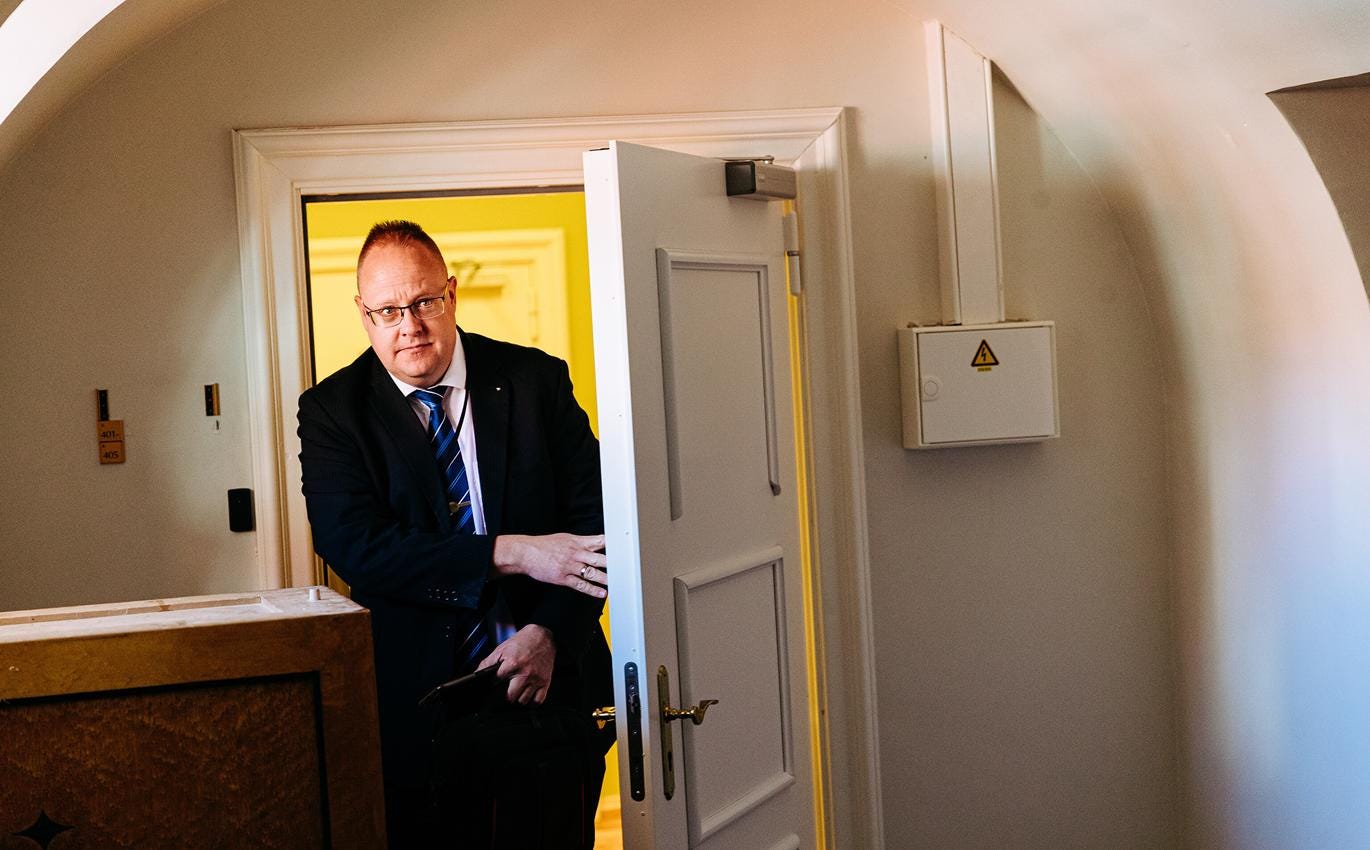
Kaupo Rosin, the head of Estonia’s Foreign Intelligence Service, is interview-shy. But when he does speak publicly, boy does he make a mark. This is one of the most fascinating and frank interviews I’ve seen a spy chief give. And everything he says goes against the zeitgeist, especially given that it is said by a Baltic figure.
The orthodoxy in these countries is that Ukraine is just step one in Vladimir Putin’s march towards attacking NATO, with the Baltic, former Soviet-occupied states first on the menu.
But Rosin says that’s not the case. He also says NATO’s actions are working to deter some of Russia’s most risky and disruptive behaviour, including cutting underwater cables and flying fighter jets into Estonian (NATO) airspace. In short, deterrence is working, for now.
When we talk about the threat assessment, how has it changed from Estonia’s perspective from the beginning of the year to the end?
What we’re still seeing today is that Russia currently has no intention of attacking any of the Baltic states or NATO more broadly.
We’ve seen that, as a result of our responses, Russia has altered its behaviour following various incidents that have occurred more broadly in the region. So far, it’s still clear that Russia respects NATO and is currently trying to avoid any open conflict.
What do you mean when you say that Russia has changed its behaviour in response to our actions?
Following various incidents — starting with the undersea cables some time ago or the different drone incursions into NATO airspace or aircraft violations — what we’ve seen is that, in response to reactions from the West or NATO, Russia has taken various measures to prevent such incidents from happening again in the future.
If we look at the current situation, including what’s visible to the public, the drone flight paths over Ukrainian territory or airspace have been adjusted to minimise risk. We’re also seeing that Russian aircraft are now very carefully monitoring their flight paths over the Baltic Sea, strictly adhering to their trajectories to avoid triggering incidents.
There have also been no cable-related incidents since the NATO mission [Baltic Sentry] was launched here. That's the current situation. Of course, this doesn't rule out the possibility of future incidents because military activity remains high and the war in Ukraine is ongoing. In theory, such events are still possible, but at the moment we don't see any indication that Russia is deliberately trying to escalate.
Zelensky finally hires a new chief of staff
This is a very interesting move from Zelensky. After his former chief of staff, Andriy Yermak quit after being investigated by anti-corruption bodies (he has not been charged), Zelensky has been without a top aide.
During this time, Zelensky has been negotiating with Trump the terms of a possible ceasefire deal. But the appointment of Kyrylo Budanov to replace Yermak provides an insight into how Kyiv truly perceives the efficacy of any truce the US can broker between Ukraine and Russia.
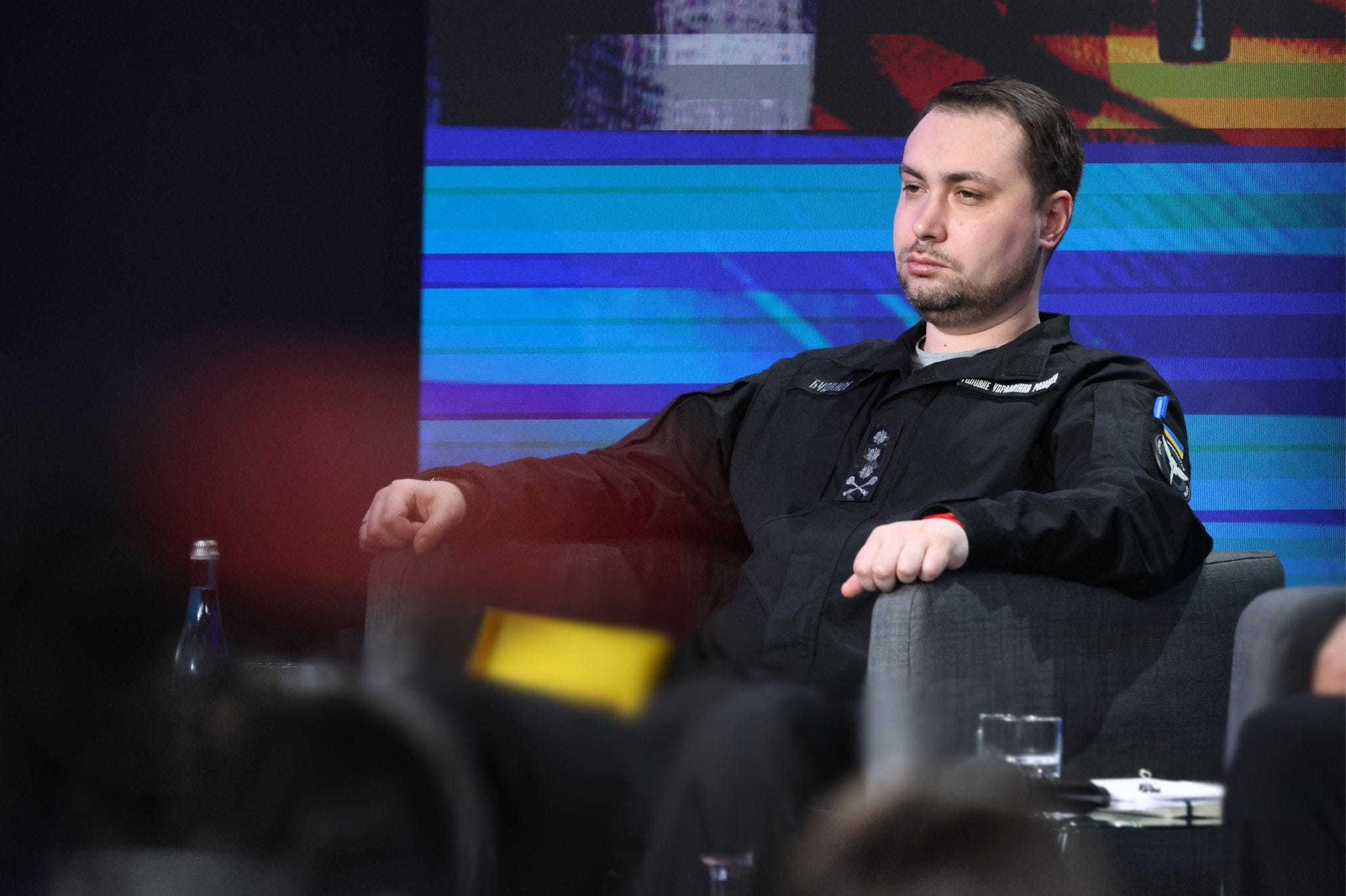
Budanov was the intelligence chief. One of my Ukrainian sources interpreted it this way: ‘It’s a good and strong sign to Trump and Putin, meaning that Ukraine is not going to surrender.’
But there is also a political dimension. Zelensky has promised elections as part of any peace arrangement. Budanov is a popular figure in Ukraine and is regarded as one of the two top contenders if there were to be any presidential election held in the near future. The other being General Valerii Zaluzhnyi, who is currently, and mostly silently, serving out a posting as Ambassador to the UK. Both have served on the battlefield.
How to read this move? Zelensky is either trying to neuter Budanov by tying him to the current government or setting him up as a potential successor.
Zelensky also promoted Mykhailo Federov to Defence Minister — another popular figure.
Lieutenant General Budanov, 39, has led HUR since 2020. Under his leadership, HUR has evolved into a formidable force during Russia’s full-scale invasion.
Budanov has become a household name in Ukraine, his agency is regarded as one of the most competent institutions in the country, while the spy chief has been publicly giving bold predictions about the war’s outcome. Not all of them came true.
A lawmaker from Zelensky’s Servant of the People party, who spoke with the Kyiv Independent on condition of anonymity, believes that Budanov’s appointment may signal that the widely discussed peace plan will not yield results given the Russian stance.
‘We need to prepare for a long, exhausting struggle. And this is exactly the approach that Budanov represents,’ the lawmaker said.
Lawmakers and experts argue that the most important thing is not who becomes the new head of the President’s Office, but the role’s future influence. Budanov’s predecessor, Yermak, accumulated unprecedented power within the Ukrainian government.
‘(Budanov) will need to build his own system, his own vertical of power. I think it will be a different style of leadership for the office,’ the same source told the Kyiv Independent.
‘He’s a spymaster, but he’s not a master of political intrigue.”’
Lawmakers from the president’s party who spoke with the Kyiv Independent approved Zelensky’s choice, while questioning why Budanov agreed to take on this role.
Although Budanov has never announced plans to pursue a political career, he is regularly featured in opinion polls and ranks among the top presidential contenders, behind only Zelensky and Ukraine’s Ambassador to the U.K. Valerii Zaluzhny.
According to a recent poll conducted by Socis, Budanov would secure 5.7 per cent in the first round. In a hypothetical runoff between Zelensky and Budanov, the latter one would defeat Zelensky with 56 per cent of the vote against 44 per cent.
According to the Economist, Budanov was close to losing his job in June 2025. The effort to oust the popular spy chief was led by then President’s Office Head Yermak, according to the news outlet.
Volodymyr Ariev, a lawmaker from the opposition European Solidarity party, sees Budanov’s appointment either as an attempt to remove a political rival or a move to shape him into a possible successor to Zelensky.
Russia’s meat grinder, exposed
Russia’s human rights ombudsman appears to have inadvertently published online more than 1000 complaints from Russian soldiers about the brutal and inhumane conditions under which they have been forced to fight Ukraine.
The petitions seem to have been accidentally published and were noticed and collected by the Russian journalist Maxim Kurnikov, who runs the Berlin-based Russian media outlet Echo.
The New York Times corroborated many of the complaints that exposed a pattern of abuse of Russian soldiers.
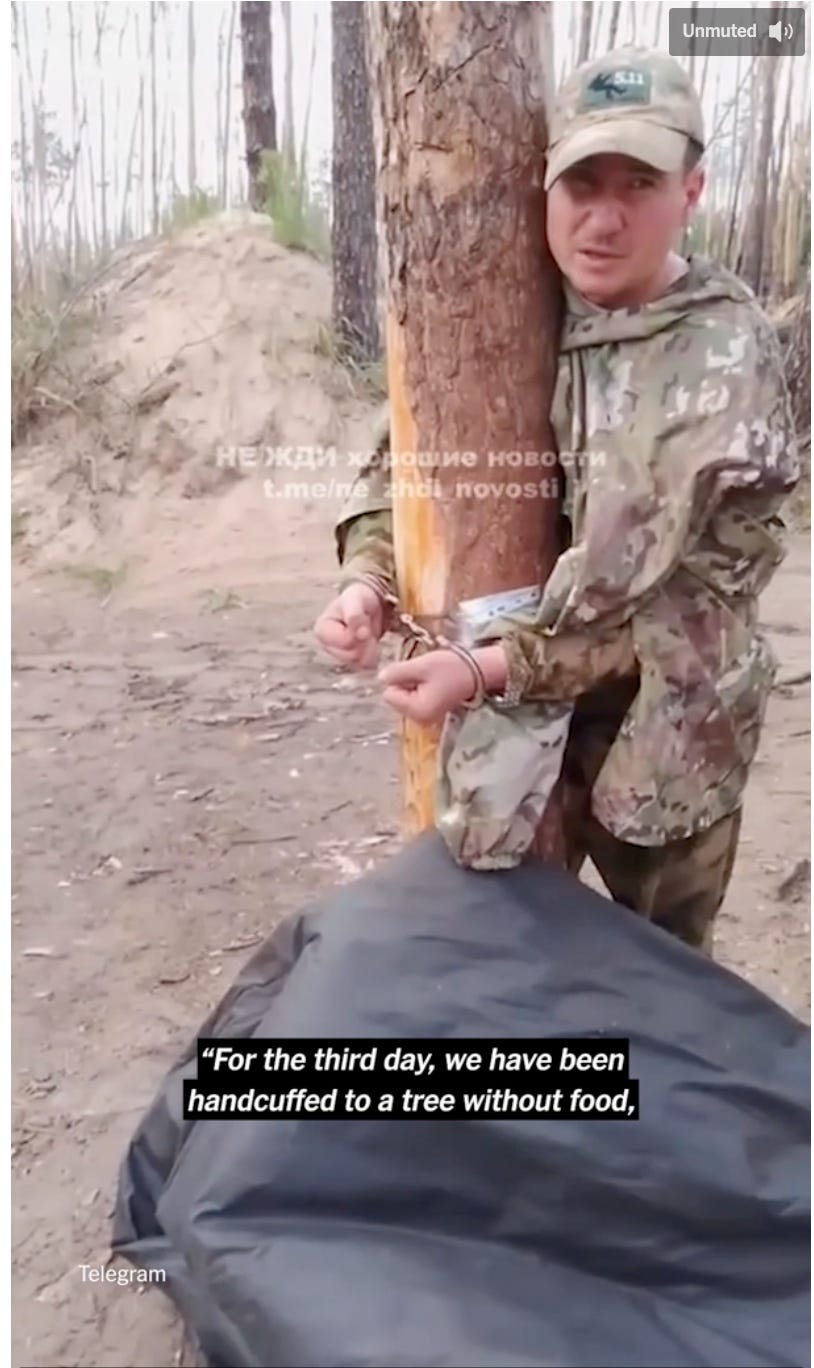
In an August 27 complaint, a soldier’s mother, Oksana Krasnova, attached a video her son had taken of himself and a comrade handcuffed to a tree for four days without food, water or access to a toilet. She pleaded, ‘They are not animals!’
She also made the story public on social media, saying her son and his comrade had been punished for refusing to go on a suicide mission that involved taking a photo with a Russian flag on Ukrainian-held territory.
Reached by The Times, the son, Ilya Gorkov, said he had taken the video near Kreminna, Ukraine, after hiding a phone in his sleeve and that he was released thanks only to a relative with connections in the Russian security services. He said he had hired a lawyer and was refusing to return to his unit, because doing so ‘would be like signing my own death warrant.’
‘People in wheelchairs are being sent to the front, without arms or legs,’ he said. ‘I saw it all with my own eyes.’
…
In at least 95 cases reviewed by The Times, prisoners of war released by Ukraine were returned against their will to Russian military service, often to active combat.
Thousands of captive Russian and Ukrainian soldiers have been freed in prisoner exchanges over the last four years. The documents show that Russia sometimes sends these troops back to the front line as quickly as a day after their release.
One Russian soldier who said he had been sent back to the front line after seven months in Ukrainian captivity described in a complaint how memories from his time as a POW were causing him to panic and make poor decisions on the battlefield.
‘Given my psychological state, sending a former prisoner of war to an active combat zone is a rash decision,’ he said in the complaint. ‘How can I carry out the orders of the command if this whole situation is affecting me mentally?’
Why Russians aren’t revolting
And yet this has not translated into any material opposition or trouble for Putin, at least that is visible.
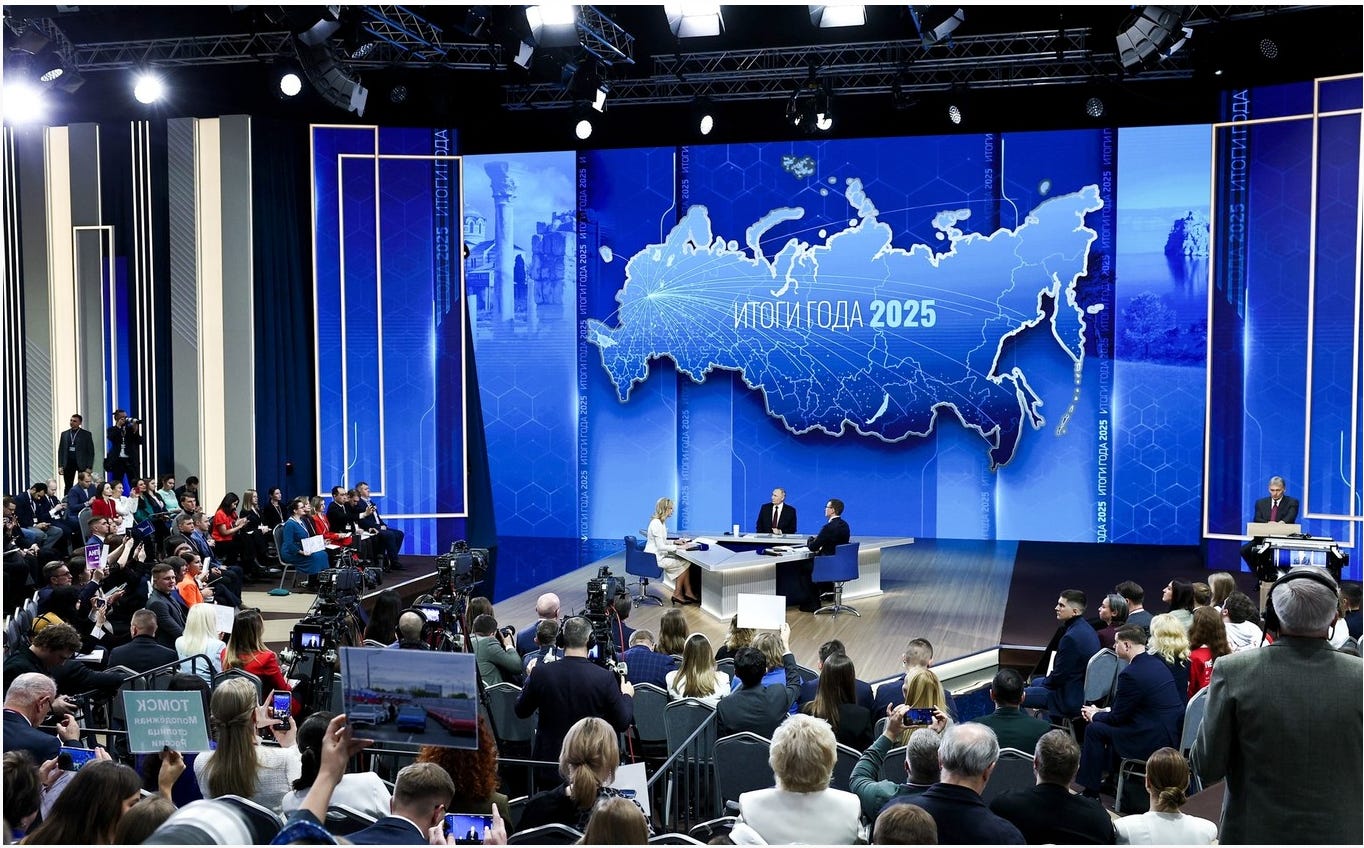
Putin has successfully convinced the Russian public to back his war, which has fuelled domestic economic growth, a surge in Russian patriotism, as well as culture and local tourism.
The Ukraine War has significantly changed public attitudes toward this question, and led to a consolidation of most of the Russian population behind a set of national ideas. This has contributed to the resilience that Russia has shown in the war, and helped to frustrate Western hopes that economic pressure and heavy casualties would undermine support for the war and for President Vladimir Putin. To judge by the evidence to date, there is very little hope of these Western goals being achieved in the future.
…
When the war in Ukraine started, without any warning to the Russian public, it was initially met with disbelief, confusion, and bewilderment. Most were concerned with their chances to navigate the troubled waters rather than providing support for their country.
No longer. Nearly four years of war has profoundly transformed Russia. Fostered by state propaganda, many ordinary Russians have developed a sense of pride that Russia has survived in the face of Western hostility. This feeling has been fed by Western expressions of contempt toward the Russian people and Russian culture — insults that are assiduously quoted by the state-controlled Russian media.
…
Emphasis on Russian culture has become more pronounced, and not only because of the war. Russia, having rejected ‘woke’ ideology when it emerged onto the global stage, has presented itself as the ‘true,’ or traditional, 20th-century Europe. This appeals even to many liberal Russians, who aspired to join the Western civilisation of the past, but not what it has become today. Even among Russians who strongly opposed the war, there is a feeling of satisfaction that Russia no longer has to defer to the West culturally.
And that’s my list for this week.
Please do send me anything that’s caught your eye, I enjoy knowing what you’ve been reading.
Thanks, I rely on journalists like as you never know what on social media is AI created. I get confused as to Russia's position - we are told it is only the 6th largest world economy and its weaponry is inferior to the west's. It's key strength appears to be the number of soldiers it is prepared to expend for slow gains. Can it outlast the western alliance even if US retreats? I am amazed that British (husband) and Dual Russian Citizen (wife) vloggers like "Matt and Julia" can make "neutral Russian leaning" videos for YouTube. On Trump there is lots of commentary on YouTube about Canadian PM Carney out smarting Trump on tariffs by restricting US access to Canadian metals and minerals essential to US car and chip manufacturers. Haven't seen much about this in mainstream media. Can you add anything? Cheers and thanks