

Keir Starmer clings on: ‘It’s not about vanity’
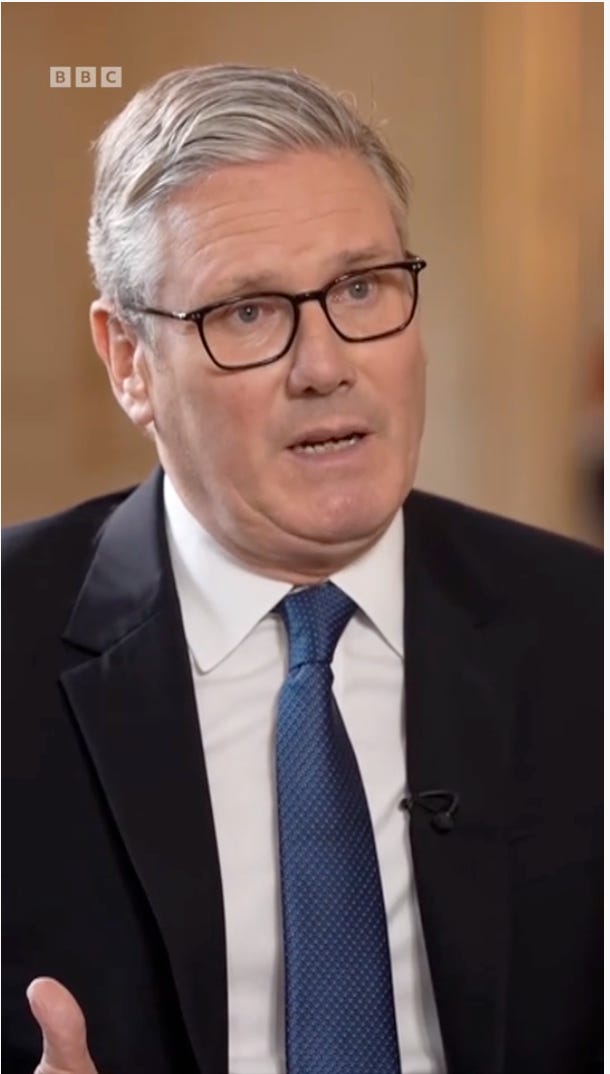
It is beyond sad watching Keir Starmer cling to his leadership, for the sake of so little. He continues to pay the price for running an agenda-free election campaign and, in government, is trapped by his own political ineptitude, a charmless Chancellor in Rachel Reeves and a Labour party that thinks the country’s problems can be fixed by endless welfare.
The departure of John Healey as Defence Secretary was a body blow. Healey is no leadership rival (more on that below) and was an uber-loyalist to the prime minister.
His decision to quit because Starmer and Reeves have no intention of funding defence to meet a threat level that includes a potential attack by Russia on NATO within three and a half years is devastating.
But Starmer is unperturbed, as usual. He filled Healey’s vacant post with the junior home office minister Dan Jarvis.
In a veiled warning to potential leadership challengers in his own party, he said: ‘Whoever is prime minister is going to face the same prevailing winds as I am facing, none of that is going to change.’
Asked if he wanted to lead Labour into the next election, he said that was what he wanted to do, but acknowledged: ‘I need to turn things around.’
He said he did not want to ‘plunge’ the country into the ‘chaos’ of a leadership election but added: ‘If it does happen, I will fight.’
‘Let me be clear that this is not about personal vanity, it is not about stubbornness, it is about a very deep sense of duty,’ he said.
‘I was elected to serve this country notwithstanding difficult circumstances - that is what I am doing.’
Defence matters for Labour’s next PM
Former Labour MP Tom Watson has an interesting analysis about what the row means for the future of the party’s electoral viability, and the more immediate leadership contest.
He says Healey goes with his reputation enhanced, although writes his former colleague’s obituary. This may be hasty as Healey could emerge as a credible, consensus candidate, drawing upon his bolstered reputation, as I wrote here.
A cabinet minister resigning over a point of principle is rare enough to command respect. He goes with his reputation enhanced.
Which makes Jarvis’s task brutally clear. He inherits a settlement his predecessor judged a danger to the country: spending creeping from 2.6 per cent of GDP next year to 2.68 per cent by 2030, an extra £13.5 billion against the £28 billion the service chiefs say they need. The armed forces minister Al Carns, another decorated soldier, walked out alongside Healey. In resigning after John, Carns showed that however stellar military his career, his political judgement was poor. The causes he proclaimed in his resignation letter required him to be on the inside, not on a tour of the resignation interview circuit.
The defence community, from the chiefs to the supply chain, is distinctly irritated, and worse: it agrees with the Secretary of State who just resigned. Jarvis’s biggest challenge is convincing that community he can hustle up the defence budget across Whitehall, against a Treasury that has just faced down a defence secretary and won.
My guess is that he can. Here is why. The single biggest question being put to the various candidates for the Labour leadership, despite there being no vacancy, is where do you stand on defence and the defence budget. Wes Streeting has gone to the backbenchers to build his platform. Andy Burnham circles with his. Every contender knows that credibility on national security is now the entry ticket to the contest, just as Jarvis himself argued back in 2019 when he said a Labour leader “had to be credible when it comes to the economy and when it comes to national security”. A prime minister fighting for his political life cannot afford to lose two defence secretaries over money in one parliament. Jarvis knows it. The Treasury knows it. That is leverage, and leverage is what Healey, for all his virtues, never quite had.
There is a deeper shift underneath. For a decade the party’s centre of gravity ran through health, housing and the cost of living. It now runs through the defence of the realm. Politics has moved, at last, onto Dan Jarvis’s ground: the man with the medals, the comprehensive education and the marathon habit, who has waited fifteen years while lesser CVs overtook him in the queue.

The rivals circle
The leadership candidates are wasting no time.

Wes Streeting, the former health secretary who quit cabinet to make a tilt for Number 10, has no clear record on defence or foreign policy. But he has proposed several ways of funding defence, as well as services.
‘We’ve seen serious proposals around the Defence Security and Resilience Bank, which is now led by Canada. Great initiative. We’re not part of it. We’ve seen serious proposals for defence bonds, which would be inheritance tax-free defence bonds, so that we can get the huge amounts of money that are currently sat in all sorts of other savings and investments, probably not earning a great deal of interest, actively investing in the defence of our nation today.’
In Streeting’s view, the Prime Minister has failed to take responsibility for defence spending as well as a number of other issues. ‘[He] says he takes responsibility. I don’t think he does, actually. I don’t think he’s taken responsibility or even acknowledged what happened to good Labour people who lost their seats in May. And I don’t think he has taken responsibility for gripping this Defence Investment Plan and when you’ve got a defence secretary saying that the Chancellor is unwilling to fund it, and the Prime Minister is unable to effectively lead, I think it underscores the case for change and change quickly because we can’t go through any more of this inertia.’
He also lambasted the government for announcing a £4.5 billion walking and cycling scheme the day after Healey and Carns resigned, calling it ‘bad judgement as well as bad politics’.
‘Now, as a former health secretary, I’m all in favour of walking and cycling,’ he said.
‘I think these are good things, but would people watching and listening honestly say that if you’ve got a defence secretary who’s telling you there is insufficient funding to keep our country safe, would you, the very next day, as a matter of style, let alone substance, have an announcement for four and a half billion for walking and cycling?’ he said.
‘That’s not a choice I would make, and I think it’s a really good example of bad judgement, bad policy, as well as bad politics.’
Burnham’s vague plans
Andy Burnham’s plans are less concrete. The Labour Mayor of Manchester is contesting the Makerfield byelection next week.
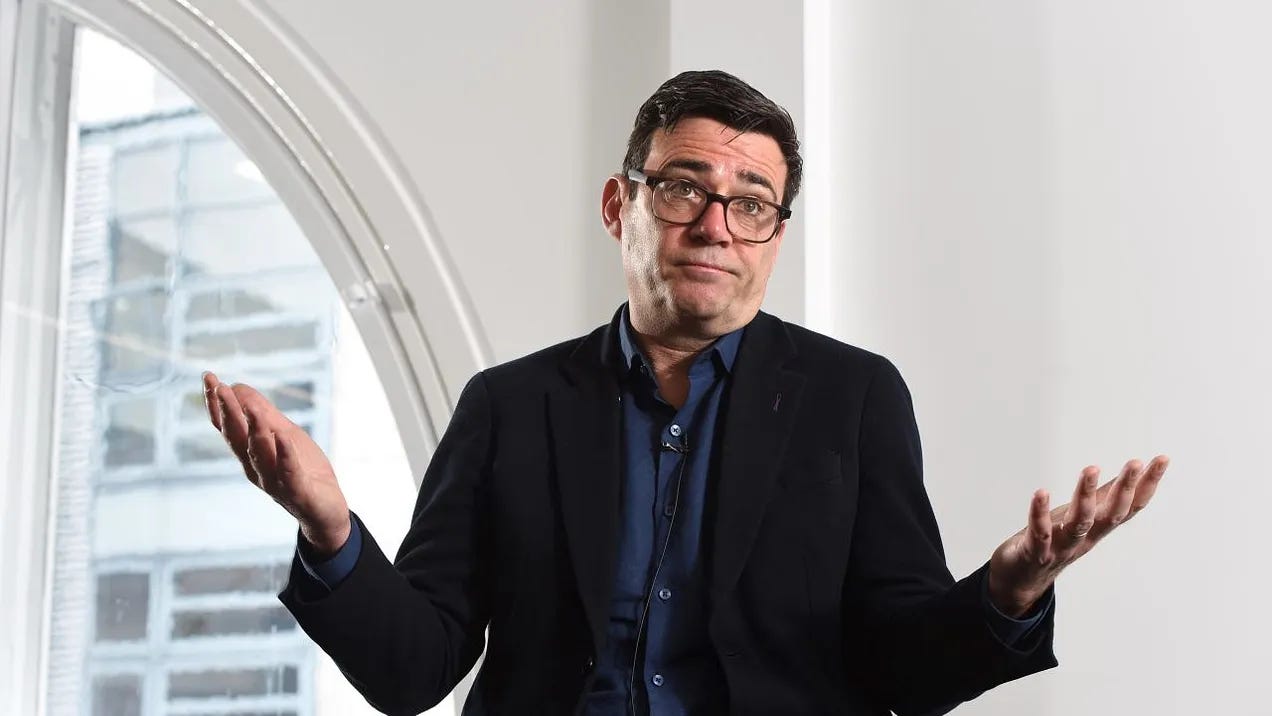
If he wins, a leadership challenge to Starmer is all but on. He wants to prioritise British jobs as part of procurement and defence resilience. Insisting on domestic-only or domestic-first builds is a huge part of why governments find it so hard to deliver weapons on time and in budget.
‘The world has changed, it’s obvious to anybody who looks at it, and we are going to have to change the assumptions on which we’ve been working,’ he says.
‘I would say it’s defence and security but also resilience.’
It is at this point that Burnham begins to set out one of the first planks of his plans for power. He thinks that there needs to be not just a ten-year approach to defence and security, but a ten-year approach to public investment and procurement. As part of the plan, all public procurement would have to include a measurable commitment to ‘social value’, such as work placements and apprenticeships for young people.
This, he says, is the ultimate way to help reduce the welfare bill and ensure there is more money available for defence. “I am not squeamish about saying that the plan would be to reduce the welfare bill,” he says. “Not at all.” But under Burnham’s vision this would be about taking people out of welfare and into work.
‘It is not the traditional Westminster way of just crude cuts, short-term cuts that then create a backlash and create more political turbulence. It is actually going to do things that will reduce the benefits bill, moving towards a more preventative state that makes the right investments to support people into work.’
MAGA gets tactful
Elbridge Colby, the number two at the Pentagon, weighed in, but was in keeping with the new tactful tone that the Department of War’s chief bomb-throwers have adopted of late. (Pete Hegseth’s recent speech in Singapore not berating allies was a case in point).
The United Kingdom has an extraordinarily proud military history. It commands our respect. There is again a great need for more British military strength in this critical time. We urge the UK to meet that need with urgency, scale, and determination.
As I said recently in Normandy, ‘Here soldiers, sailors, and airmen from Great Britain and Canada demonstrated the courage, tenacity, dedication, daring, and loyalty that won them the lasting admiration and gratitude of the whole world – not only here in Normandy but also through the entirety of two World Wars…
‘Our purpose now must be to take our resolve from the legacy of Normandy – to look at our challenges realistically and seriously, to build our military strength individually and together, and to restore our home fronts that can, once again, supply overwhelming superiority in weapons and munitions.’
And that’s my list for this week.
I have had a few mental weeks.
I moderated and MCed the GLOBSEC Forum in Prague, attended the Black Sea Security Forum in Odesa, Ukraine and moderated a session as well as attended the German Marshall Fund’s China Stockholm Forum in Sweden last week in my capacity as Associate Expert at the Australian National University’s National Security College.
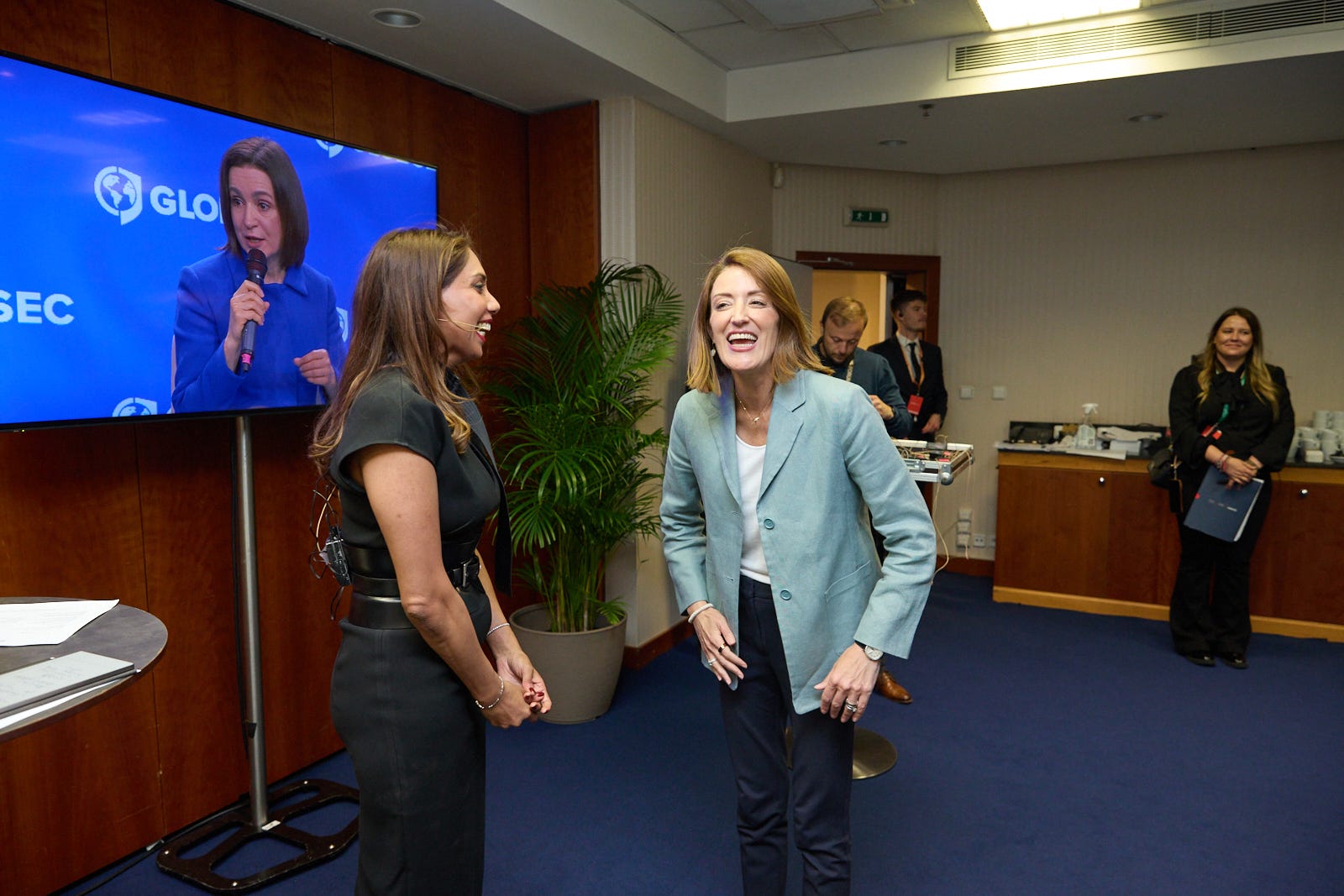

So please forgive the lack of reading updates in between.
Next week I will be attending the Kiel Security Conference in Germany.
On the ABC’s Global Roaming, Geraldine Doogue and I spoke to Suzy Hansen about the slide to authoritarianism under President Erdogan.
And Kylie Morris and I spoke to human rights lawyer and researcher Ahmed Abofoul about whether the war in Iran is accelerating the green transition.
Listen on all podcast apps and here.
Please do send me anything that’s caught your eye, I enjoy knowing what you’ve been reading.