

Meditations, by Marcus Aurelius
Not since watching Moulin Rouge at the age of 17 have I felt as seen as I did reading Meditations, in my forties. I really don’t even know where to start with the fact that the two people in the world who’ve most made me feel this way are Baz Luhrmann and Marcus Aurelius, but I’m relying on one of you to find the link between these two geniuses somewhere!
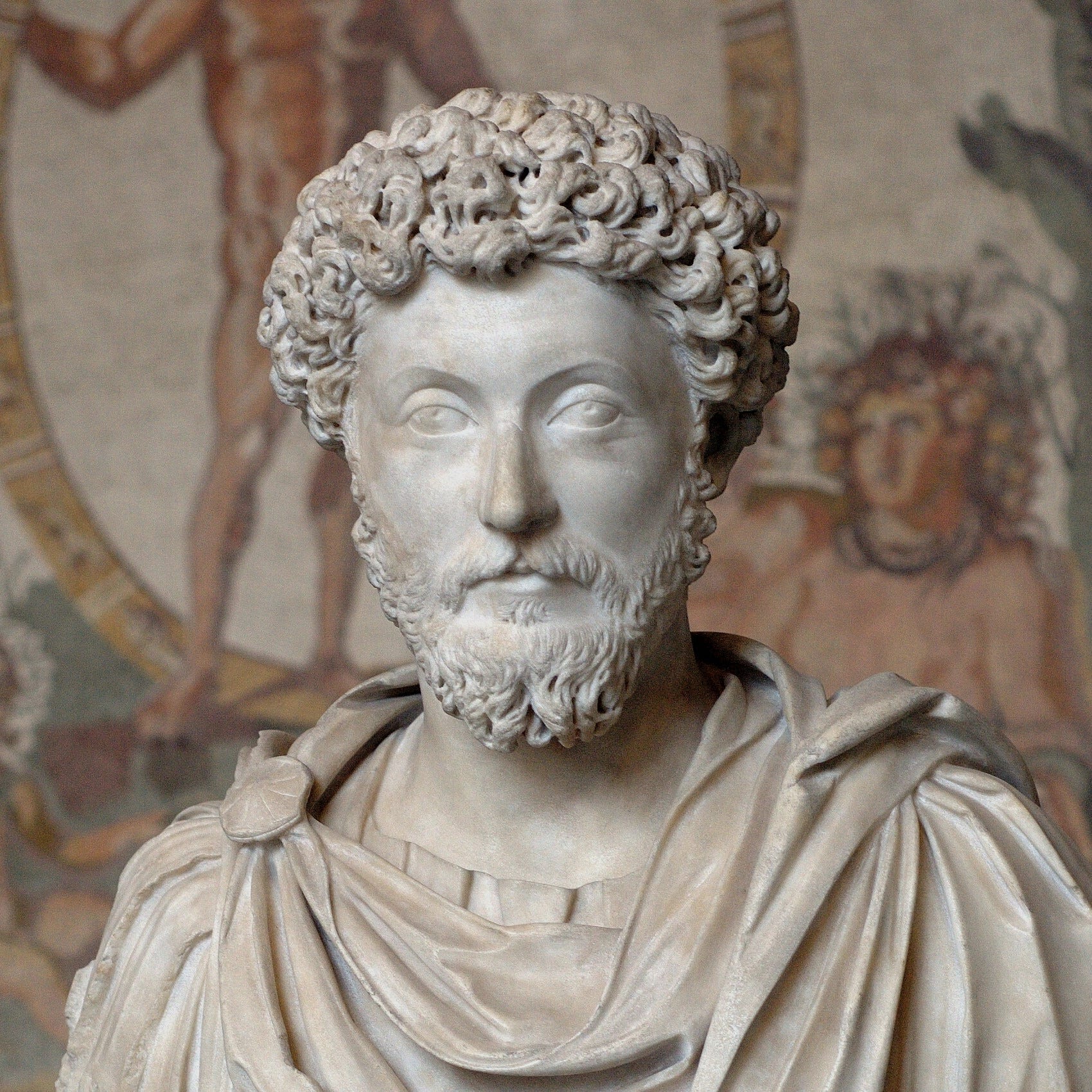

Inspired by my joy in discovering the wisdom of the much-maligned Machiavelli earlier this year, I decided to explore some more classics, particularly around political leadership.
To that extent, I sometimes feel a great deal of sympathy for politicians because there’s no real manual for how to be a great world leader, and many take the job suddenly, too ambitiously, aka too soon and fall into power deeply unprepared. But for so much as a guidebook exists, it surely has to be Meditations. Aurelius’ mandate is one almost for the ‘reluctant ruler,’ divorcing ego from power and applying humanistic principles to personal and public conduct.
I loved his complete lack of interest in preserving legacy or creating fame, a stark contrast to the modern world’s cast of political socialite-leaders. And he describes well the liberation that comes from freedom from materialism.
However, I was not totally sold on the advice to absorb all wrongs and return the treatment only with kindness — bad actions need to be identified as such in my view, but maybe a journalist would say that.
But my absolute favourite quote was not about leadership or political rule in the end. Rather it was his question and answer session about the concept of eternity. Raised by very strict Catholic parents, I had to spend a lot (every weekend and more) of time in church growing up, and so I spent a lot of my teenage years questioning what I saw was a key flaw in the idea of eternity and heaven — was what was the point of the endless production of souls and wtf are we all supposed to do in heaven forevermore if it does exist? So when I came across this dazzling passage, I realised how great a crime it was to read Meditations so late in life.
It is not necessarily his answer that I find persuasive, just the reassurance even if decades later, that these thoughts were not totally mental for me to have been thinking.
Every parent should give this book to their young adult child IMHO. Aurelius shows better than anyone that human nature is constant, and his teachings are a timeless prescription for a better humanity.
If souls survive death for all eternity, how can the heavens hold them all? Or for that matter, how can the earth hold all the bodies that have been buried in it? The answers are the same. Just as on earth, with the passage of time, decaying and transmogrified corpses make way for the newly dead, so souls released into the heavens, after a season of flight, begin to break up, burn, and be absorbed back into the womb of reason, leaving room for souls just beginning to fly. This is the answer for those who believe that souls survive death.
Some of my other favourite quotes:
‘Go straight to the seat of intelligence.’
‘People who are excited by posthumous fame forget that the people who remember them will soon die too… until their memory, passed from one to another like a candle flame, gutters and goes out.’
‘So many who were remembered already forgotten, and those who remembered them long gone.’
‘The object of life is not to be on the side of the majority, but to escape finding oneself in the ranks of the insane.’
‘It is the responsibility of leadership to work intelligently with what is given, and not waste time fantasising about a world of flawless people and perfect choices.’
‘Soon you’ll be ashes, or bones. A mere name, at most – and even that is just a sound, an echo. The things we want in life are empty, stale, and trivial.’
‘Wherever a person can live, there one can also live well.’
‘Life is short—the fruit of this life is a good character and acts for the common good.’
‘All you need are these: certainty of judgment in the present moment: action for the common good in the present moment; and an attitude of gratitude in the present moment for anything that comes your way.’
Red hands graffiti part of Russia’s attacks on West
In May 2024, three men sprayed red handprints on the Parisian Wall of Righteous that honours gentiles who helped Jews during the Holocaust.
The defaced memorial naturally set off a public storm and the images that were quickly circulated on social media and in the mainstream media, inflamed the debate for weeks.
But a judicial proceeding into the incident has exposed the seemingly low-level graffiti to be a Russian covert attack, aimed at destroying community cohesion with the sole intention of eroding and eventually breaking democracy.
Clément Renault sat in on the entire trial. His read-out is a must-read. It is a reminder that we in the West must get far, far better at defending ourselves rather than blithely hoping that our democratic institutions are so strong that they will withstand these constant, hidden attacks on every part of our way of life.
The ‘Red Hands’ case is one of at least ten similar incidents that have targetted Jewish and Muslim sites in France in the last two years. Targetting religious sites is deliberately aimed at polarising society, provoking anger and eroding trust in each other.
But what unites these seemingly disconnected incidents is not only their symbolic targeting or clandestine execution, but their systematic amplification through Russian-linked disinformation networks. In each case, the physical act is not an end in itself but the first step in a broader influence mechanism. These actions were all rapidly followed by their amplification across social media and their insertion into Russian-linked disinformation networks such as Doppelgänger. The pictures of the ‘red hands’ went viral online only a few hours after the act of vandalism itself, with the Russian ecosystem of fake X accounts and coordinated bot networks injecting manipulated content into public debate.
These operations demonstrate that Russian intelligence services make use of traditional covert structures together with modern tools of digital influence. While the actions themselves are often low-cost and operationally crude, they are designed from the outset for online amplification. Using bot networks, inauthentic media outlets, and AI-generated content, these small-scale disruptions are rapidly transformed into far-reaching influence campaigns. This approach reflects the evolution of Russian intelligence tactics in which acts of vandalism serve primarily as triggers for larger information operations.
Ultimately, these interference activities reflect the growing strategic weight Moscow places on subverting public opinion in Europe in the context of war. These acts of subversion are not peripheral but closely linked to Russia’s broader war objectives, unfolding in parallel with espionage and sabotage efforts. Together, they reflect a coherent doctrine of offensive action rooted in the longstanding traditions of Russian intelligence. The ‘red hands’ case therefore stands as both a testament to Russia’s tactical adaptability under constraint and a reminder that even seemingly amateur operations can contribute to an integrated strategy to destabilise democratic societies from within.
Zelensky loses his Chief of Staff, Andriy Yermak
The all-powerful gatekeeper to the Ukrainian President has been a wildly unpopular figure inside and outside of Ukraine, particularly in Washington and Brussels, for a long time now.
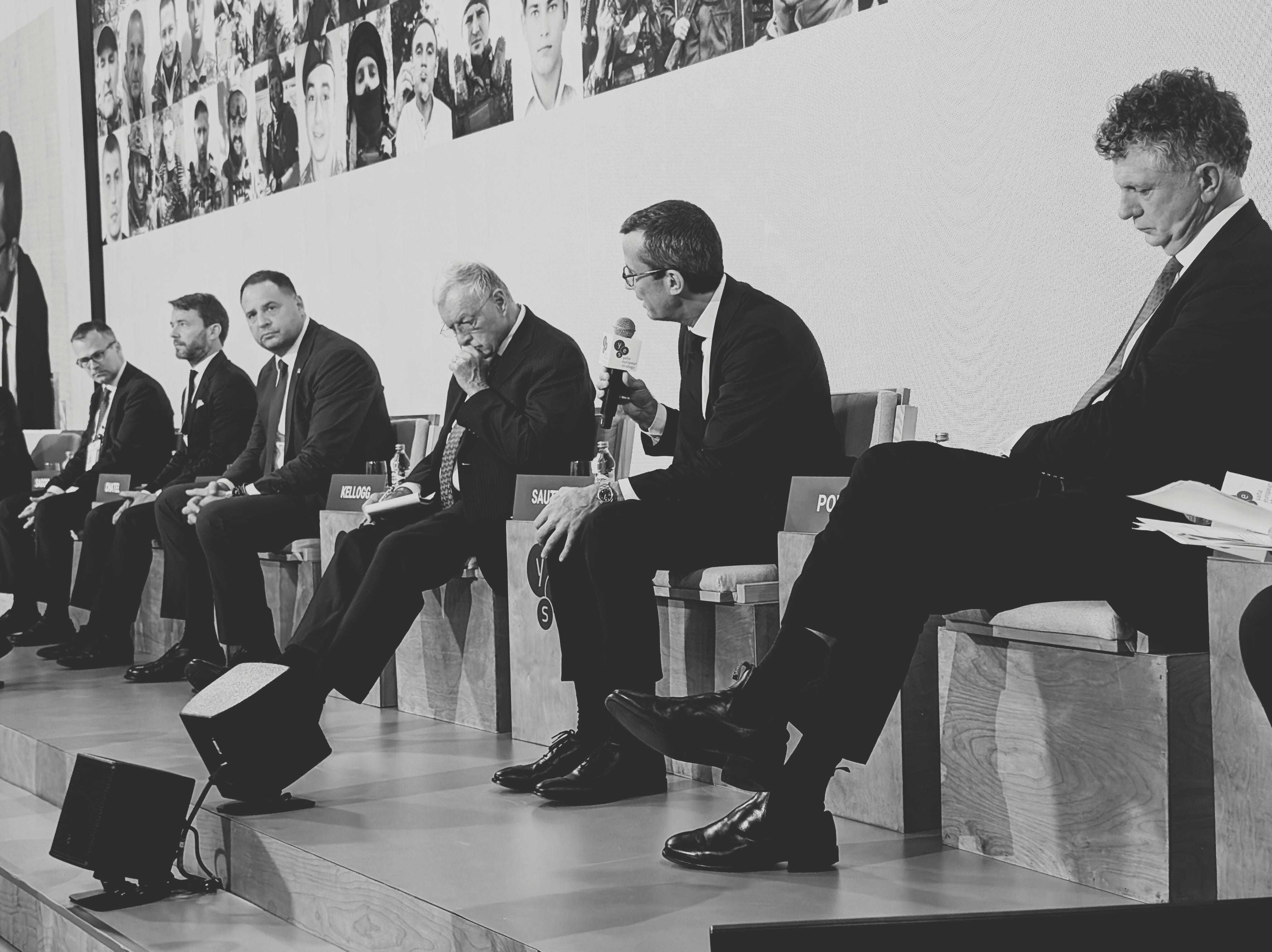
Volodymyr Zelensky finally parted ways with Andriy Yermak after the corruption bodies that Zelensky and Yermak tried to neuter earlier this year, raided the home of the President’s Chief of Staff on Friday morning. This is part of the ongoing corruption scandal that has come dangerously close to Zelensky, embroiling the President’s former business partner and now, his chief aide. There is no suggestion that Zelensky himself is tainted.
By Friday evening, Yermak was gone. Zelensky announced he had resigned.
My Ukrainian contacts were jubilant when the news broke.
Yermak has not been charged with anything, but it was clearly untenable for him to continue in a climate of Zelensky’s weakening authority both at home and abroad as the peace negotiations with the US continue.
It is not all bad news for Ukraine. While the Russians have gleefully jumped on the news and the corruption scandal that has rocked Ukraine, Zelensky, who rode to power on an anti-corruption platform, has an opportunity to show that, unlike past presidents, he is listening and acting.
For Ukraine’s sake, he must survive without his right-hand man.
With Mr Yermak no longer around to ride herd on domestic policy, keep a lid on power struggles within the military and oversee peace negotiations, Mr Zelensky’s political control may weaken, analysts say. Mr Zelensky has said he would consult with Ukrainian politicians and generals before appointing a replacement.
Before his top aide’s ouster, the political system under Mr Zelensky had come to be known in Ukraine as Yermakshchina — the era of Yermak.
This arose from Mr Zelensky’s dominance in elections in 2019. Key appointments to ministries and agencies became internal decisions within Mr Zelensky’s team, rather than compromises hashed out with opposition parties.
Mr Yermak held sway, doling out jobs and enforcing loyalty. He was also widely understood to control a powerful network of pro-government news channels on the Telegram messaging app, used to conduct smear campaigns against the government’s opponents and to promote Mr Zelensky.
The corruption case that brought down Mr Yermak has highlighted the role of money as a glue in Ukrainian politics. Ukraine’s presidents have used such favours to gain and maintain allies. Past scandals in previous administrations exposed political slush funds collected from wealthy businessmen or skimmed from state enterprises such as a natural gas company and a defence contractor.
Mr Yermak’s predecessor as chief of staff, Andriy Bohdan, in a 2021 interview all but admitted a continuation of the approach under Mr Zelensky.
Speaking to a Ukrainian talk show host, Mr Bohdan said that members of Parliament in Mr Zelensky’s party were paid under-the-table bonuses for delivering votes. He called it an informal salary in ‘black money’ and said it was raised from businesses, without specifying how.
Arrayed against corruption and other perceived misdeeds of the government is Ukraine’s civil society, a buzzing ecosystem of thousands of volunteer groups, nongovernmental organisations and online chat groups. Mr Yermak’s firing represents a victory for this potent force in Ukrainian politics.
Underestimating the power of civil society has cost previous Ukrainian politicians dearly, including former President Viktor Yanukovych, who was ousted in street protests in 2014 after seeking closer ties with Russia.
Mr Zelensky has been responsive. Mr Yermak’s standing with Mr Zelensky took a first hit over the summer, when the aide misread the public mood and pushed for a law that would limit the independence of anticorruption agencies.
Street protests erupted for the first time since Russia’s 2022 invasion. Mr Zelensky quickly reversed course, with Mr Yermak finding himself in a rare position: on the losing side of an internal debate.
Zaluzhnyi says peace could buy Ukraine re-group time
This is very interesting. If Zelensky has a political rival, it is Valerii Zaluzhnyi, who was the Commander-in-Chief of Ukraine’s military at the time of the full-scale invasion. If there were an election in Ukraine tomorrow, Zaluzhnyi would be the frontrunner and likely winner.
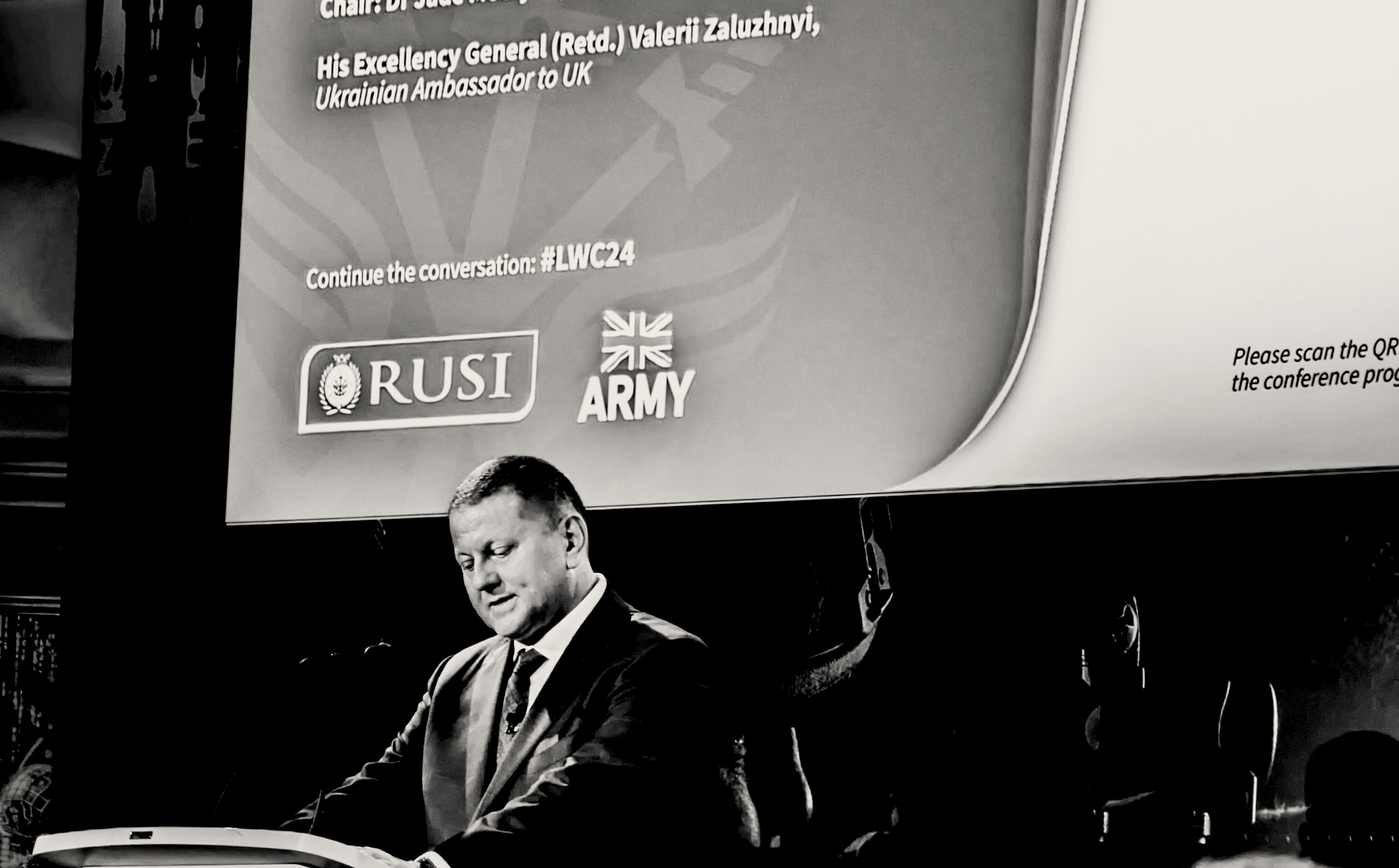
Zaluzhnyi is now Ukraine’s Ambassador in the UK but barely says a word or makes a public appearance. This is partly because he doesn’t speak English but mostly because anything he says is assessed through his political rivalry with Zelensky. There are even whispers in Kyiv that his silence was part of the deal of his diplomatic posting.
Which makes the timing of his just-published opinion piece ‘How to defeat Putin and build a better Ukraine’ in the UK Telegraph all the more interesting. He sets out his views of Ukraine’s position in the peace talks, on the battlefield and geopolitically.
The events of 2024 and 2025, despite minor achievements at the front, indicate the absolute effectiveness of such a strategy for Russia in its efforts to achieve its political goal.
However, a war of attrition is also being waged on the political front and the economic front. Military actions play an important role in achieving political goals, but are not the final phase.
For example, let’s imagine that Russia completely occupied the Donetsk region. The war would not end because it would not achieve the political goal. Russia seeks to create conditions to achieve the collapse of Ukraine on the military, economic and political fronts simultaneously.
In the absence of a unified vision of a new security architecture on the European continent, without security guarantees and real financial programmes, the war with Russia risks turning into a broader war with over the capture of Eastern Europe. War does not always end with the victory of one side and the defeat of the other. We Ukrainians strive for complete victory, but we cannot reject the option of a long-term end to the war.
Peace, even in anticipation of the next war, provides a chance for political change, for deep reforms, for full recovery, economic growth and the return of citizens. It is even possible to speak about the beginning of the formation of a safe, protected state through innovation and technology; of strengthening the foundations of justice through the fight against corruption and the creation of an honest court system; and of economic development, including on the basis of international economic recovery programmes.
But all this is impossible without effective security guarantees. Such security guarantees could include: Ukraine’s accession to Nato, the deployment of nuclear weapons on Ukrainian territory or the deployment of a large allied military contingent capable of confronting Russia.
However, there is no talk about this today and, therefore, the war will probably continue. Not only militarily, but also on the political and economic fronts. Russia may change the tools and forms of its aggression, but they will all serve the same purpose. For us in this situation, the main political goal should be to deprive Russia of the opportunity to carry out aggression against Ukraine in the foreseeable future.
All My Sons ⭐⭐⭐⭐⭐
Touch wood, I am one day away from achieving my goal of spending one entire month of 2025 at home in London, which means some time to indulge in theatre!
Last week I went to the first night of Arthur Miller’s All My Sons, now playing at Wyndham’s Theatre. It was always going to draw crowds, given that it stars Bryan Cranston and is directed by Ivan van Hove. It more than lives up to its blockbuster promise.
It was terrific and, believe it or not, the Breaking Bad star was not even the best actor on stage.
The story charts the demise of Joe Keller (Cranston) whose business sold cracked parts to the US Air Force that killed 21 pilots during the war. Keller escapes jail and his business partner is blamed and jailed instead.
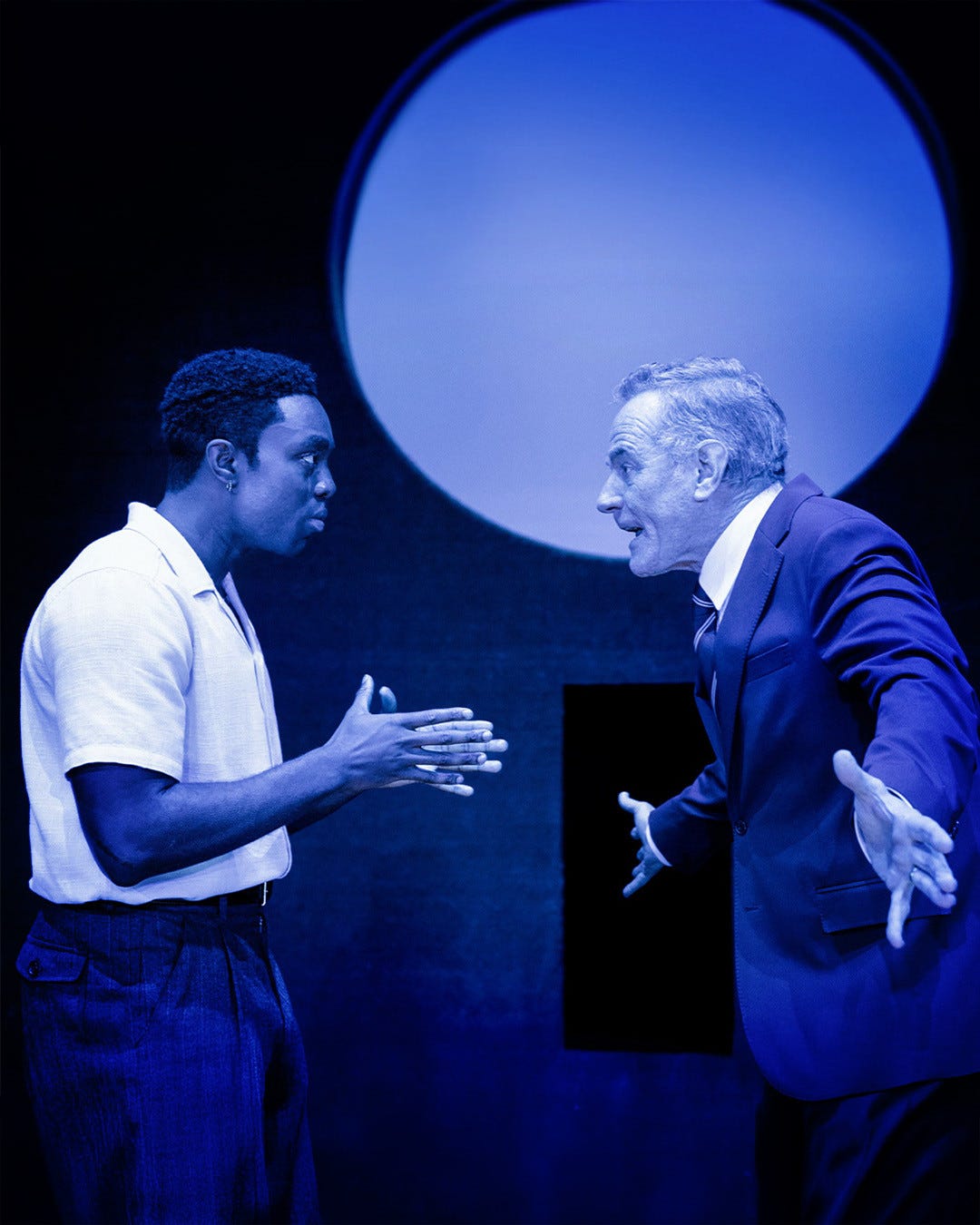
The unravelling of this family and neighbourhood story, set in the Keller’s backyard on a fallen tree, is masterful and tense, once the writing gets going.
But the stars of this show are the cast and, in particular, Paapa Kwaakye Essiedu, whom I would see on stage in anything after this. His face-off with Cranston at the play’s crescendo is edge-of-the-seat stuff.
It’s the actors that ultimately make it. Cranston is superb as a grandfatherly figure who believes he has squared his past actions with himself, because he’s a pragmatist, a capitalist and because he thinks what he did was in line with the American Dream.
But at the very end, he is almost physically stunned to discover that he does care – the revelation rips him to shred before our eyes. Marianne Jean-Baptiste is exquisite as Kate Keller: a tough, no nonsense woman for whom the death of her son Larry has become an achilles heel, a point of vulnerability in an otherwise steely character.
It’s Essiedu however, who really runs off with the show as the Kellers’ surviving son Chris. At one point the family’s embittered neighbour Sue (Cath Whitefield) suggests Chris leave town because she’s annoyed that his sunny goodness is encouraging her husband to take a lower paid job (‘He’s driving my husband crazy with that phony idealism of his’).
And as Chris, Essiedu really is that guy: a puppyish, bashful, extraordinary wholesome young man who teeters on the border between ‘really nice’ and ‘living saint’. We really root for him – when he eventually turns on Joe it’s not a petty family squabble, it’s Biblical, the Son confronting the Father and declaring Heaven is a lie. There’s plenty of imagery relating to the Fall sprinkled throughout Miller’s prose, and this production laps it up.
And that’s my list for this edition.
📻 For my media appearances this week, I joined Times Radio to discuss British politics on Saturday and reviewed the newspapers on Monocle Radio on Thursday.
Please do send me anything that’s caught your eye. I enjoy knowing what you’ve been reading.
Some of you have started to offer me copies of your books etc. Please email me at latika@latikambourke.com for a forwarding address for hard copies.