

We are Bellingcat
I raced through this book.
Written by computer-geek-turned-investigative-OSINT-reporter Eliot Higgins and published in 2021, I came across this on my Kindle only recently.
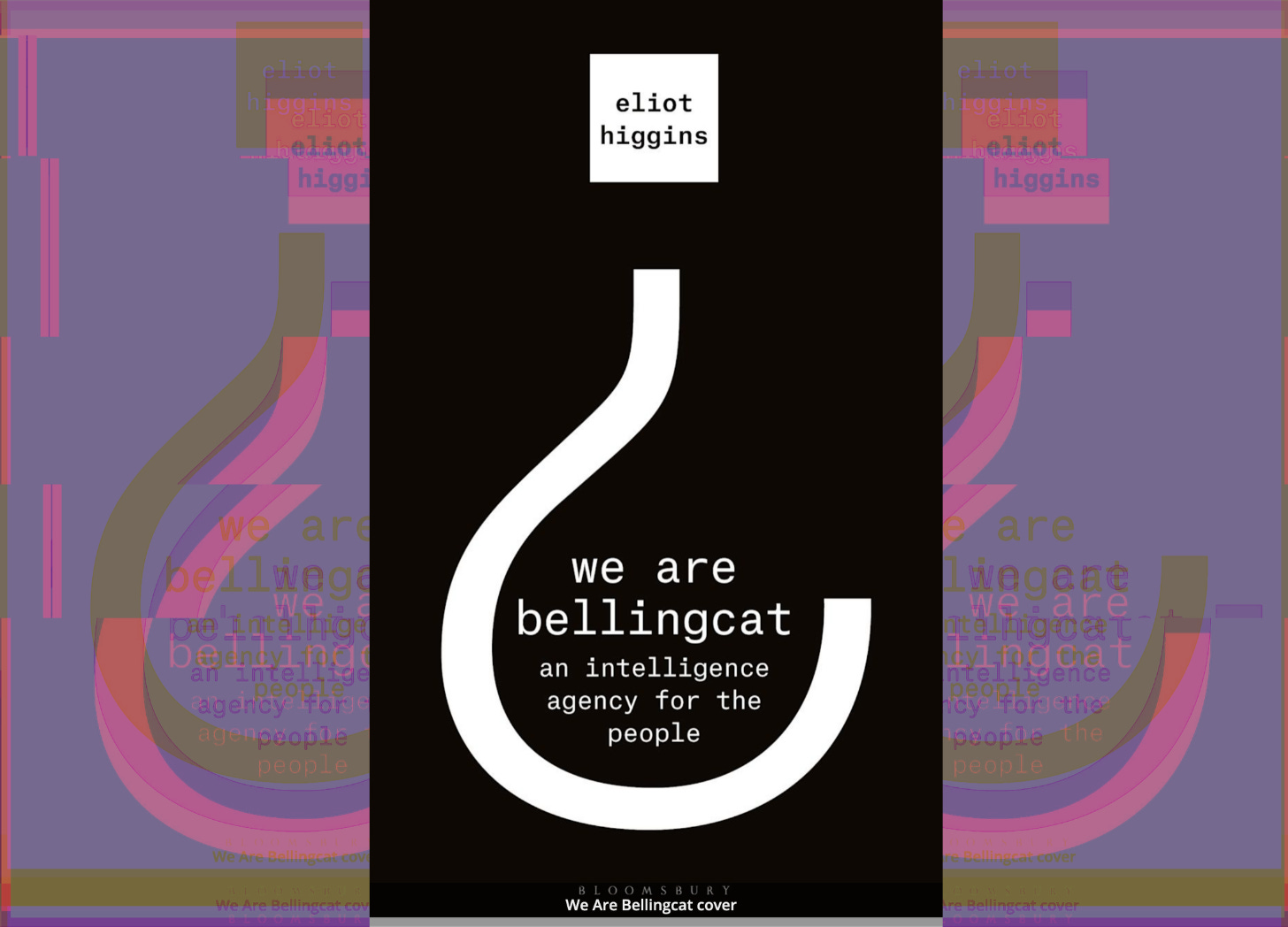
Bellingcat, for those who don’t know, is a citizen journalist/blogger website or investigative news outlet that uses investigative journalists and online hobbyists to crack major cases, mostly through using publicly available information.
Higgins really took off during the Arab Spring and Syrian civil war, but became an everyday name for me during MH17, when he and his team of sleuths exposed Russia’s hand behind the downing of the passenger jet over eastern Ukraine in 2014.
This book is extremely readable, and quite a good field guide for anyone, journalists or otherwise, who are interested in identifying facts or how to become a fellow fact fundamentalist. Higgins has a lovely tone; he is neither boastful nor too shy in showcasing his successes. His book could easily have been a brag, but he comes across as very down-to-earth, extremely thoughtful, ethical and honest.
What was most interesting about this book is Bellingcat’s relationship with truth, in terms of upholding and exposing it.
When Higgins begins his work, he could rely on social media content being legitimate, more often than not. It is how he is able to use tools like Google Maps to determine location, apps that track the sun’s shadow to pinpoint time and social media networks to penetrate the identities of soldiers in Russian military battalions. Early on, he makes a clear distinction between this sort of work — using open source or publicly available information to piece together a case — and the work of WikiLeaks — publishing classified and private information obtained by hacking.
There is a very interesting passage when Bellingcat begins paying Russian sources for data like flight logs and internal Russian ID lists that will expose Russian crimes; Higgins explains the ethical debate they had when they began seeking this sort of information, as opposed to using only publicly available sources.
As the book continues, his work runs up against misinformation, deliberately faked images and footage, and outright cyberattacks from Russia. There are also interesting questions about whether censoring hate speech, violent imagery and footage recorded in war zones is actually the right approach, given it can help citizen investigators prove state involvement in war crimes or crimes against humanity.
Most depressing is how much of a harbinger it serves as for what Russia is doing to Europe and the West today. I will never forget the morning in Canberra, waking up at 0600 to the news that MH17 had been shot down. It is one of my lifelong regrets that I did not pay enough attention then, as a political reporter in the Canberra press gallery, to what this horrific crime was showing us about Russia’s imperial designs over Ukraine, which led to the downing of MH17, the annexation of Crimea and then the full-scale invasion. It was all right in front of us.
Reading through Higgins’ description of Bellingcat’s pioneering work, which laid out step by step how the Russians operate and conduct this style of warfare, was like reading a horror movie script in slow motion, when you know the ending.
Higgins must certainly have another book in him: how Bellingcat’s method works in an AI-slop world, a political climate of ‘alternative facts’ and social polarisation was the question on my mind almost right through the book.
Our Skripal investigations drew headlines around the world, and questions, too. How had a collective of self-taught internet sleuths identified a Russian ‘hit team’? Was that even plausible? Where had we come from? And what was ‘Bellingcat’?
The answers begin a decade ago, in that period when smartphones were beginning to spread globally and social media became the platform for personal relationships, opinions, images. Without intending to, humanity presented for public viewing the most revealing account of itself that the world had ever known. The innocents did not realise how much they were giving away. Nor did the guilty.
At the time I was just another computer enthusiast, an office worker in my early thirties with an unsatisfying job and an interest in the news. Then I had an epiphany. If you searched online, you could find facts that neither the press nor the experts knew yet. A smattering of other people had a similar realisation, and an online community drew together, converging around news events that had left clues on YouTube, Facebook, Twitter and beyond. As our efforts progressed, we gained sophistication, teaching each other the latest investigative hacks, cobbling together what cohered into a new field, one that connects journalism and rights advocacy and crime investigation.
This discipline is so new that it lacks a single name. Most common is ‘OSINT’ for open source intelligence. But that shorthand derives from government intelligence, whose secretive practices diverge from the open and public mission of Bellingcat. A more accurate description is ‘online open source investigation.’ What we do is far more than just internet research, though. We battle the counterfactual forces warping society. We insist on evidence. And we show ordinary citizens how to expose wrongdoing and demand accountability from the powerful.
White House turned down Starlink
After last weekend’s diesel deal, Ukraine suffered another stealth attack from the White House — the slowing down of the Starshield.
Starshield is the military-grade satellite system owned by Elon Musk’s SpaceX, which provides satellite services through Starlink.

Ukraine uses Starshield to fly and intercept drones. This week, Ukraine’s President Volodymyr Zelensky said the service was slowed, meaning Ukraine could not intercept Russian drones. He also said allied warnings of incoming Russian attacks were not provided this week.
Zelensky has been openly criticising US President Donald Trump post the diesel deal. Was the slowing of Starshield White House retribution?
The order to limit a satellite system used by Ukraine for battlefield communications and drone operations came from inside the White House, according to two US officials and a Western official briefed on the matter.
The officials said leaders at the Defence Department received a message that the SpaceX Starshield service for the Ukrainian military needed to be slowed.
The officials, who spoke on the condition of anonymity, did not specify who in the White House made the decision or who was responsible for implementing the order. The Pentagon is the biggest customer of Starshield, which is the military-grade version of the Starlink service.
Ukrainian officials said this week that military-grade Starlink receptors stopped working in Ukraine when mounted on fast-moving objects, interfering with the performance of Ukrainian drones that rely on them for onboard guidance systems over Ukrainian territory.
A person in Ukraine’s Defence Ministry said on Thursday that the receptors were now working when in motion, but only at speeds of up to 100 miles per hour (160 kph).
But wait, there’s more
Joe Barnes from the UK Telegraph says that’s not quite the story.

He writes that Musk cooked up the idea, then distanced himself from it on X in public when he feared a backlash from European clients.
Elon Musk came to Donald Trump with the plan to throttle Ukraine’s use of SpaceX’s Starshield satellite internet network, sources have told the Telegraph.
The tech billionaire made the proposal during the US President’s row with Volodymyr Zelensky over strikes on Russian oil refineries.
‘The reality is that they were both in it,’ a senior source said of Musk’s and Trump’s involvement.
But after a night of carnage in Kyiv caused by the slowdown, Musk was alarmed about the possibility of adverse consumer reaction in Europe.
The SpaceX boss then proceeded to tweet, blaming the US administration, and ultimately, President Trump for authorising the slowdown.
‘He tweeted out that he was innocent and that it was the US administration that did it,’ the source said.
India’s Missing Cockroach
India’s cockroaches are back in action, but this time, so too is India’s Prime Minister Narendra Modi.
The Cockroach Janta Party (CJP is a play on Modi’s Bharatiya Janata Party [BJP]) is a satirical movement that began as a meme but turned into a mass uprising of mostly Gen-Z Indians who successfully demanded the resignation of India’s education minister over leaked exam papers.
Then Modi was caught unaware by the people’s movement and caved to their demands, even communicating with them via their favoured platform, Instagram.
It was a rare concession from the strongman leader who has cracked down on dissent in democratic India since first being elected in 2014.
Now the cockroaches are back, accusing India’s Election Commission of tampering with voter lists in favour of Modi’s BJP, something that is denied.
But this time police are arresting the protestors, including their leader Abjijeet Dipke, who has been detained twice and now not seen since his second arrest on Friday. CJP organisers have written to Delhi police demanding to know where he is.
Respected Sir/Madam,
I am writing to seek urgent information regarding the whereabouts of Mr. Abhijeet Dipke, Founder and National Convenor of Cockroach Janta Party, who was detained by Delhi Police on 16 October 2026.
I was present at the location when Mr Dipke was intercepted by police personnel outside the residence of NCP-SCP spokesperson Anish Gawande. He was walking entirely alone and was on his way to Connaught Place to unfurl the national flag. Despite being alone and intending to exercise his right to peacefully display the Tricolour, he was prevented from proceeding.
Mr Dipke also requested the police to suggest an alternative location where he could peacefully unfurl the national flag. This request was denied. Instead, the police informed him that he was being preventively detained. took him away, and left without providing any information about where he was being taken.
Since his detention, we have received no information regarding his present location or the police station or facility where he is being held. This lack of information is deeply concerning.
We therefore request your immediate intervention and ask that the police authorities.
1. Immediately confirm Mr Abhijeet Dipke’s present whereabouts and disclose the police station or facility where he is being held.
2. Confirm the legal provisions invoked and the grounds communicated for his preventive detention.
3. Confirm the authority under whose directions he was detained and the details of the officer responsible for his custody.
4. Ensure that he is permitted to contact his colleagues and obtain access to legal counsel, in accordance with applicable law.
We request an immediate response and written confirmation of his whereabouts. Detaining a person who was walking alone and seeking to peacefully unfurl the national flag, while refusing to suggest an alternative location, raises serious concerns that warrant an urgent explanation.
We trust that your office will treat this matter with the utmost urgency and ensure that all applicable legal safeguards are respected.
And the Flamingo Revolution is back
What is taking place in Albania is really worth keeping an eye on. Protestors, who initially began demonstrating against a plan to let Trump’s daughter and son-in-law, Ivanka Trump and Jared Kushner, build a resort on an area where flamingos are protected, are back.
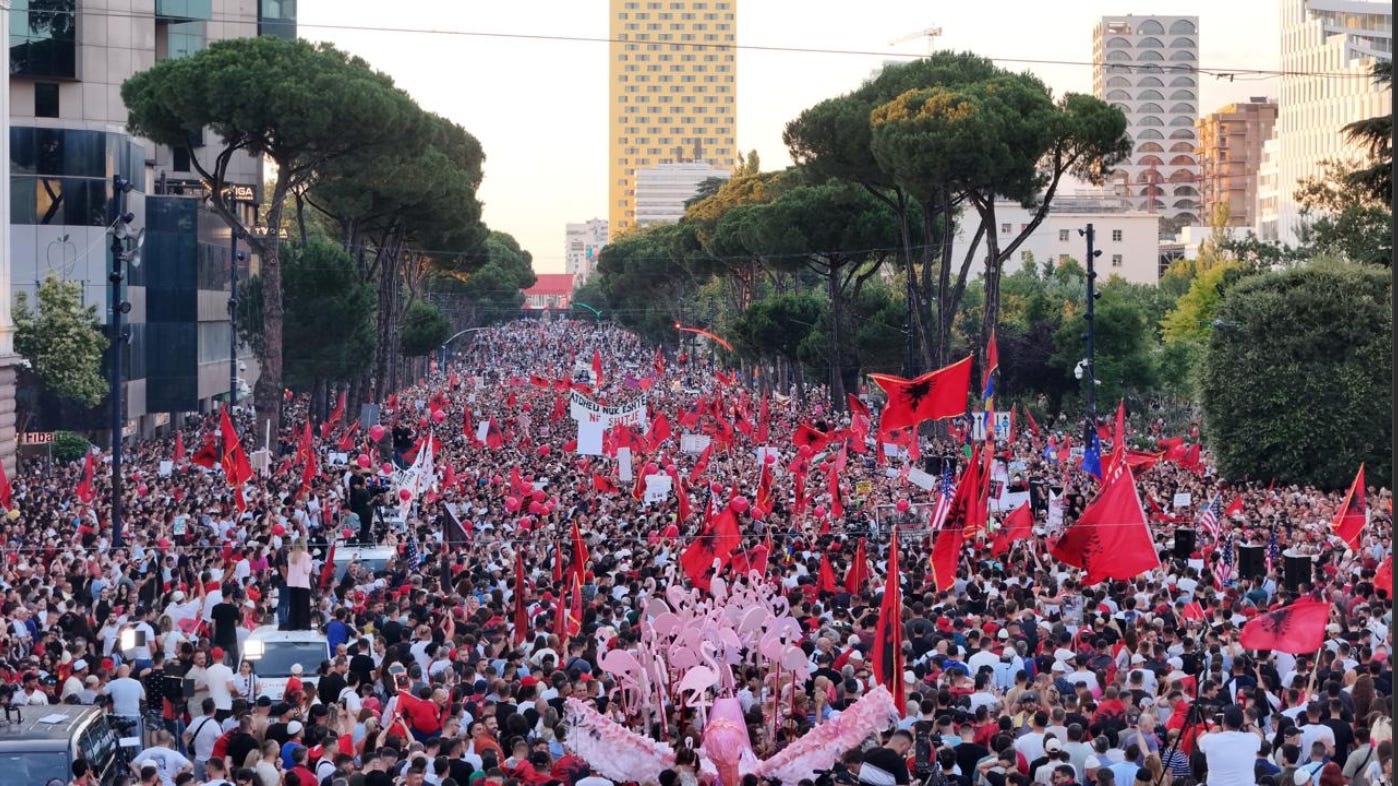
This time they have become violent and also focused on what they say is the corruption of the government led by Edi Rama.
Albanian dissident and writer Fatos Lubonja spoke to Amy lori about how the protests have become ‘the last hope we have.’
‘No one listens, so violence becomes inevitable.’
They started on Tuesday at the Ministry of Education. The protest grew, and the police responded aggressively. Yesterday, there was tear gas, arrests, and injuries. More people joined the demonstrations, and some entered Tirana’s City Hall.
Those who prevent, underestimate, or refuse to listen to a peaceful revolution make violent reactions inevitable.
What about the role of the opposition and Europe?
The protesters also accuse the opposition of colluding with Rama’s government.
Hopes for change had been placed in the justice system and Western partners. But, in my interpretation, Europeans prioritise the geopolitical considerations of Balkan enlargement and pretend not to see what is happening. They accept the narrative of Albania as a ‘success story.’
This fuels the anger.

And that’s my list for this week.
Please do send me anything that’s caught your eye; I enjoy knowing what you’ve been reading.
📻 For my media this week, I joined the BBC’s World Service Weekend program on Saturday.
🎙️ On the ABC’s Global Roaming, Geraldine Doogue and I interviewed Adrian Ash on what’s driving the gold market, and Laura Tingle and I spoke to Thiago de Aragão about the Brazilian election.
Last week I moderated the opening session at the Italian Navy’s Trans-Regional Seapower Symposium.
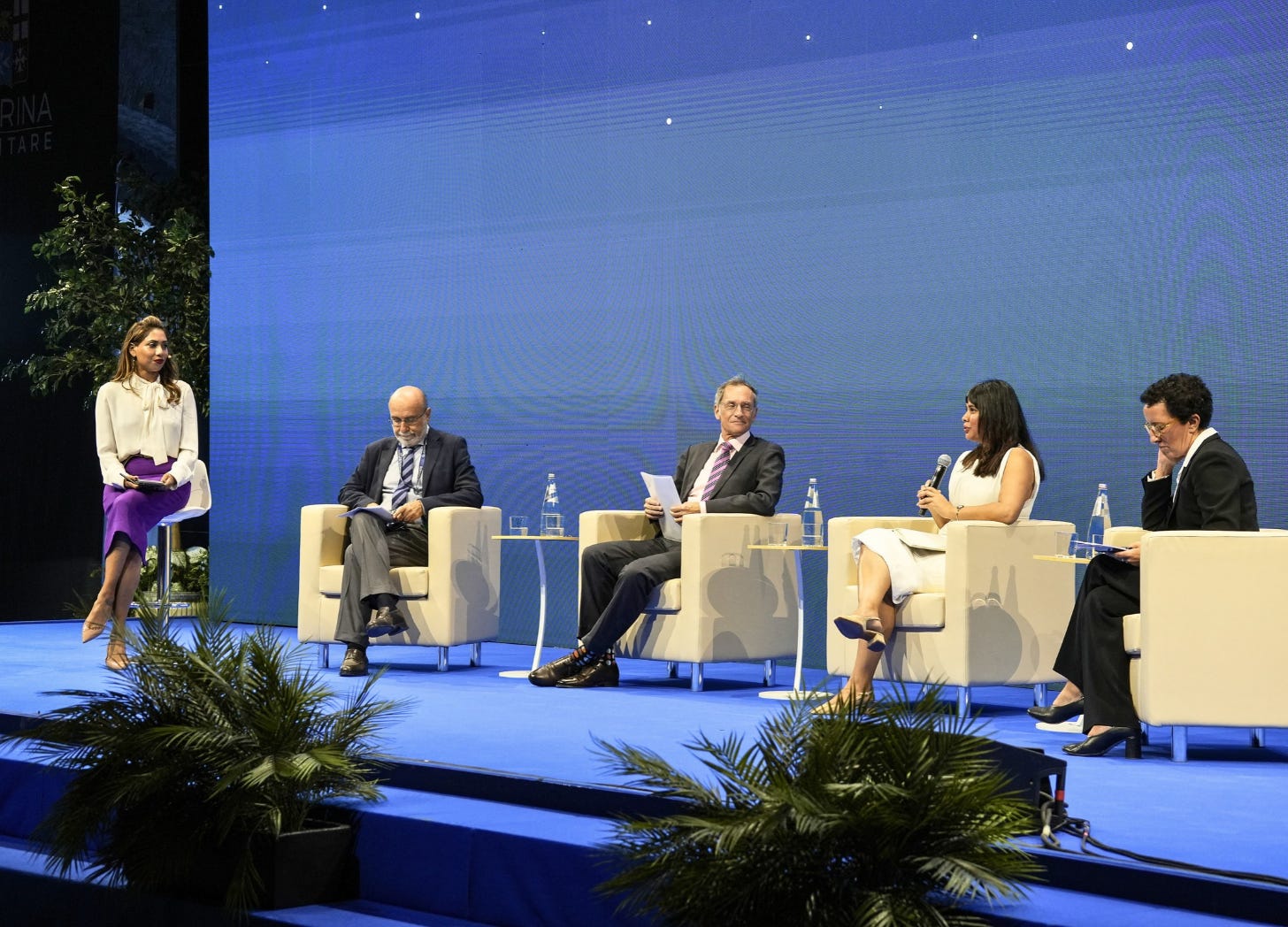
And this week I moderated a panel at the Warsaw Security Forum in collaboration with the Doho Forum on the prospects for peace in the Middle East.
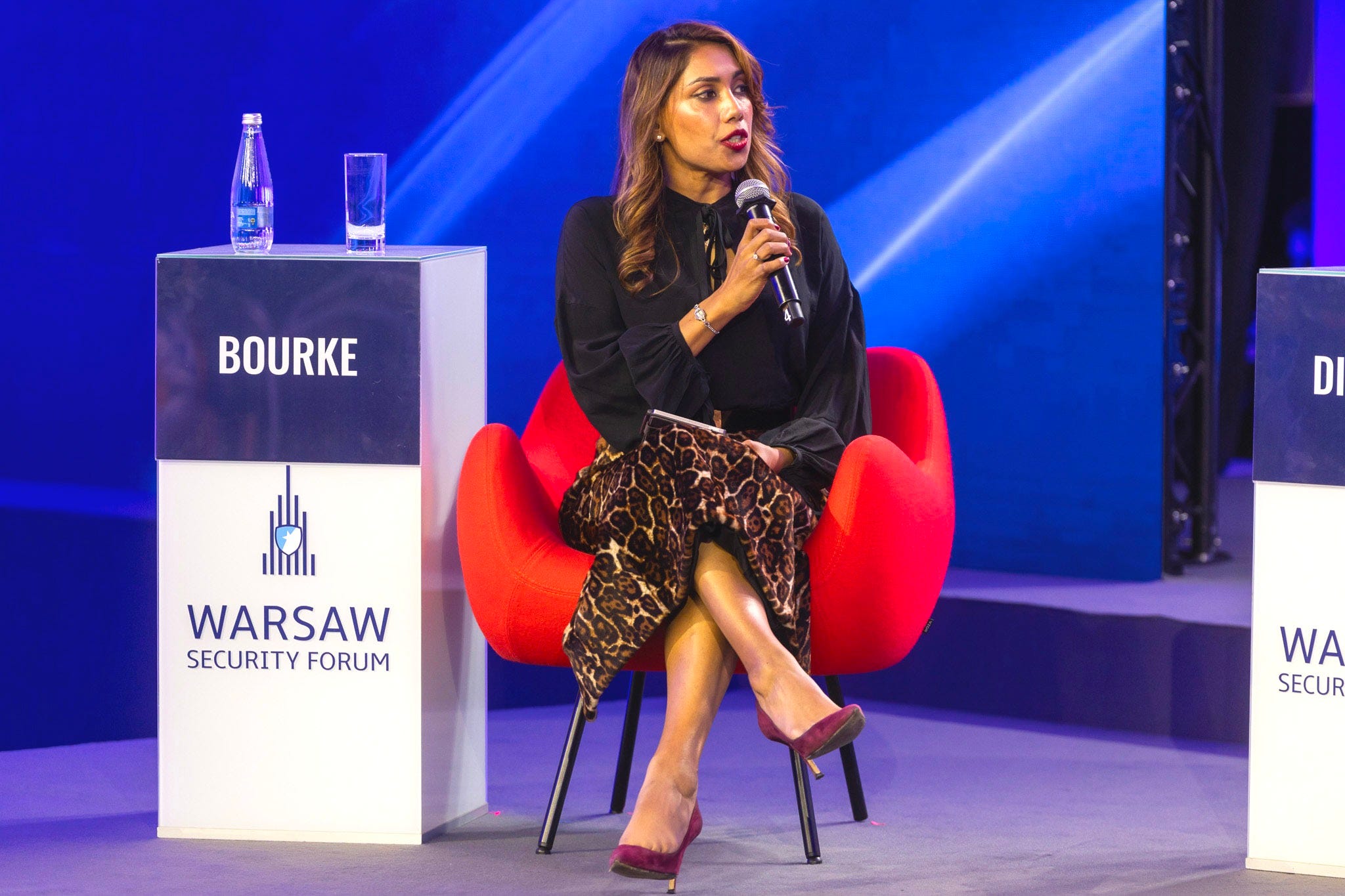
You can watch it here if you are interested.
Back in the UK, I was invited by the Sussex International Relations Society to speak to a very smart bunch of mostly Politics and International Relations students about working in international journalism.
It was a delight.