

Kyiv, Ukraine: Even as a lowly fifth-time visitor to wartime Ukraine, it is not hard to bump into friends in this particular district of the capital.
Known as the ‘Soho of Kyiv’, the trendy district is home to several landmarks, including two gloriously-domed cathedrals and three major international hotels that make it notionally ‘safe’ for Western visitors, diplomats and the like.
And so it goes when I step outside my hotel and bump into my Ukrainian friend, Alex Zakletsky, a former National Geographic photographer, whom I last saw in February, in thick snow in Chornobyl, the nuclear plant that melted down during the Soviet era, and arguably contributed to its collapse.
‘How are you?’ I inquired, after we exchanged hugs and reminisced about that memorable trip.
The question sounds like a normal one, but in Ukraine it carries a heaviness far beyond pleasantries.
‘Well, I’m still alive, as you can see,’ he replied. Ordinarily, you would attribute such an answer to the famous Ukrainian black humour.
But the grim way of measuring life speaks to a new reality. And especially right here in Kyiv, in what is one of the supposedly safer parts of Ukraine, now trapped in its fifth year of war following Russia’s illegal invasion in 2022.
Just a few blocks away, Russia this month struck at the heart of the capital when it ploughed a drone into the headquarters of the SBU intelligence agency.
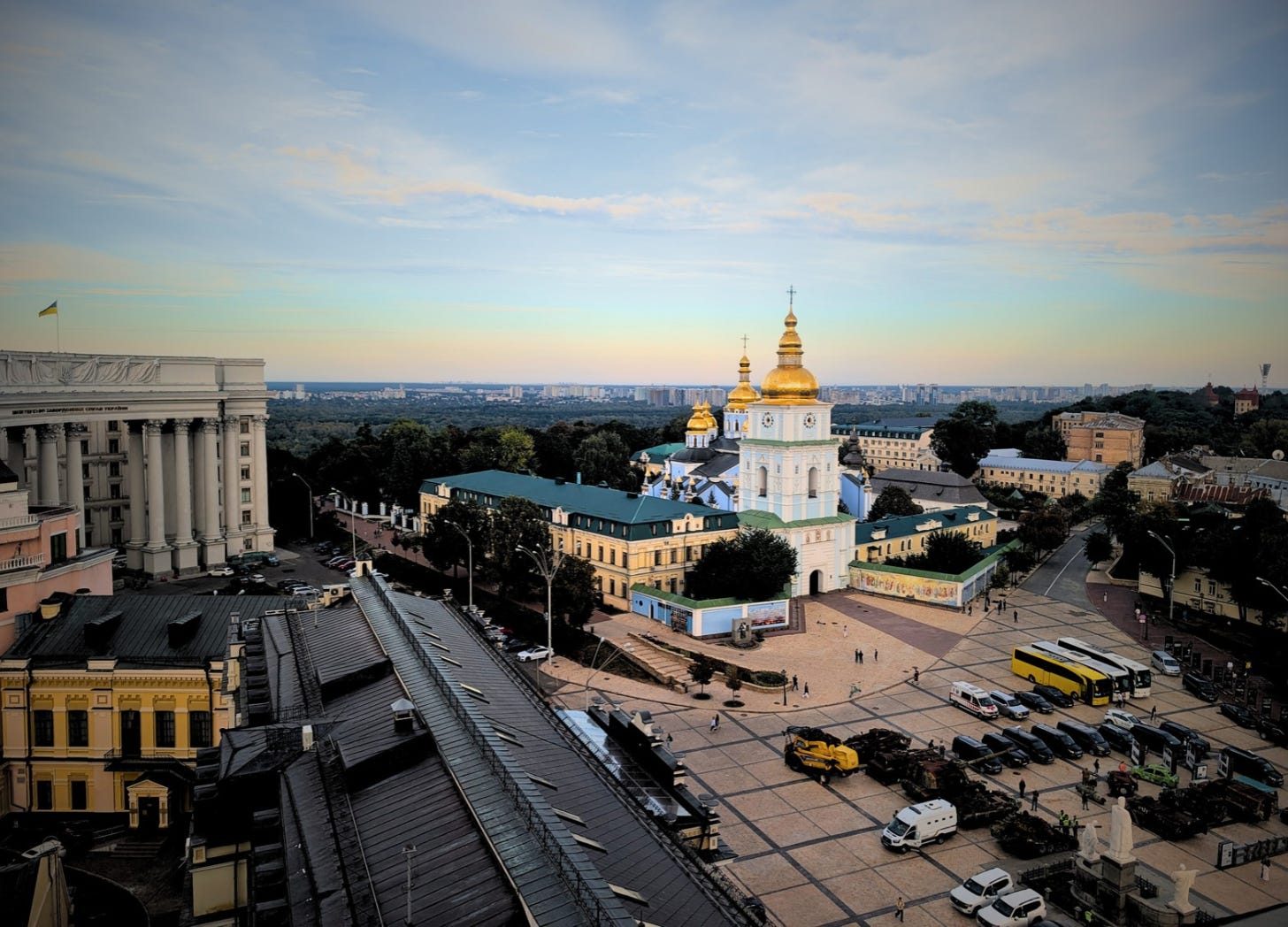
The successful attack happened in broad daylight, just metres from St Sophia’s Cathedral and despite the fact that Western diplomats, dignitaries and VIPs are always in this area. In Sydney terms, it would be like a drone hitting a government building on Macquarie Street, or in London terms, imagine a drone making it through to a government building in Victoria near Westminster Abbey.
‘You innovate, or you die,’ is a common refrain in Ukraine.
This is why the SBU attack was not just a gut punch. It demonstrated a shocking revelation of Russia gaining a strategic upper hand in a war where Ukrainian courage, spirit, ingenuity and dogged determination have traditionally outmatched the imperial power.
In the attack on the intelligence agency, Russia was able to penetrate Kyiv’s air defences with a drone fitted with an engine.
‘Jet Shaheds,’ as they are commonly called in Ukraine, are the latest Russian iteration of the drones, first introduced into the war with Iranian help.
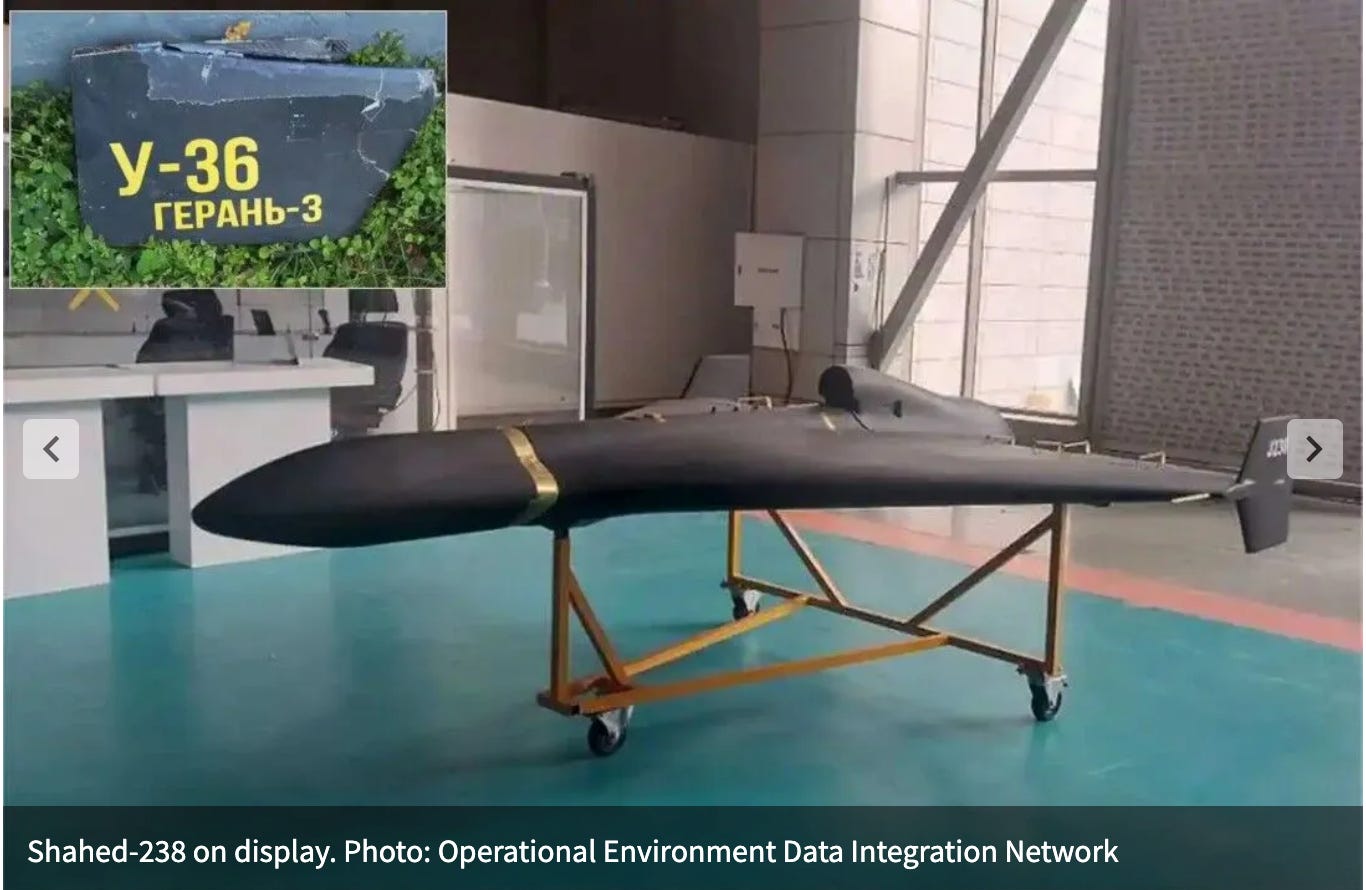
Jet Shaheds fly at a speed of up to 600 kilometres per hour, three times faster than the regular propeller Shaheds. This is too fast for Ukraine’s much-celebrated counter-drone technology or interceptor drones that take down most of Russia’s drones.
The Jet Shaheds exhaust Ukraine’s air defences, enabling missiles to follow behind and take advantage of the cleared airspace. It is this breakthrough that has given Russia a terrifying edge, enabling it to hit shopping centres, schools, hospitals, civilian infrastructure, and energy sites ahead of winter, along with the intelligence HQ in Kyiv.
The key to Russia’s advance in the air, compared to its stagnant state on the ground, has been scale and the backing it has from China.
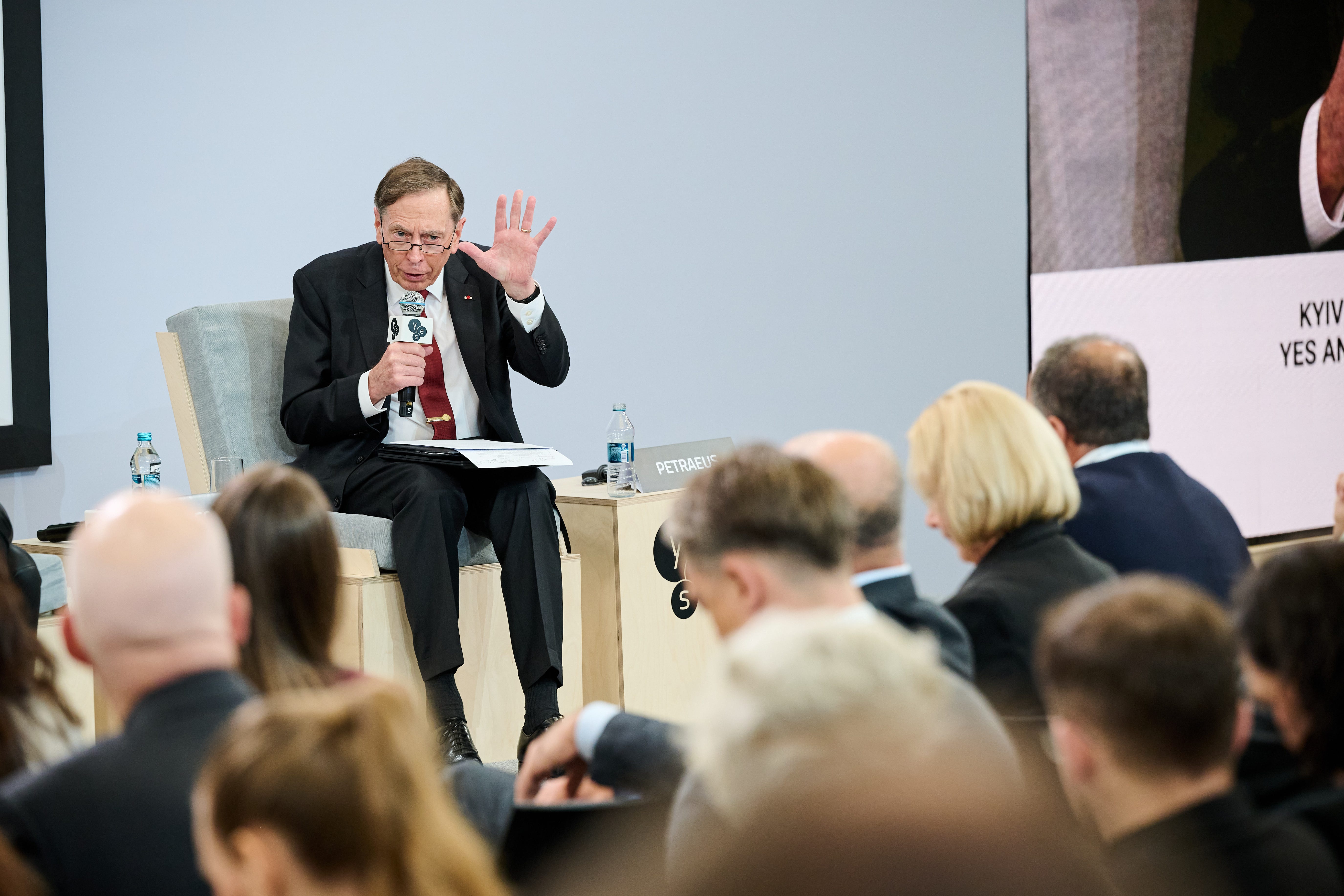
‘The two Achilles heels right now obviously are the missile defence and then the jet-powered, which are being scaled very substantially by the Russian production,’ former CIA Director and retired General David Petraeus told the Yalta European Strategy Conference held in Kyiv and attended by Latika Takes.
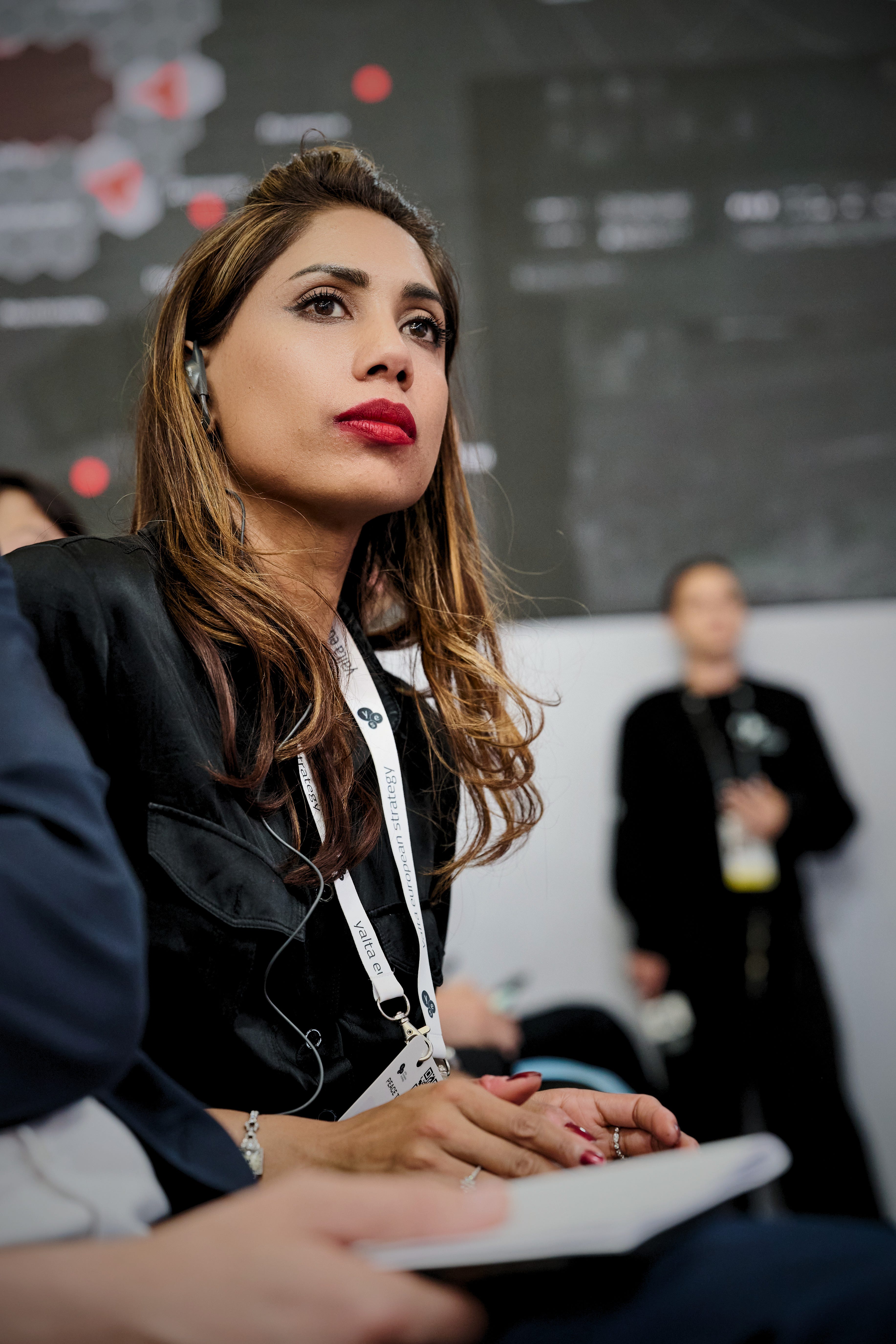
‘What we need to do, meaning Western countries, NATO countries in particular, is provide as many missile interceptors to Ukraine as we can, as much money, they have to close a $27 billion defence budget deficit and the specific material required to enable them to scale the production of jet-powered drone interceptors.’
Vadym Skibitskyi, Deputy Chief of Ukraine’s Defence Intelligence, said that this month, Russia would produce at least 100 ballistic missiles.
‘We know all enterprises, companies that are involved in the common production with Chinese companies because, unfortunately, they are situated far from our borders, more than 2000 kilometres; it’s not easy, only with deep strikes and only with UAVs to reach such targets,’ he said.
‘That’s why we need international sanctions and believe me, the sanctions concerning China work, today the Russian Federation has some problem with jets for the UAVs — jets from China, this is the result of the activity of our partners.’
Every month that Ukraine is not equipped to force Russia to the negotiating table gives China, Russia, Iran and North Korea more valuable time to collaborate and develop new ways of killing Ukrainians.
Several Ukrainian drone suppliers said they expected to have counter-jet Shaheds by the end of the year. Ukraine’s President Volodymyr Zelensky set the date for December. The significance of this time gap cannot be overstated. Ukraine, for now, has lost its innovation edge over Russia.
‘The technological race is always a spectrum; so there are times when you’re winning, there are times when you’re losing,’ Iryna Terekh, the CEO of Fire Point, the company making Ukraine’s long-range missiles, said.
But in a war where technologies are updated in weeks and months, waiting half a year is an eternity, and death. This is why, despite Ukraine’s well-publicised success in penetrating Russia’s defences to hit oil refineries and warehouses, from where goods the military uses are stored and shipped, the mood in Ukraine is extremely brittle.
Why is it so particularly dangerous for Ukraine at this moment? It is because the country’s politics are also in a precarious state and, as stated by Anders Asland from the Kyiv School of Economics, ‘the economy is a disaster’. The war is costing Ukraine more than it can make with its money-making potential, like exporting grain, frequently targeted by Russia.
‘Unfortunately, the war has become so expensive that this year we cannot even cover the basic military costs – last year we covered salaries and basic costs for military – we cannot do this any more,’ said Rokolana Pidlasa, an MP who chairs the parliament’s budget committee.
Zelensky’s heroic act of staying to fight the Russians and rally the country and the world behind him means that he maintains an excellent reputation in partner countries.
But at home, where, just like innovation, unity is a do-or-die issue, the situation is different. Corruption scandals, which have reached as high as his former and powerful chief of staff, Andriy Yermak and a pre-political business partner, have eroded domestic confidence.
Ukrainians have twice taken the extraordinary step of taking to the streets during wartime to protest against him, last year when the President and Yermak tried to curb the country’s two anti-corruption bodies and this year, when Zelensky sacked his popular defence minister Mykhailo Fedorov.
Fedorov was seen, rightly or wrongly, alongside this year’s early success in launching deep strikes on Russian oil refineries and warehouses and viewed as a next-generation anti-corruption tsar. He brought a tech-bro attitude to government but lacked political nous, demonstrated when, upon his firing, he called for wartime elections, in breach of the constitution.
At the time of full-scale invasion, Zelensky had the trust of 90 per cent of Ukrainians.
Anton Grushetskyi, executive director of Kyiv International Institute of Sociology, which regularly polls Ukranian sentiment, said trust in Zelensky remained ‘fairly high’ at 54 per cent.
‘At the same time, the cumulative negative effect of a number of high-profile anti-corruption investigations affecting the team and environment of Volodymyr Zelensky may ultimately be irreversible. It is worth recalling that Ukrainians react very strongly to corruption,’ he said.
Five years into this war, Ukrainians are ragged.
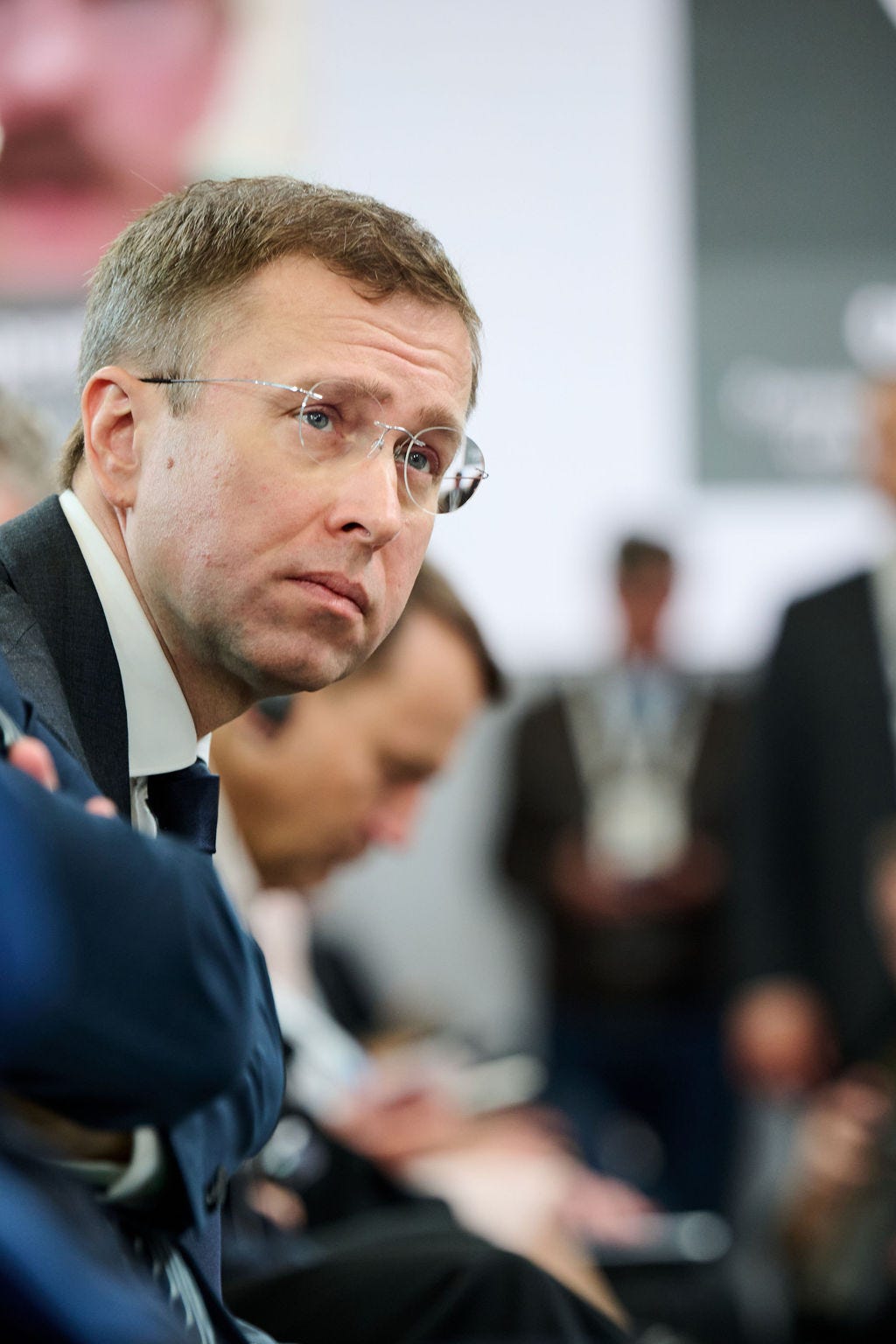
‘It is a difficult period, that is undeniable. For the Russians, in my personal opinion, it is a kind of blitzkrieg,’ said Sergii Koretskyi, Zelensky’s newest prime minister.
But there is zero suggestion of surrender.
‘This is the war of attrition and the situation is not getting easier for us. At the same time in such a war what matters is resolve not to surrender and to survive no matter what. Luckily, we are not alone in our struggle and can count on our friends, including, of course, the UK,’ Oleksandr Merezhko, the chair of Ukraine’s Foreign Affairs Committee, told me.
But the West is undermining its own security, and indeed the hundreds of billions of dollars it has sent Ukraine’s way, with the vast majority of the public’s support, by relying so heavily on Ukraine’s grit amid Putin’s willingness to cross more red lines by targeting previous no-go zones.
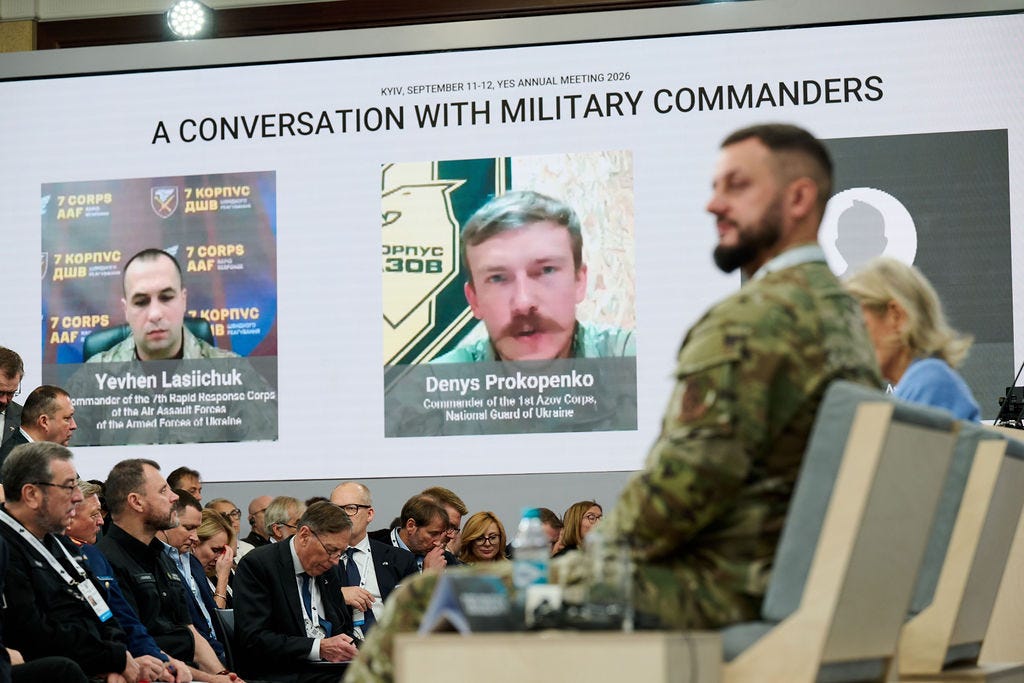
Oleg Apostol commands Ukraine’s Air Assault Forces. He said Putin was crossing more and more red lines and that the West needed to help Ukraine counteract Russia ‘sooner and more efficiently.’
‘He has got totally unhinged; Putin has nothing to lose, so he will go all the way. He will not stop at Ukraine; he doesn’t care what happens after him, that China can grab half their land,’ he said.
‘Nothing matters for him; he is now trying to grab Ukraine, and we’re not going to be the last victim. I wish to God that this stops at our country but together with you we can prevail.’
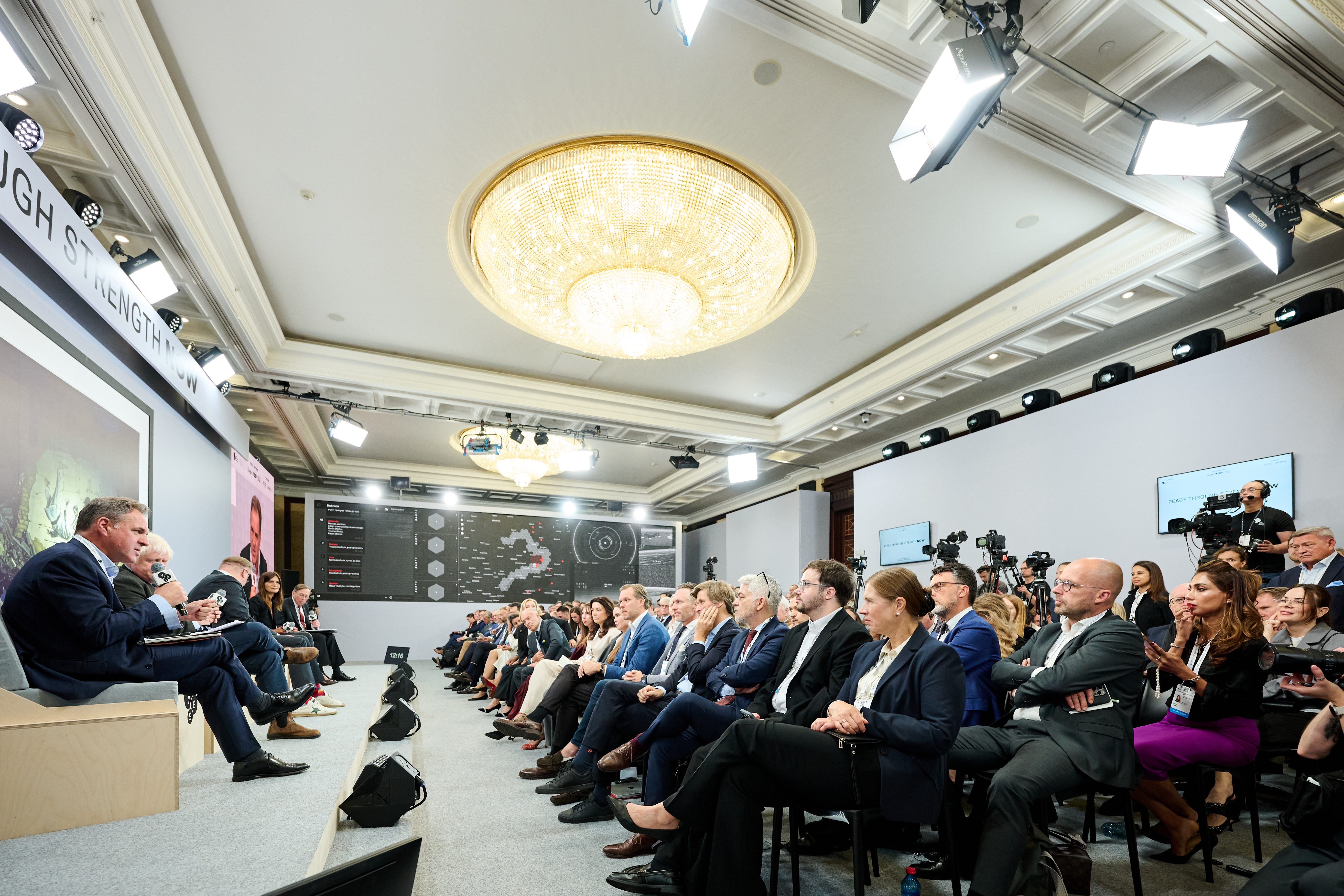
‘We need to signal now to Putin how we want Game Over and what the end state is. We’ve got to stop pussyfooting around about this’ former UK prime minister Boris Johnson said in Kyiv.
Yevhen Lasiichuk, also an air assault commander, said Russia was fighting the entire civilised world and not just Ukraine.
‘If Ukraine stops resisting the enemy, you should all understand what happens then.’